


Low Back Club Chair
A low back club chair brings deep-seated comfort and understated English country house character to a room.
Low Back Club Chair
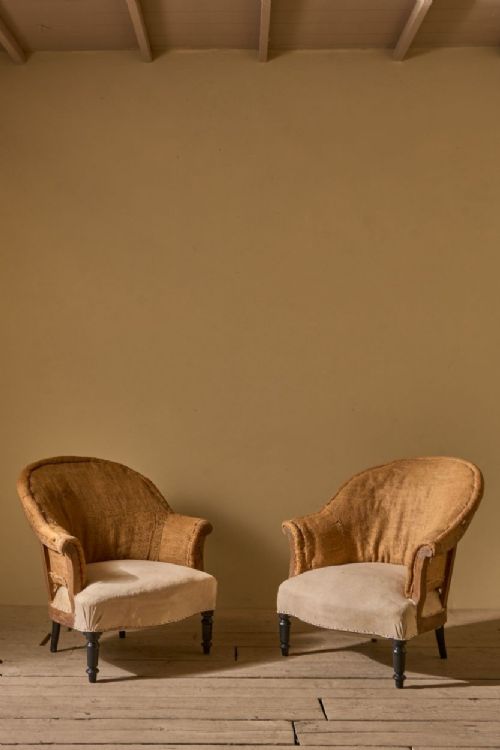
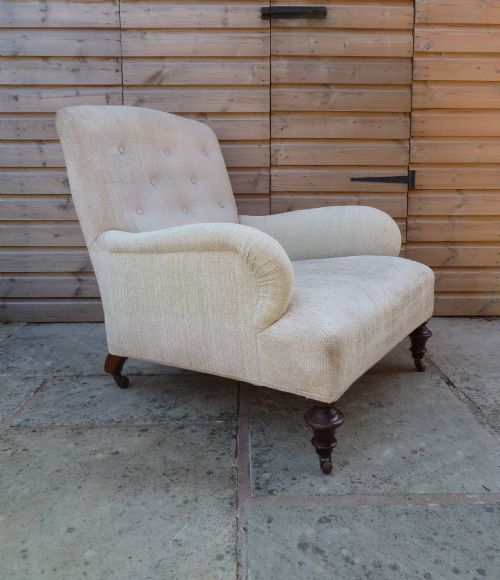
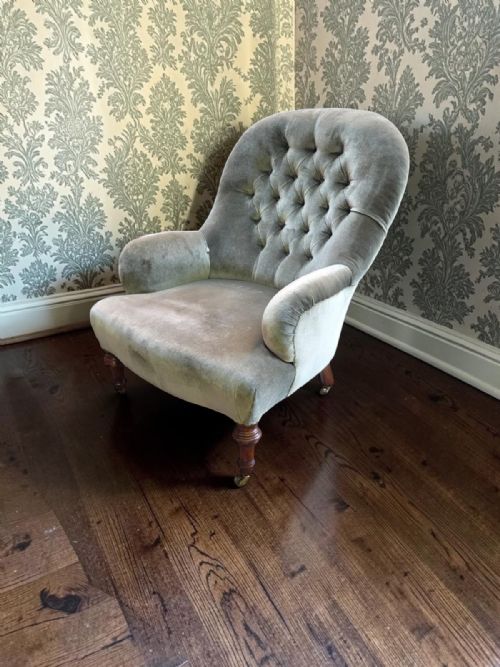
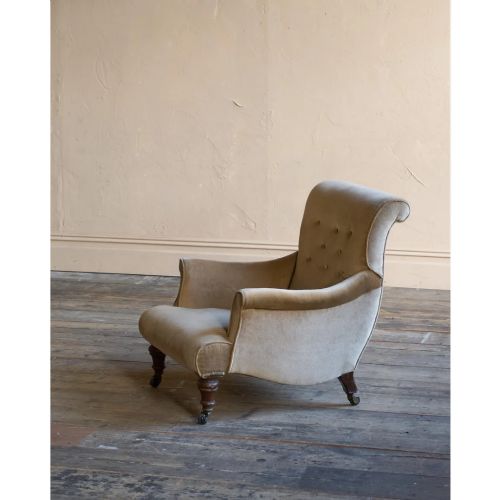
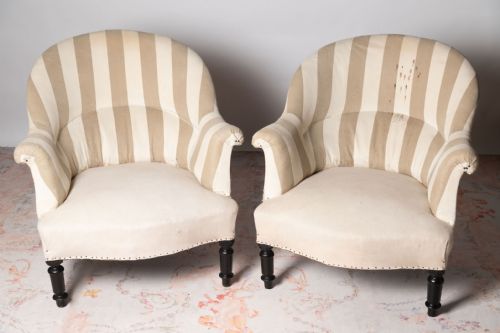
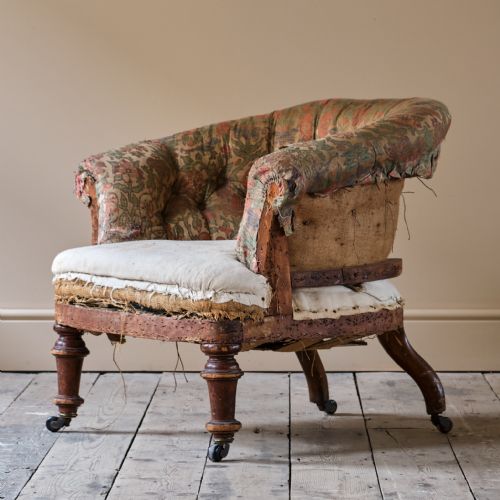
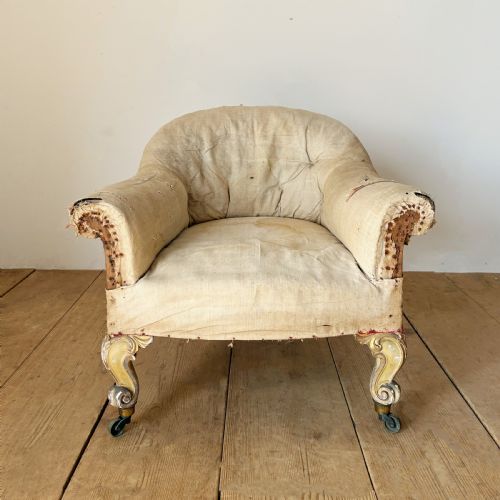
A low back club chair is a deeply padded armchair designed for relaxed lounging, frequently appearing in Victorian, Edwardian, and Art Deco interpretations. The form prioritises a low-slung profile and generous proportions over formal upright posture. Buyers searching for a low back club chair encounter various iterations, from button-backed tub shapes to substantial upholstered armchairs.
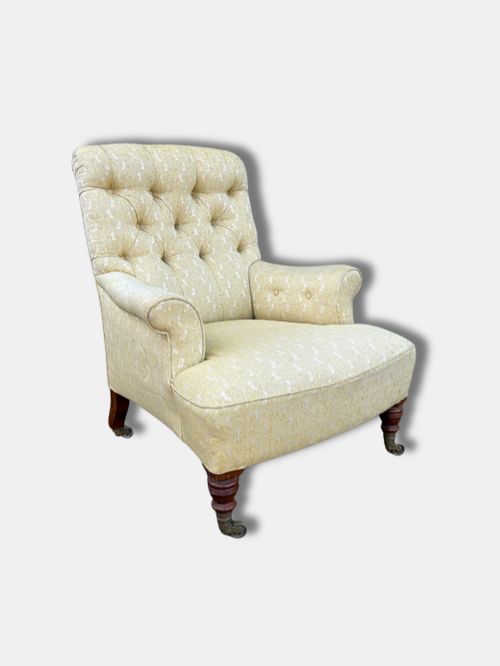
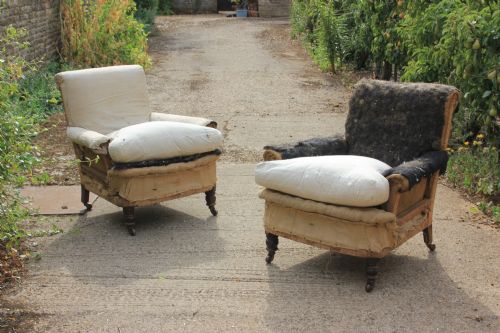
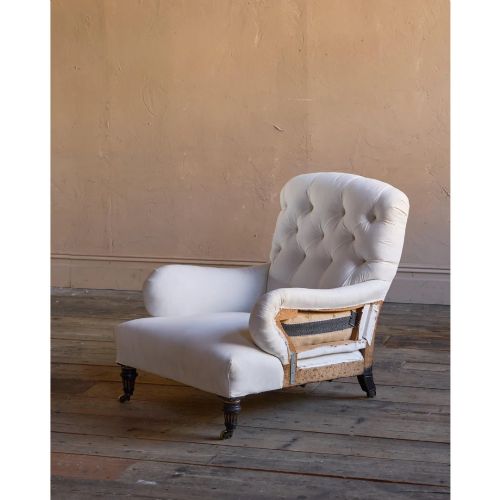
Many examples follow the distinct aesthetic established by makers such as Howard and Sons, characterised by low profiles and turned timber legs. These pieces often arrive covered in ticking, calico, or velvet, reflecting traditional English seating design. The selection spans the nineteenth and twentieth centuries, including French styles alongside domestic pieces.
Materials and construction
The frames rely on hardwoods like mahogany, walnut, beech, and elm to provide a sturdy structural skeleton beneath the upholstery. Exposed legs frequently feature brass castors to allow easy movement across floorboards and carpets. Timber elements are shaped and turned to suit the specific period style, from aesthetic movement legs to ebonised finishes.
Deep upholstery forms the core of the seating experience, utilising traditional stuffing materials concealed beneath outer coverings. Fabrics range from robust ticking and hessian to plush velvet and leather. Button-backing techniques provide both structural tension and decorative depth to the padded backrests.
Materials recorded across the available pieces include mahogany, walnut, beech, elm, brass, velvet, calico, and ticking.
Judging quality and proportion
Quality rests heavily on the integrity of the underlying frame and the spring tension within the deep seat. A superior piece maintains balanced proportions, where the low back and generous arms work in harmony without appearing overly bulky. The crispness of the turned woodwork and the finesse of the joinery distinguish fine workshop production from standard output.
The choice of original or period-appropriate covering materials also influences the overall character of the armchair. Examples retaining their early ticking or high-grade velvet demonstrate a higher degree of preserved authenticity. The refinement of the leg elements, whether brass-castor or ebonised, completes the standard of execution.
Howard and Sons·Shoolbred·Woodstock
The Low Back Club Chair Glossary
- Button-back
- An upholstery method where buttons are pulled deep into the padding at regular intervals to create a tufted diamond pattern. This technique secures the internal stuffing while adding textural detail.
- Tub chair
- An armchair characterised by a continuous curved back and arms forming a single circular enclosure. The enclosed shape offers a supportive, cocooning sit.
- Castor
- A small wheel mounted on a swivel attached to the bottom of a chair leg. It enables smooth movement of heavy upholstered seating across rooms.
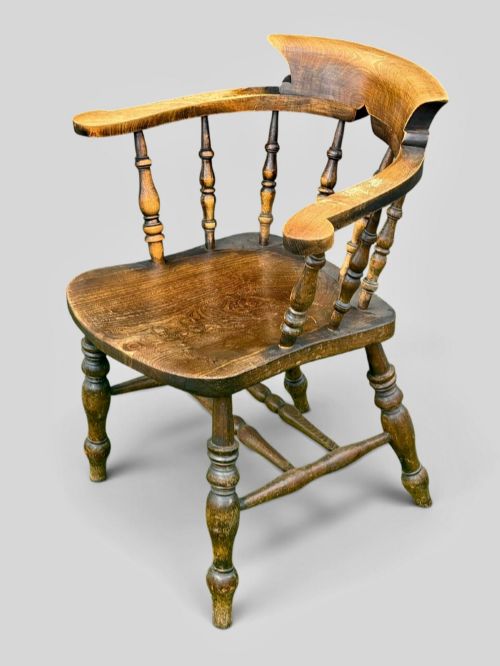
- Smoker's bow
- A nineteenth-century wooden armchair featuring a rounded spindle back resting on a low hoop. This regional English form shares similarities with Windsor seating.
Low Back Club Chair: Frequently Asked Questions
How do I identify a Howard style armchair?
Howard style armchairs are recognised by their exceptionally comfortable, low proportions, sprung seats, and turned wooden legs often terminating in brass castors. Many original examples and later interpretations are upholstered in signature ticking fabric.
Makers like Howard and Sons set a benchmark for English seating, influencing numerous nineteenth and twentieth-century workshop productions. The attention to hidden structural comfort remains a hallmark of this distinct aesthetic.
Where were these armchairs used historically?
These armchairs served as comfortable lounging seats in domestic spaces such as country house libraries, smoking rooms, and drawing rooms. Their generous proportions invited long periods of relaxation.
Their robust hardwood frames and durable upholstery fabrics like velvet, calico, and leather suited daily family life. Today, they transition easily into modern living spaces as statement seating.
Are these chairs suitable for daily seating?
These robust armchairs are built with hardwood frames and traditional springs designed for regular use. Their deep seats and supportive backs offer enduring physical comfort.
Placing them in a sitting room or study provides a functional reading chair with historical character. Regular gentle maintenance preserves both the frame and the upholstery materials.