

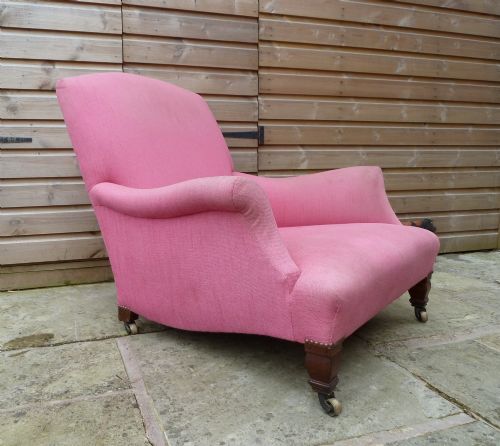
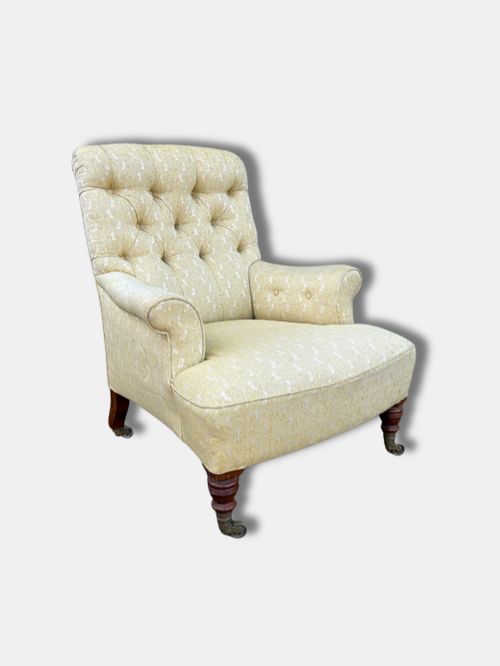
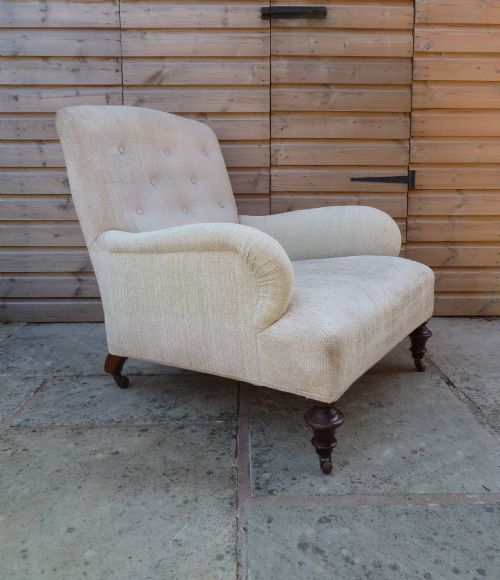


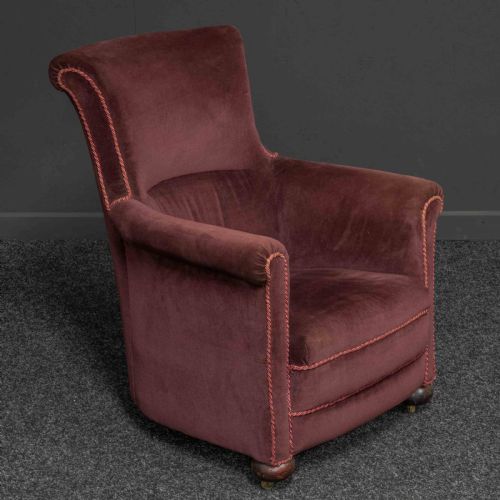
Low Arm Easy Chair
These low arm easy chair examples offer deep sprung comfort, and you want one for a traditional sitting room.
Low Arm Easy Chair
A low arm easy chair sits low to the floor with deep proportions designed for relaxed seating. The selection spans the nineteenth century, the Victorian era, the Edwardian period, and into the twentieth century up to nineteen twenty.
Most pieces meet the criteria of low arm easy chairs through English country house styles, Victorian designs, and French nineteenth-century influences. Makers and makers' styles represented include Howard and Sons, Hampton and Sons, Gillows, and Bridgewater forms.
The primary object type is the armchair, often upholstered in velvet, cotton calico, or kilim fabrics. Frames are built from timber, hardwood, and mahogany, supported by brass castors.
How they were made
Frames utilise solid timber, hardwood, and mahogany to provide a sturdy structural skeleton for the upholstered body. Wood components are shaped to form the low arms and deep seats characteristic of the form.
Upholstery techniques involve layering traditional fillings beneath top covers of fabric, velvet, and cotton calico. Brass hardware, including castors, is integrated to aid mobility on heavy framed armchairs.
Low Arm Easy Chair Retail Price Guide 2026
Typical asking prices for low arm easy chair among the pieces listed under this phrase on Sellingantiques today, from the lower quarter to the upper quarter. They describe what is for sale here now, not the wider market.
Periods represented span from eighteen fifty through the Victorian and Edwardian eras up to nineteen twenty.
What varies in quality
The integrity of the internal wooden frame and the precision of the joinery distinguish fine examples. Heavier hardwood and mahogany construction provides greater longevity than softer timber alternatives.
The sophistication of the upholstery work and the choice of covering materials dictate the finish. Original fabric choices, such as kilim or quality velvet, set certain pieces apart from standard calico upholstered variants.
Howard and Sons·Hampton and Sons·Gillows
The Low Arm Easy Chair Glossary
- Howard and Sons
- A notable nineteenth-century firm renowned for comfortable upholstered armchairs. Their legacy influences many subsequent easy chair designs.
- Gillows
- A prominent cabinet maker and furnishing firm operating from Lancaster and London. Their pieces are recognised for robust construction and refined proportions.
- Bridgewater style
- A traditional armchair design characterised by low rolled arms and deep sprung seats. It prioritises domestic comfort above formal posture.
- Calico
- A plain-woven cotton fabric often used as an initial upholstery layer or base cover. It appears frequently beneath decorative top covers on period chairs.
- Kilim
- A flat-woven textile originating from the Middle East and Central Asia. It is sometimes utilised as a distinctive upholstery material on Victorian armchairs.
Low Arm Easy Chair: Frequently Asked Questions
What defines a low arm easy chair?
These chairs feature a lower seating position and reduced arm height compared to standard fireside chairs. They are built for lounging rather than formal dining or reading.
Most examples date from the Victorian and Edwardian periods, utilising deep springing and generous proportions to maximise physical comfort.
How do I identify a Howard style armchair?
Howard style chairs typically exhibit low rolled arms, deep sprung seats, and short legs terminating in brass castors. Many carry the design hallmarks of nineteenth-century London workshops.
Authentic pieces often feature maker stamps on the castors or webbing, though many later versions imitate these specific comfort-driven proportions.
Where should I place an easy chair?
Their low profile and generous depth make them suited to living rooms, studies, and reading corners. They require sufficient floor space to complement existing seating arrangements.
Because they sit lower than standard chairs, pairing them with similar period furniture ensures a balanced visual layout in the room.
How do I care for nineteenth-century upholstery?
Protect fabric and velvet covers from direct sunlight to prevent fading of the textile colours. Regular gentle vacuuming removes dust from deep crevices without straining the fabric.
Wooden legs and exposed timber frames benefit from occasional application of appropriate furniture wax to nourish the material.