

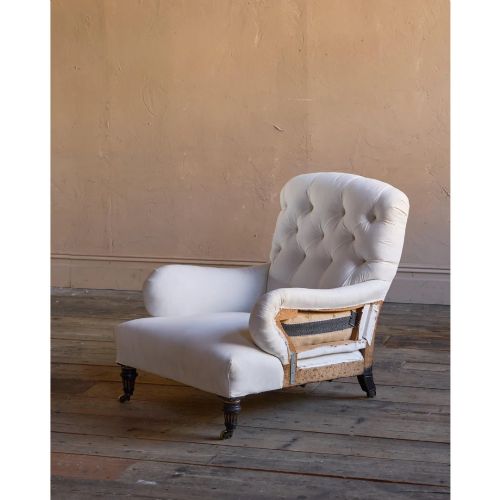
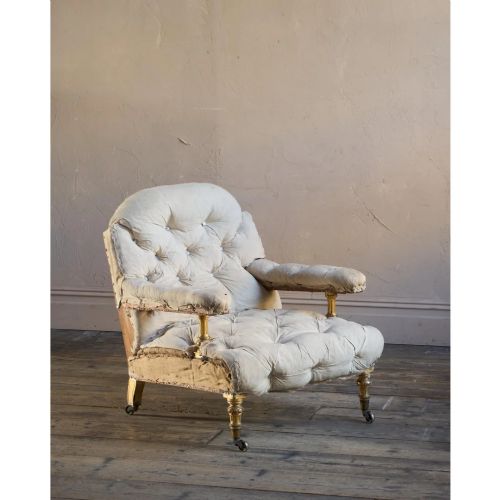
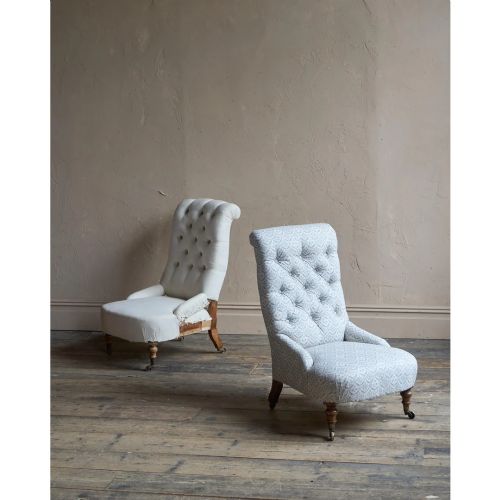
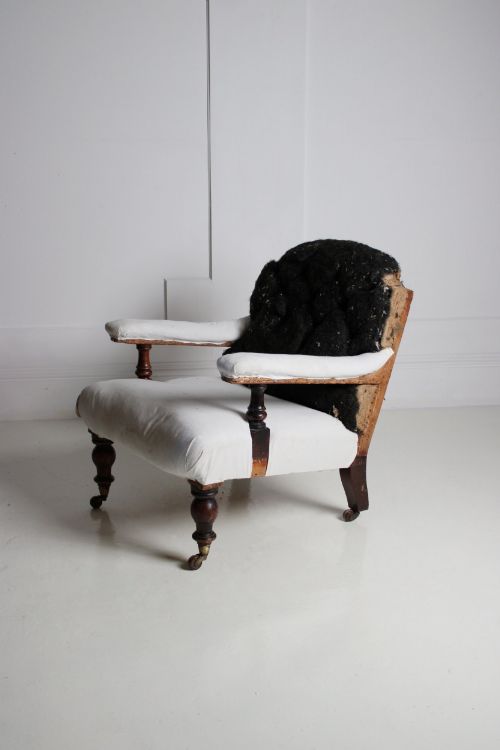


Calico Howard Armchair
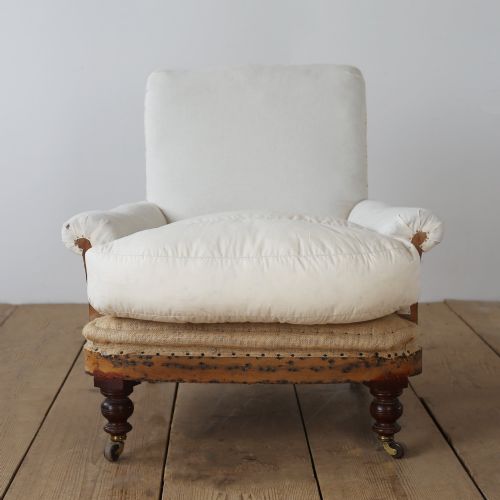
A calico howard armchair is a deeply comfortable low-slung seat upholstered in plain cotton, built for country houses and libraries.
Calico Howard Armchair
A calico howard armchair brings together nineteenth-century seating forms and sturdy internal padding designed for long hours of sitting. These low-slung easy chairs often appear from the Victorian and Edwardian eras, sometimes bearing maker stamps or taking the form of later style interpretations.
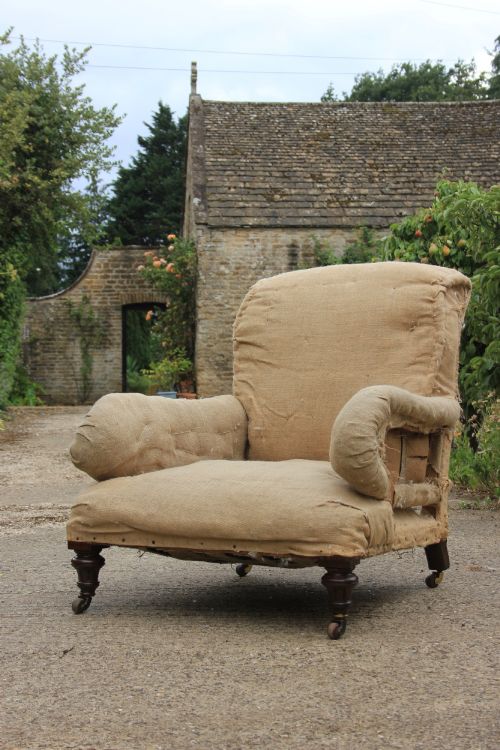
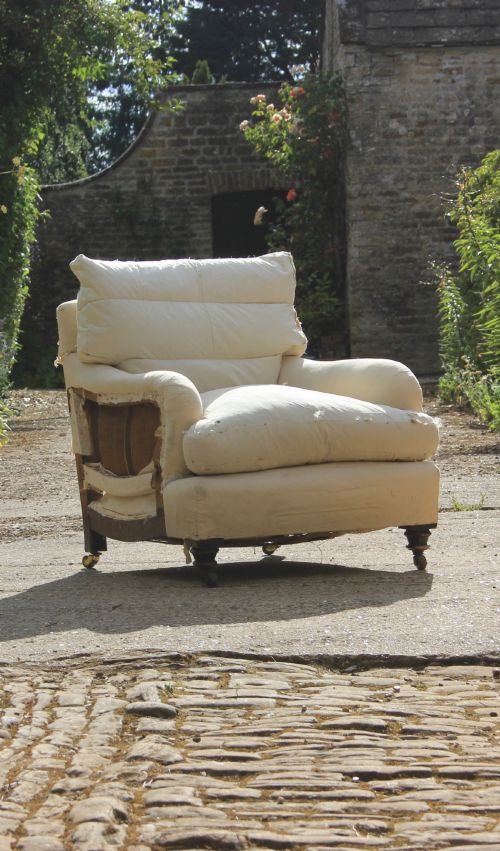
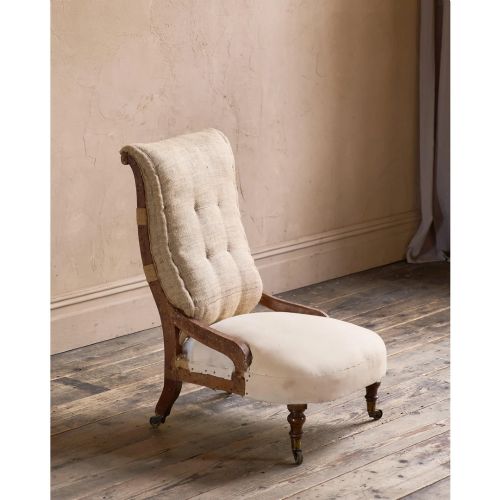
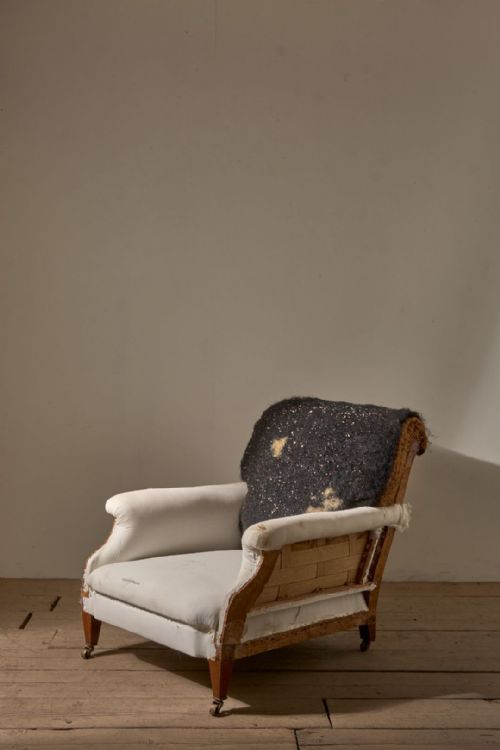
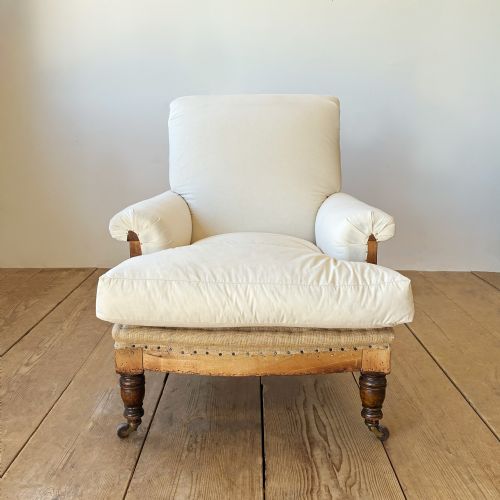
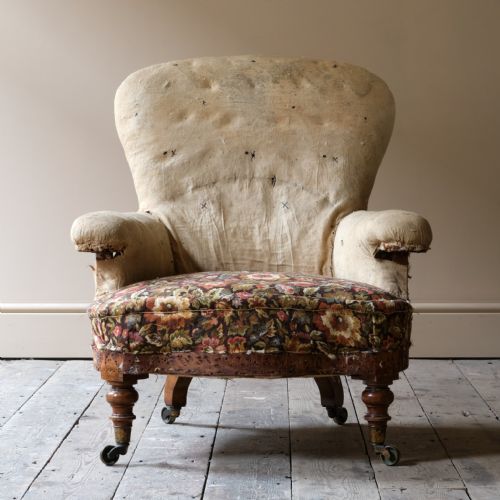
The pieces on this page span the nineteenth century up to the early twentieth century, taking shape as club armchairs, open armchairs, and generous country house seats. Most arrive upholstered in plain calico or hessian readiness for top covers, reflecting their original workshop supply state.
How they were made
Makers constructed the robust frames of these armchairs using dense timbers such as mahogany, walnut, and general hardwood. Turnings on the front supports often feature brass castors to aid movement across heavy carpets.
Traditional upholstery techniques layer hessian and calico over coiled spring systems to achieve the characteristic deep seat. Workers secured the taut calico covers directly to the frame using rows of iron tacks before final decorative fabric application.
Many of these sturdy armchairs spent generations tucked away in country house smoking rooms, quietly absorbing decades of good conversation.
What varies in quality
The distinction between workshop pieces rests on the weight of the timber frame and the complexity of the internal springing. Chairs bearing verified maker attribution command attention through precise joinery and superior steel coil deployment.
Proportion and stance separate standard nineteenth-century examples from truly grand country house editions. The rake of the back and the curve of the arms determine the visual balance of each seat.
Howard and Sons·SF Cullen·Trollope and Sons
The Calico Howard Armchair Glossary
- Calico
- A plain-woven unbleached cotton fabric used as the primary under-upholstery layer on traditional armchairs. It provides a tight, durable base before any decorative top fabric is applied.
- Hessian
- A coarse woven fabric made from jute fibres used extensively in Victorian upholstery for webbing and internal padding containment. It offers high tensile strength and breathability.
- Castor
- A small wheel mounted in a swivel fixture attached to the base of furniture legs. Brass versions appear frequently on nineteenth-century seating to facilitate easy movement.
- Club armchair
- A deeply proportioned low-seated armchair designed for relaxed lounging in libraries and smoking rooms. These pieces prioritise generous padding and supportive back angles.
Calico Howard Armchair: Frequently Asked Questions
What is a calico howard armchair?
A calico howard armchair is a heavily sprung nineteenth-century seating form traditionally supplied in plain cotton calico rather than finished upholstery.
These pieces were built by specialist makers and large cabinet firms for country houses, offering deep seats and low profiles.
Are these chairs comfortable to use?
These armchairs are engineered specifically for deep relaxation through intricate coil spring systems and generous padding. Their low seating position and angled backs make them suited for daily reading and sitting.
Original calico covers indicate the piece is structurally ready for final upholstery, though many remain robust enough for immediate use in period interiors.
How do I spot a Howard chair?
Authentic pieces often feature low rolled arms, turned hardwood legs with brass castors, and precise manufacturer stamps on the casters or frame webbing. Pieces built in the style capture these proportions without bearing the original maker marks.
Victorian and Edwardian iterations maintain a heavy, solid feel with distinct attention paid to the lumbar curve of the backrest.
What does calico upholstery mean?
Calico upholstery refers to the sturdy unbleached cotton layer stretched tightly over the internal springs and stuffing of a chair. It served as a foundation layer in Victorian workshops before customers chose their decorative top fabrics.
Finding a piece in calico allows modern owners to apply their own bespoke top material while preserving the historic internal build.