
Upholstered Wing Chair
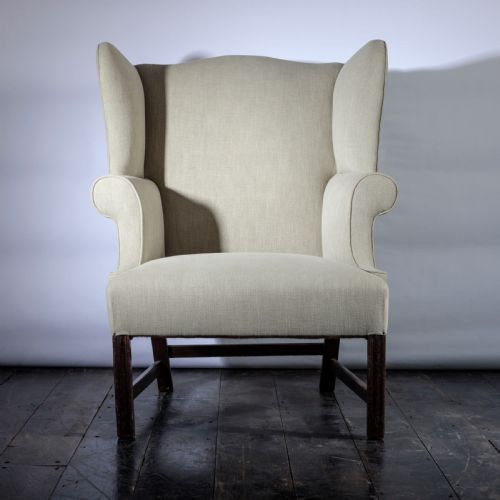
An upholstered wing chair wraps you in high-sided comfort, designed originally to shield the body from draughts while holding the heat of a hearth.

Upholstered Wing Chair
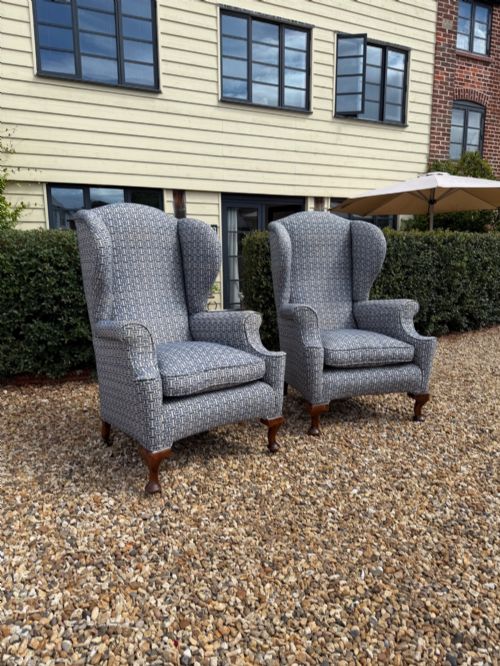
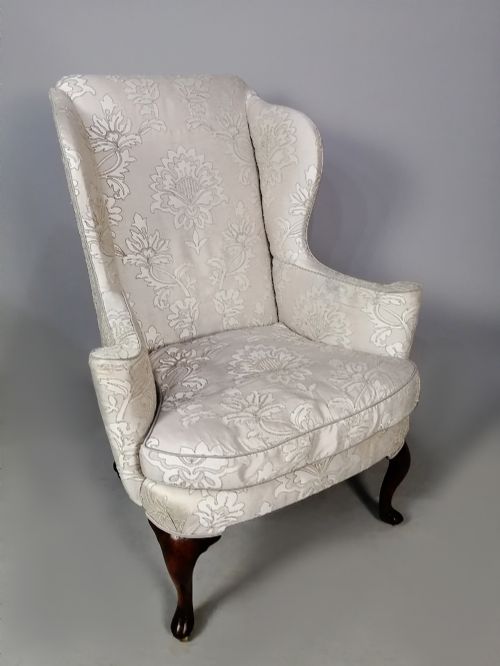
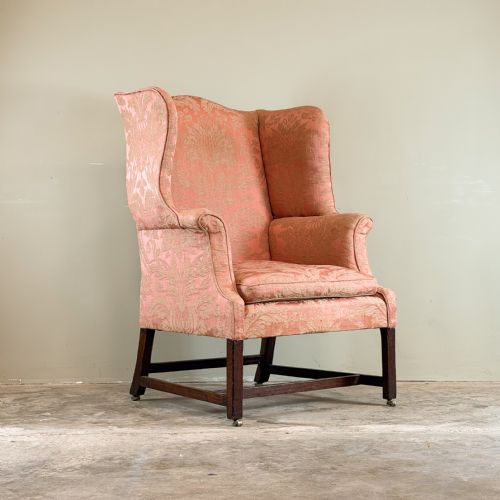
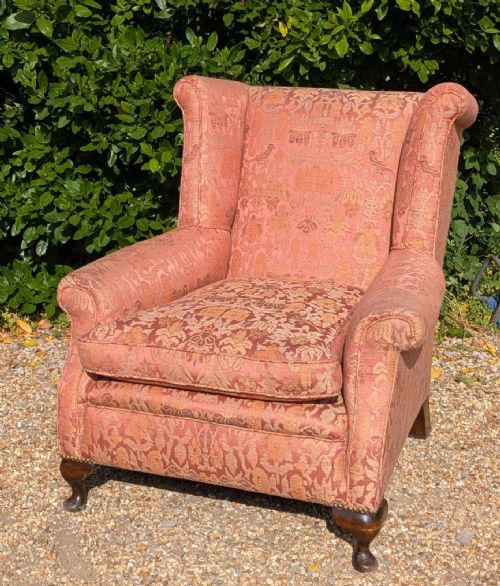
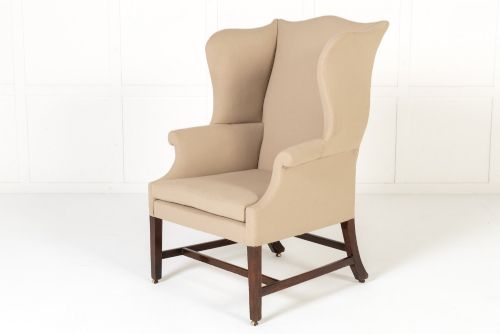
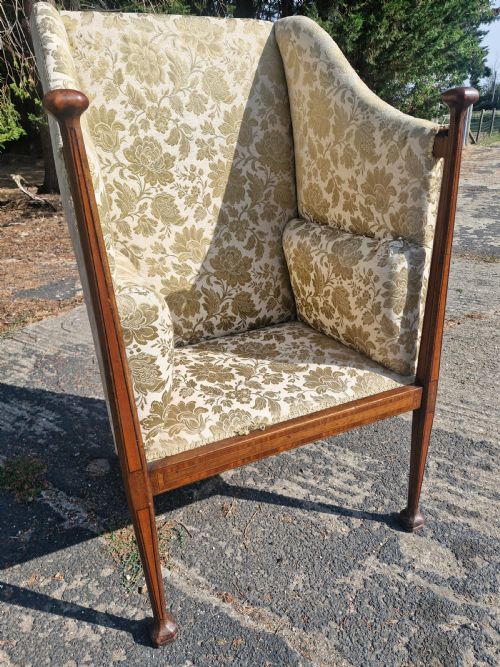
The search for an upholstered wing chair brings up substantial seating designed with protective side panels flanking the back. These pieces date across the eighteenth, nineteenth, and early twentieth centuries, appearing in Georgian, Victorian, and Edwardian guises.
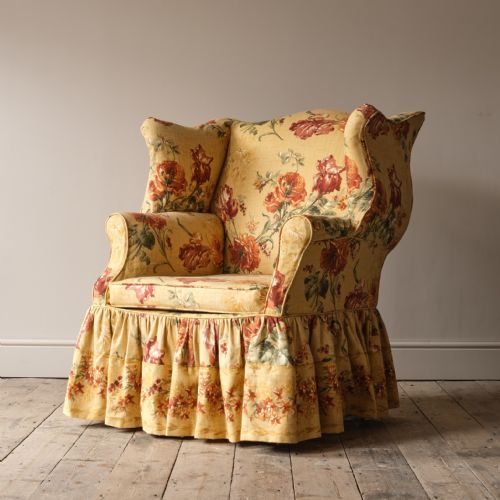
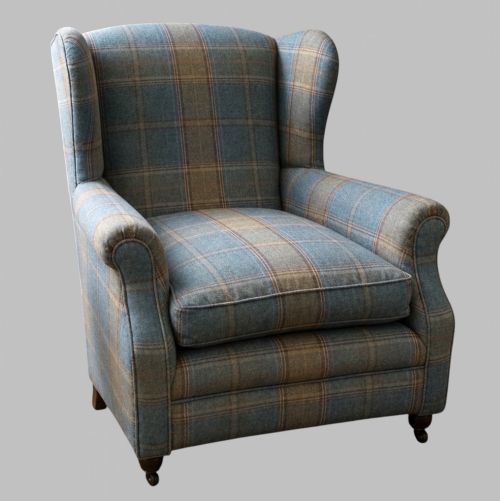
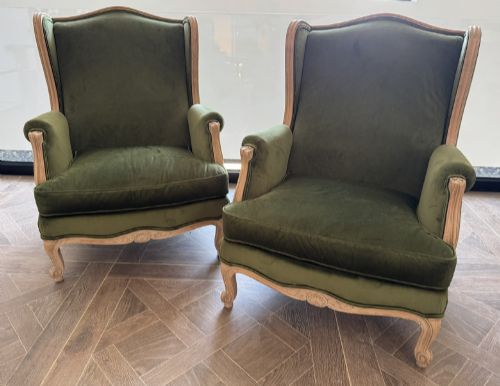
Most examples encountered here rest on timber frames of mahogany, walnut, or oak, often finished with textile coverings ranging from antique velvet and leather to modern patterned wool. Forms vary from standard high-backed library chairs to compact child-sized versions and barrel-backed variants.
Makers and designers from past centuries built these armchairs for drawing rooms, libraries, and country houses. They serve today as commanding focal points that offer deep, enclosed seating.
How they were made
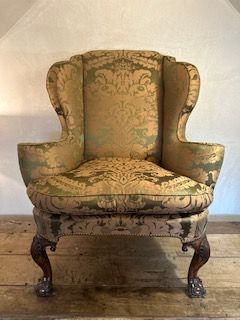
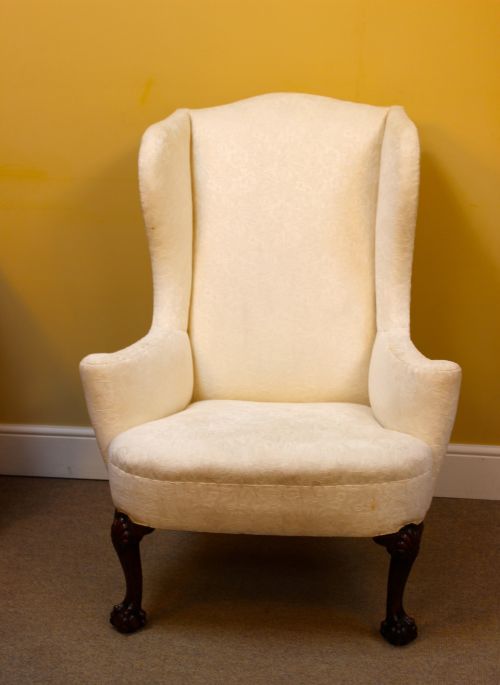
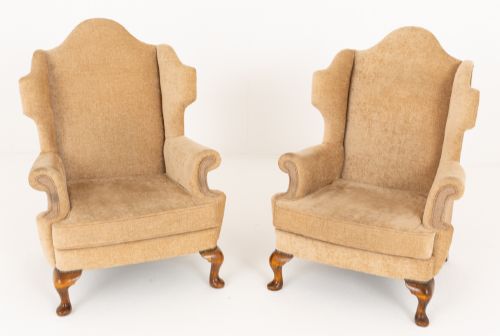
Traditional frames rely on solid hardwoods like mahogany and walnut, joined with pegged mortise and tenon construction to support heavy padding. Carved cabriole legs, ball and claw feet, or straight timber supports anchor the structural base underneath.
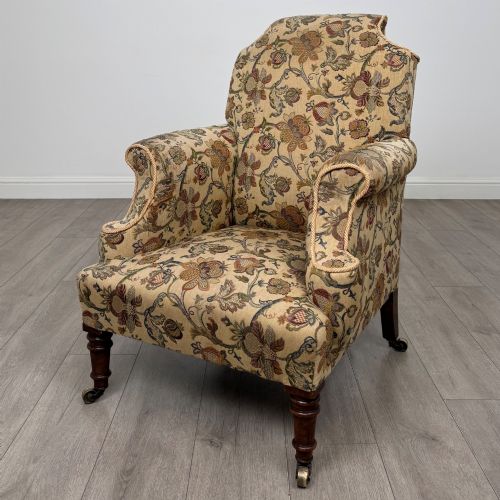
Upholstery techniques involve heavy textile or leather stretched over interior stuffing, historically secured with brass tacks. Feather filling and deep buttoning provide the characteristic resilience and sculpted shape of the inner shell.
Upholstered Wing Chair Retail Price Guide 2026
Typical asking prices for upholstered wing chair among the pieces listed under this phrase on Sellingantiques today, from the lower quarter to the upper quarter. They describe what is for sale here now, not the wider market.
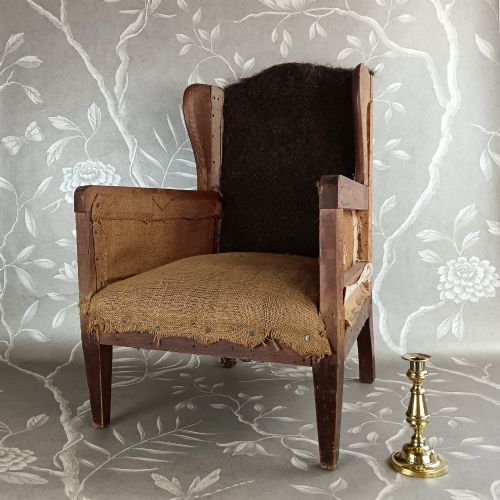
A tiny child-sized wingback chair waits quietly among the giants, built small for a tiny nineteenth-century room.
What varies in quality
The integrity of the underlying timber frame and the proportion of the wings dictate the foundational worth of each piece. Superior examples exhibit balanced curves, crisp carving on exposed mahogany or walnut legs, and robust internal stuffing.
The choice of covering alters the character significantly, with antique leather or high-grade period textile upholstery marking the upper tier of execution. Subtle details, such as precise brass nail placement and harmonious scale, separate standard workshop output from exceptional commissions.
Howard And Sons·Whytock And Reid
The Upholstered Wing Chair Glossary
- Wingback
- An armchair featuring protective side panels attached to the backrest designed to block cold air drafts.
- Cabriole leg
- A furniture leg that curves outward at the knee and tapers inward toward an ankle or foot, common in eighteenth-century designs.
- Ball and claw
- A furniture foot carved to resemble a bird's talon clutching a spherical ball, frequently seen on Georgian mahogany frames.
- Barrel back
- A semicircular chair design where the upholstered back flows continuously into the arms.
- Deep buttoning
- An upholstery method where tufting pulls the fabric inward in a diamond pattern using secured threads or buttons.
Upholstered Wing Chair: Frequently Asked Questions
What is a wing chair used for?
These seats were placed near firesides to shield the occupant from cold draughts while trapping warmth around the head and shoulders. They served as primary reading and resting chairs in grand libraries and drawing rooms.
Modern interiors utilise them as statement reading chairs or fireside seating, maintaining their traditional role of providing private, enclosed comfort.
How do I identify a Georgian wing chair?
Georgian examples typically feature rich mahogany or walnut frames with hand-carved cabriole legs, straight stretchers, or ball and claw feet. The proportions tend to be generous, with sweeping wings that flow naturally into the armrests.
Closer inspection of the internal timber construction and joinery reveals the eighteenth-century craftsmanship characteristic of this period.
Are these chairs comfortable for daily sitting?
Many antique models feature supportive feather filling and deep upholstery designed for prolonged sitting. Their enclosed backs provide natural head support and a sense of privacy.
Comfort levels vary depending on the firmness of the internal stuffing and the specific depth of the seat frame.
Can I reupholster an antique wing chair?
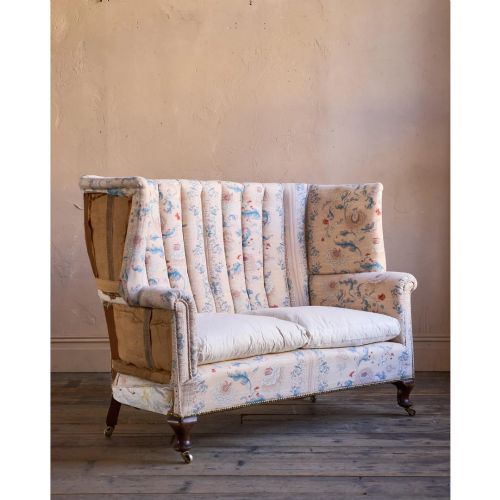
Reupholstering is a common practice for antique seating, allowing owners to choose new textiles like leather, velvet, or patterned wool. Many pieces in the archive are specifically sold ready for recovering.
Traditional methods and materials should be respected during restoration to preserve the structural integrity and historical value of the wooden frame.