
Traditional Leaf Table
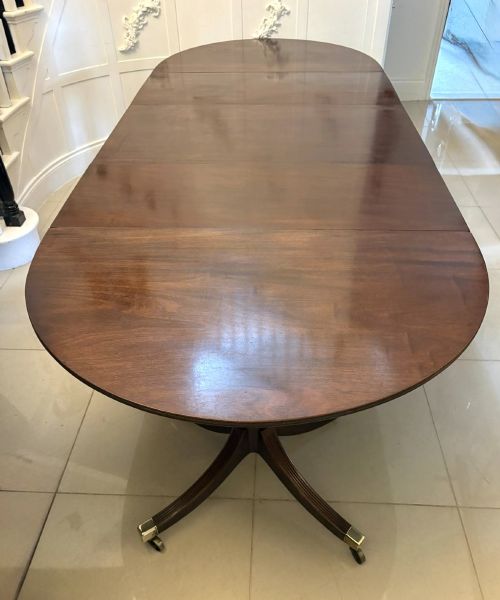
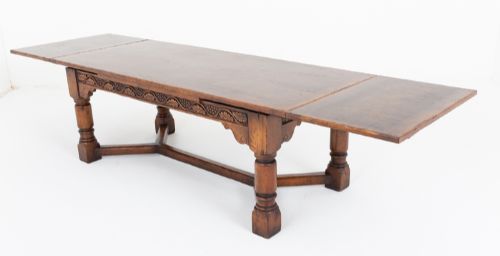
Traditional leaf table designs span sturdy oak refectory forms and grand mahogany banquet settings designed to expand for guests.
Traditional Leaf Table
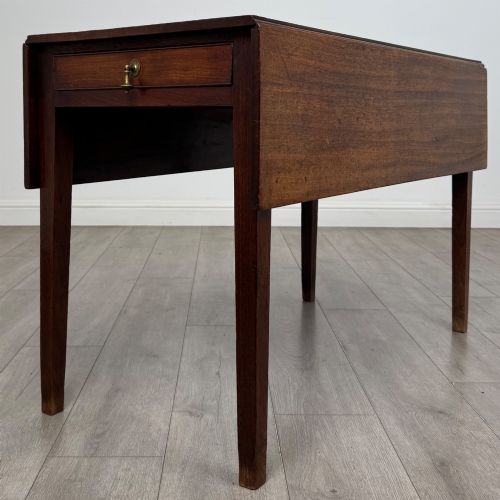
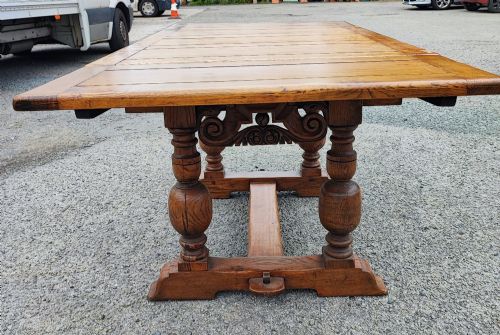
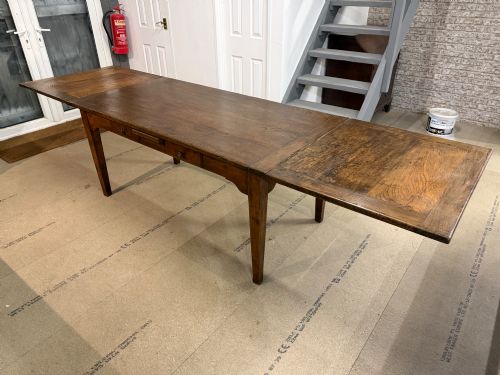
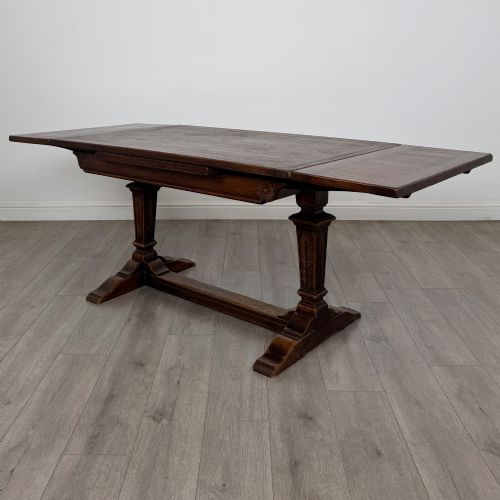
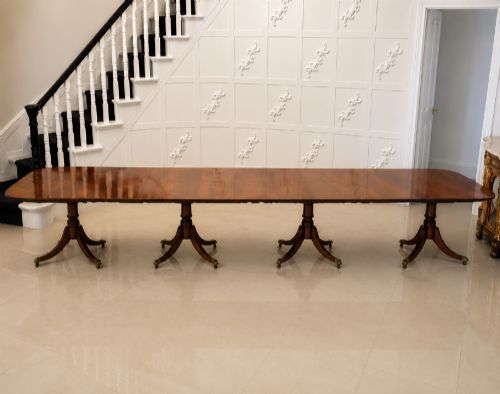
A traditional leaf table provides flexible dining space through clever drop leaves, gatelegs, or draw leaves that extend the surface when needed. These tables emerge primarily in oak and mahogany, spanning periods from the seventeenth century through the Edwardian era and the nineteen-twenties.
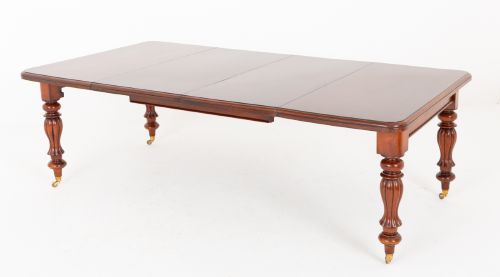
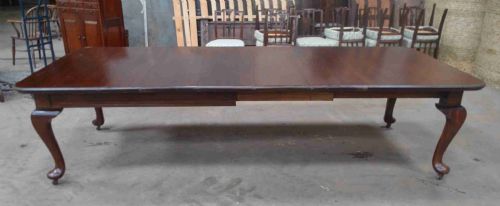
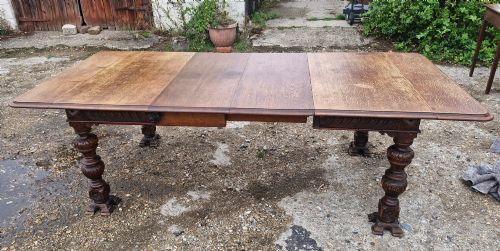
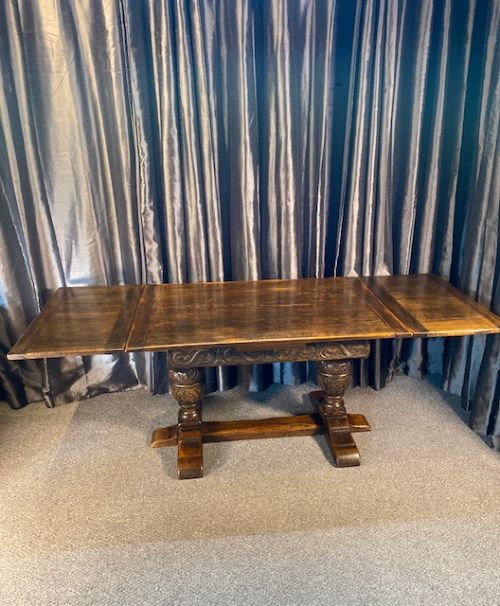
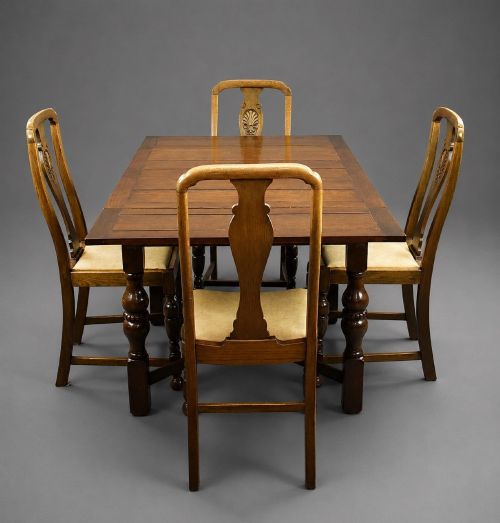
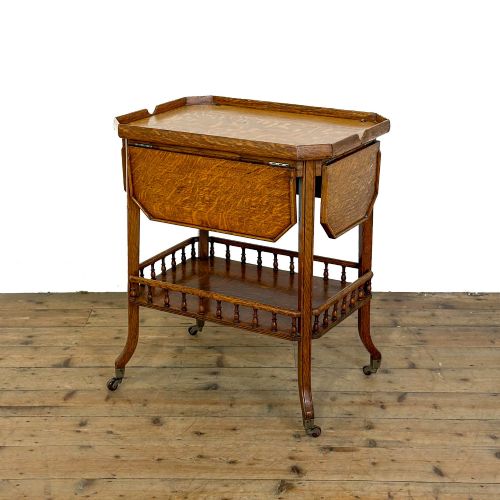
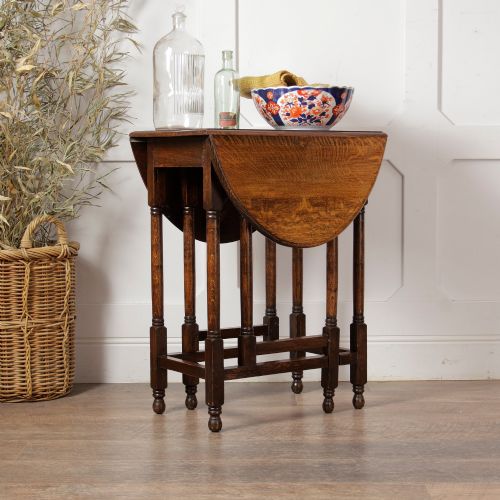
The most common examples on this page are oak draw leaf dining tables and mahogany extending tables. Buyers also encounter gateleg versions in honey oak or older timber, alongside occasional side tables and tea trolleys.
Materials and construction
Cabinet makers relied heavily on solid oak and figured mahogany, often pairing them with brass hinges and metal mechanisms to support moving leaves. Tables from the nineteenth century and earlier frequently employ hand-turned legs, barley twist supports, and pegged joints.
Surface finishes range from warm patinated wax on eighteenth-century oak to polished mahogany on Regency and Victorian pedestal dining sets.
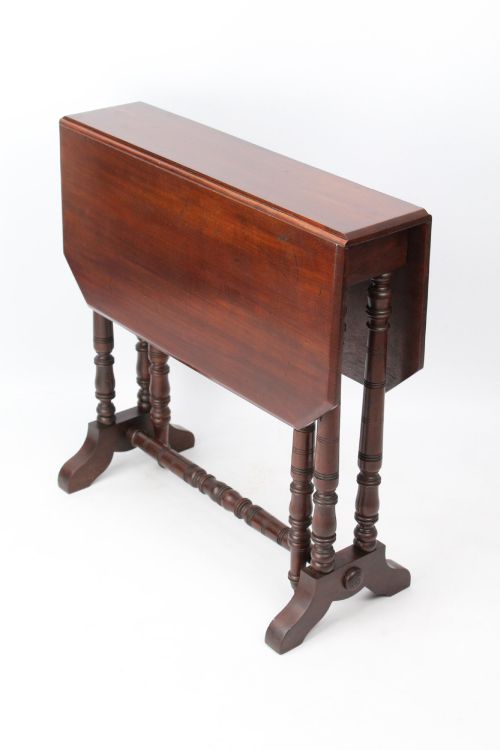
One remarkably tiny burr walnut Sutherland table proves that even the grandest dining furniture styles occasionally came in pocket-sized proportions.
What separates the best examples
Quality rests in the choice of timber, such as highly figured walnut or dense old-growth oak, and the precision of the extending mechanism. Superior tables maintain smooth leaf movement and robust structural joinery without excessive modern reinforcement.
The sophistication of carving and style execution, whether Jacobean Revival or Chippendale, distinguishes standard utility furniture from finer dining centrepieces.
The Traditional Leaf Table Glossary
- Draw leaf table
- A table with two hidden leaves stored beneath the main top that slide out to extend the surface length. This mechanism allows quick expansion without removing separate loose boards.
- Gateleg table
- A drop leaf table where the hinged legs swing outward like a gate to support the raised flaps. This design permits the table to fold down compactly when not in use.
- Refectory table
- A long, narrow dining table traditionally built with solid timber and sturdy stretcher rails beneath. These pieces originate from communal dining halls and heavy domestic use.
- D-End table
- A dining table featuring semi-circular ends that can separate or combine with central leaves to form a long oval or rectangular surface. Regency and Georgian makers favored this configuration for formal rooms.
- Sutherland table
- A narrow drop leaf table featuring exceptionally slender flaps supported by swinging gate legs. This Victorian form functions well as an occasional or tea table.
Traditional Leaf Table: Frequently Asked Questions
How do draw leaf tables work?
Draw leaf tables use concealed leaves positioned directly beneath the main surface. When pulled, these end leaves slide outward while the centre top drops slightly into place.
This mechanism creates a flat, extended surface without requiring separate boards to be stored elsewhere.
How do I care for antique oak and mahogany tables?
Historic timber surfaces respond best to regular dusting with a soft cloth and occasional applications of traditional beeswax. Avoid placing these tables near direct heat sources or strong sunlight.
Using coasters and mats protects the polished timber from moisture rings and heat marks.
How can I tell the period of a dining table?
Dating relies on examining the timber species, construction marks, hinge types, and stylistic details such as barley twist legs or pedestal bases. Seventeenth and eighteenth-century pieces often show hand-pegged joinery and warm patinated oak.
Later Victorian and Edwardian examples utilise factory-cut screws, metal runners, and different wood preparations.