




Vintage Pull Out Table
A vintage pull out table offers versatile surface space and clever extension mechanisms that suit both daily dining and larger gatherings.
Vintage Pull Out Table
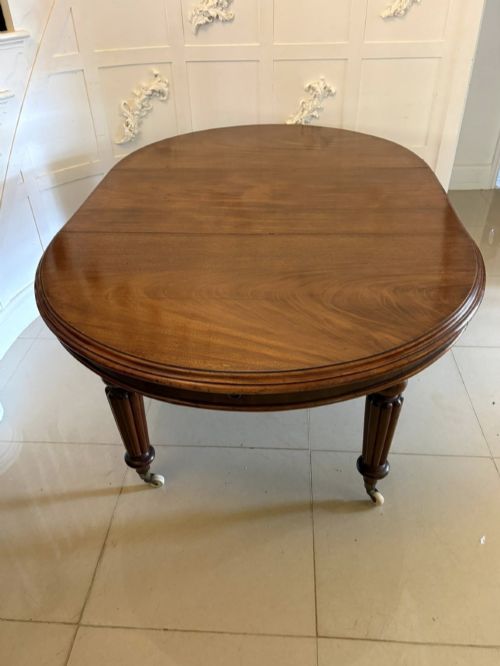
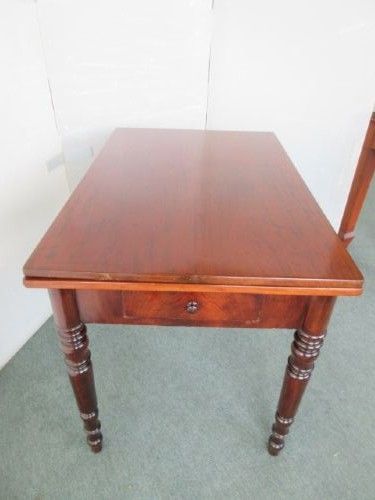
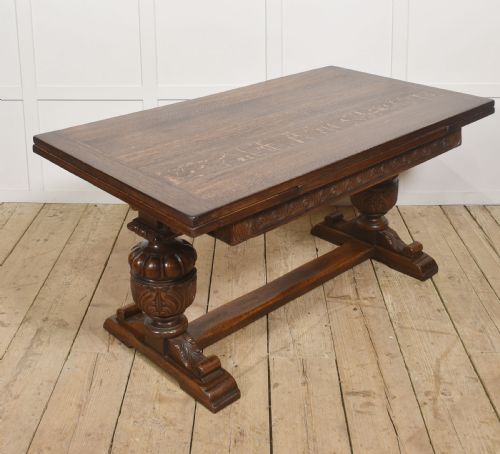
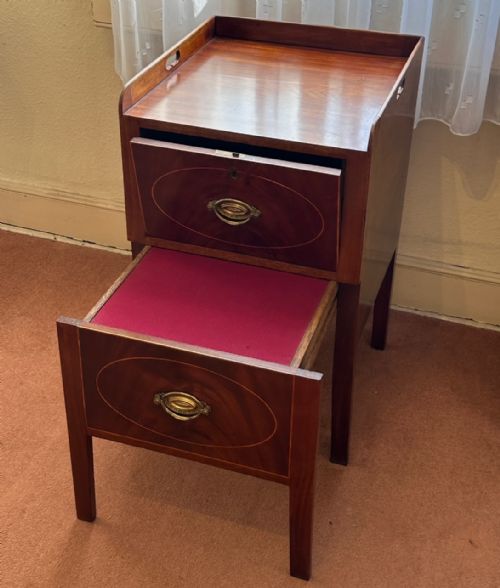
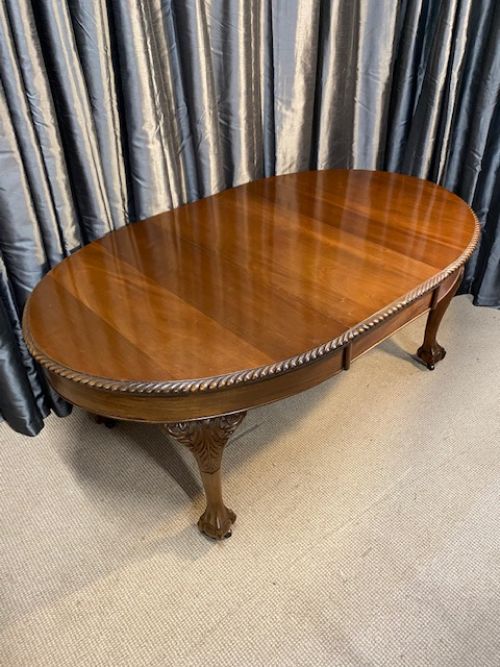
When you search for a vintage pull out table, you encounter practical items designed to expand when extra room is required. These pieces appear in forms such as dining tables, desks, and occasional tables.
The selection on this page relies upon historical periods ranging from the eighteenth century through to the early twentieth century. You meet styles spanning Georgian, Victorian, Regency, and rustic farmhouse designs.
Mahogany forms the primary material across these pieces, alongside oak, fruitwood, and occasional brass or ceramic hardware. The extending mechanisms vary from wind out systems to draw leaves and sliding writing surfaces.
How they were made
Cabinet makers utilised dense timbers such as mahogany and oak to construct sturdy frames capable of supporting mechanical extension systems. Joinery techniques ensured that sliding leaves and pull out leaves operated smoothly within the main structure.
Metal components like brass castors and ormolu mounts were integrated to aid mobility and provide decorative contrast against dark wood surfaces. Leather and ceramic details occasionally appear on desks and specialised tables as writing inserts or handles.
Listings feature mahogany predominantly, alongside oak, fruitwood, and leather, spanning the eighteenth to twentieth centuries.
What varies in quality
The sophistication of the extension mechanism dictates much of the distinction between standard and superior pieces. Smooth winding systems and well fitted extra leaves demonstrate advanced carpentry and careful maintenance over time.
Timber selection and surface finishing further separate ordinary examples from finer works. Rich grain patterns in mahogany or burr veneers, combined with restrained period carving, elevate the overall presence of the furniture.
Gillows
The Vintage Pull Out Table Glossary
- Extending table
- A table designed with internal mechanisms or removable leaves to increase its overall surface length. This feature allows the furniture to adapt easily for larger groups.
- Draw leaf table
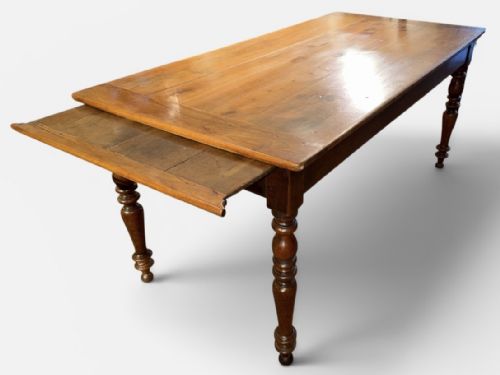
- A table equipped with underleaves that pull out from beneath the main top surface. These leaves slide smoothly into place when extra space is needed.
- Tambour top
- A flexible surface constructed from narrow strips of wood glued to canvas backing, allowing it to slide along a track. This technique conceals desk interiors efficiently.
- Ormolu
- Gilded bronze ornamentation applied to furniture for decorative effect. It was frequently utilised on French Empire style pieces to highlight architectural lines.
- Castor
- A small wheel attached to the base of table legs to facilitate movement. They are commonly cast in brass and mounted on nineteenth century dining tables.
Vintage Pull Out Table: Frequently Asked Questions
How do pull out dining tables work?
These tables utilise internal tracks, wind out handles, or sliding leaves hidden beneath the main surface. Operating the mechanism separates the top sections so that additional leaves drop or slide into place.
This design allows a compact daily table to expand comfortably for dinner parties without requiring permanent space in a dining room.
What woods were used for these tables?
Mahogany remains the dominant timber across the period pieces shown here, valued for its deep reddish tone and durability. Oak and fruitwood also appear frequently, particularly in farmhouse and rustic examples.
Finer versions sometimes incorporate burr veneers or decorative mounts in brass and ormolu to enhance the visual appeal of the woodwork.
Where were pull out desks used?
Pull out desks and architects tables served as functional workspaces in libraries, studies, and drawing rooms. The pull out slides provided immediate auxiliary surface area for maps, paperwork, or writing instruments.
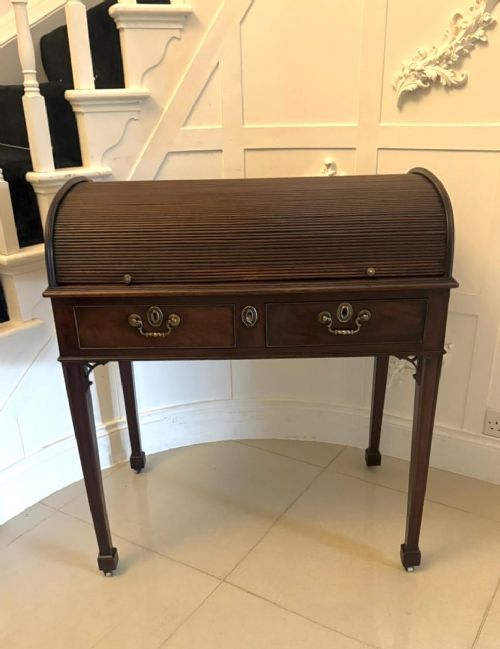
Compact forms such as cylinder desks kept working materials concealed when not in use, maintaining a tidy room appearance.
How do I care for antique wood surfaces?
Maintaining these wooden surfaces involves regular dusting with a soft cloth and avoiding placement near direct heat sources or strong sunlight. Periodic application of appropriate wax helps preserve the sheen and protects the grain.
Keeping leather writing inserts clean and avoiding excessive moisture on joints ensures the extension mechanisms continue to function smoothly.