



Traditional Highland Landscape
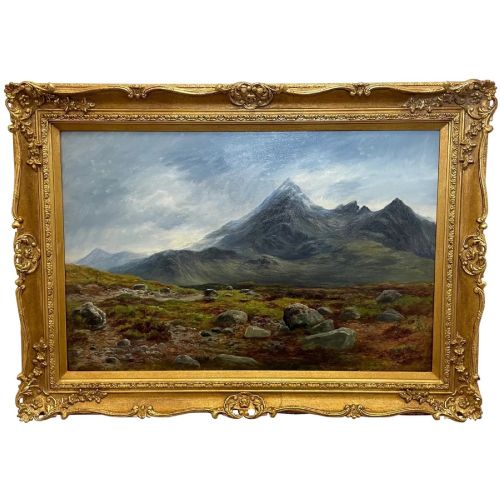
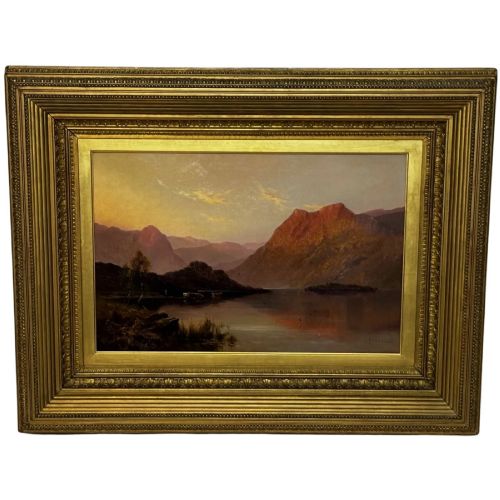
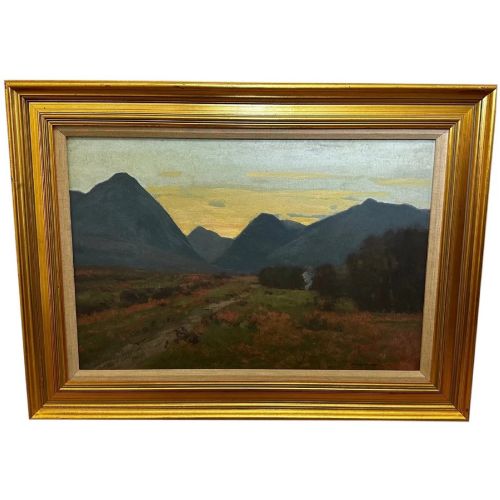
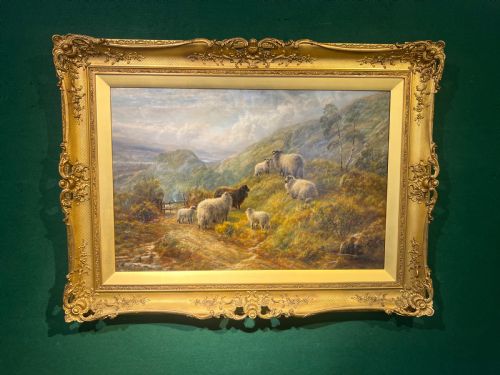
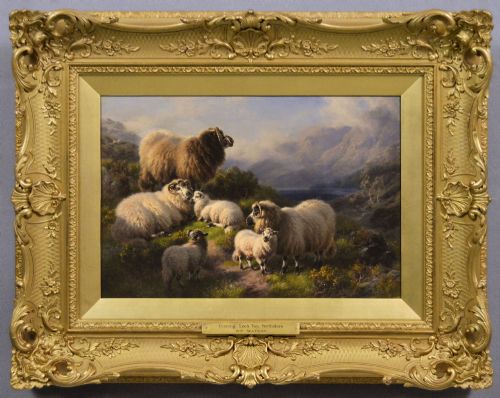
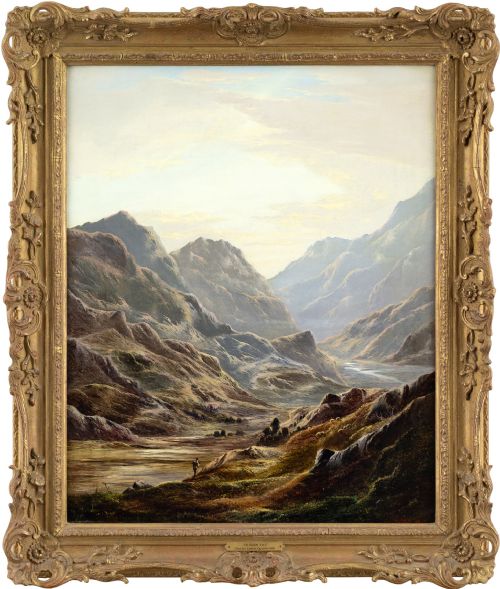
A traditional highland landscape brings the sweep of northern terrain and quiet lochs directly onto the wall through nineteenth-century and early twentieth-century oil paintings.
Traditional Highland Landscape
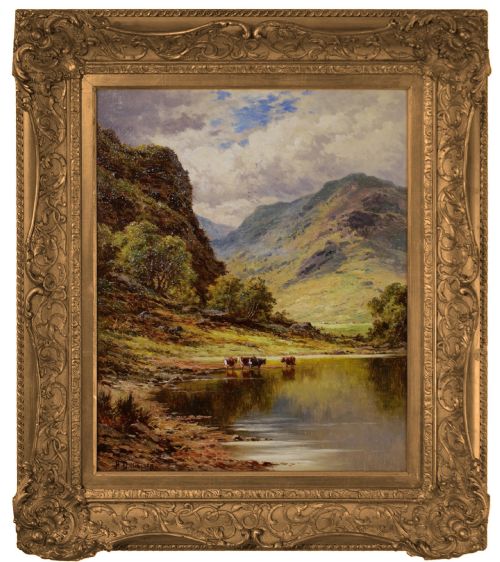
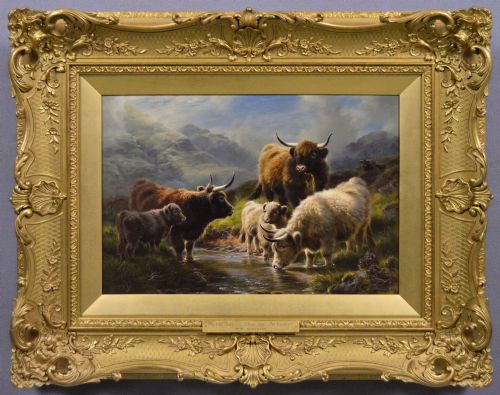
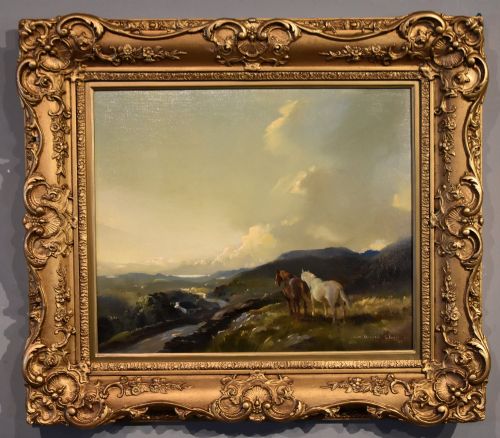
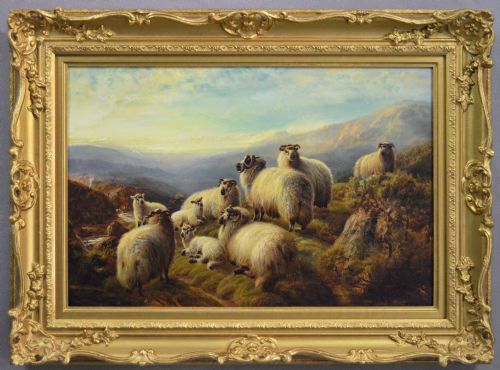
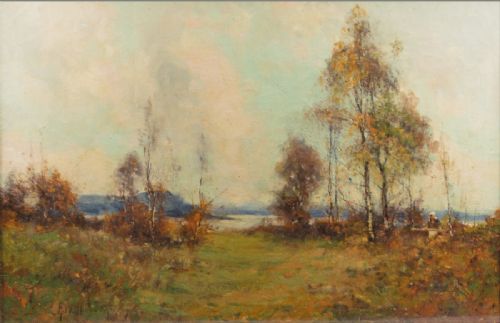
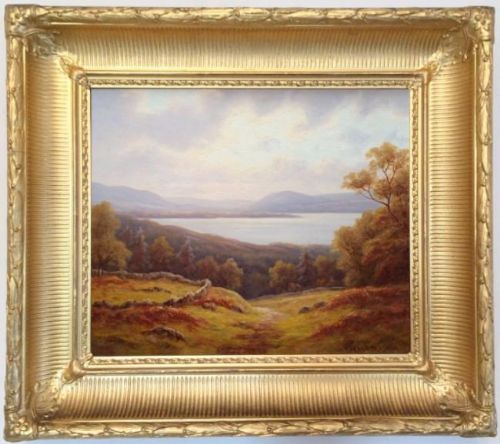
When searching for a traditional highland landscape, a buyer encounters oil paintings that capture rural scenes across Scotland, featuring rugged mountains, tranquil lochs, and native livestock.
The versions most commonly met on this page date from the Victorian period through to the early twentieth century, rendered by artists working within the Scottish School and British Realism.
These canvases often depict specific geographic points of interest, such as Loch Tay, Glen Tilt, and the Isle of Arran, alongside rustic bothies and grazing sheep or highland cattle.
Materials and Methods
The works recorded here rely predominantly on oil paint applied to canvas, wood panels, or boards, capturing the atmospheric light and mist of northern topography.
Many of these oil paintings sit within period giltwood or gesso frames that complement the depth and tonal range of the pigments used by the artists.
Listings feature works spanning from the eighteenth century to the mid-twentieth century, executed primarily in oil on canvas and wood panel.
Distinctions in Execution
Quality separates through the artist's handling of atmospheric light, cloud formations, and water reflections, which dictate whether a canvas feels flat or genuinely expansive.
The precise rendering of animal anatomy and human figures within the wider topography distinguishes accomplished academic works from more formulaic studio output.
William Beattie-Brown·Tom Campbell·Alfred Fontville de Breanski Jr·George Houston·Henry H. Parker·Robert Watson·William Watson Jnr·Charles Leslie·Vernon DeBeauvoir Ward·Alexander Wellwood Rattray·Everett Watson Mellor·Archibald Kay·Henry Robinson Hall·William Henry Mander·Henry Hillier Parker·William Grant Murray·James Bell Anderson·Sidney Yates Johnson·John Charles Tunnard·Charles Jones·Nasmyth·George Melvin Rennie·George Turner·John W Morris·Alfred de Breanski Snr
The Traditional Highland Landscape Glossary
- Oil on Canvas
- A traditional painting medium where oil-based pigments are applied to a woven fabric support stretched over a wooden frame. This combination allows for rich blending and textured brushwork.
- Giltwood
- Wood carved and coated with gold leaf or a gold-coloured finish to form decorative picture frames. It provides a warm, reflective border suited to nineteenth-century works.
- Gesso
- A plaster-like mixture applied to wood panels or frames as a smooth base for painting or gilding. It creates a stable surface that accepts fine detail.
- Scottish School
- A collective term for artists working in Scotland who developed distinct regional approaches to landscape and portraiture. Their output spans realism and early impressionist tendencies.
- Wood Panel
- A rigid flat wooden support used instead of canvas for painting. It offers a firm surface favoured by artists working on smaller or more detailed compositions.
Traditional Highland Landscape: Frequently Asked Questions
What periods do these paintings cover?
The selection spans the nineteenth century and the early decades of the twentieth century. Many date from the Victorian era.
Artists during this timeframe recorded both wild terrain and pastoral scenes with livestock.
Where were these scenes usually painted?
The compositions focus on northern geography, including lochs, glens, and mountain ranges across Scotland and the Lake District.
Specific locations noted in the titles include Loch Tay, Glen Tilt, and Ben Lawers.
What subjects appear besides scenery?
Animals frequently share the canvas with the topography, particularly highland cattle, sheep, and sport dogs. Figures engaged in rural tasks also feature.
These elements introduce a sense of scale and human habitation to the wild settings.