





Rustic Cottage Oil Painting
A rustic cottage oil painting brings the quiet charm of rural life and traditional domestic scenes into a room.
Rustic Cottage Oil Painting
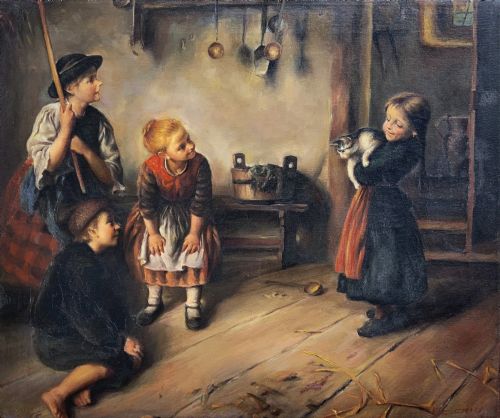
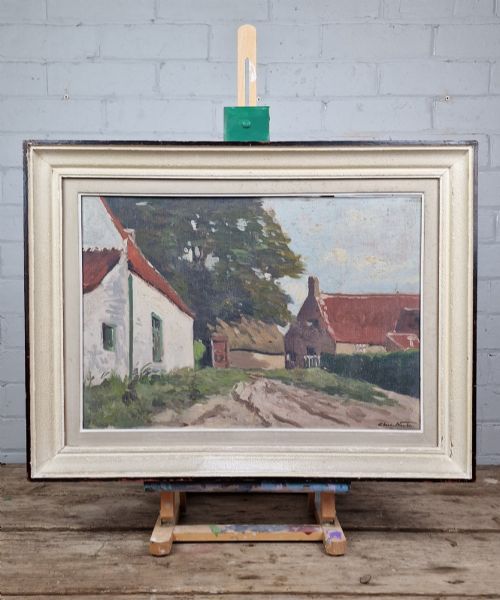
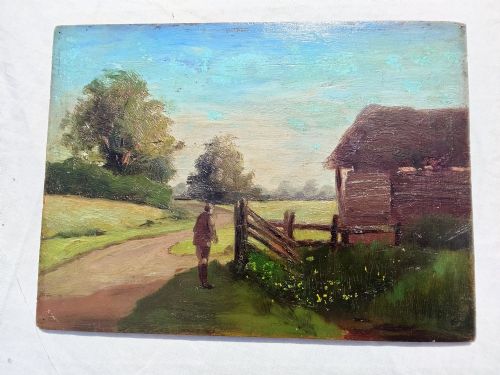
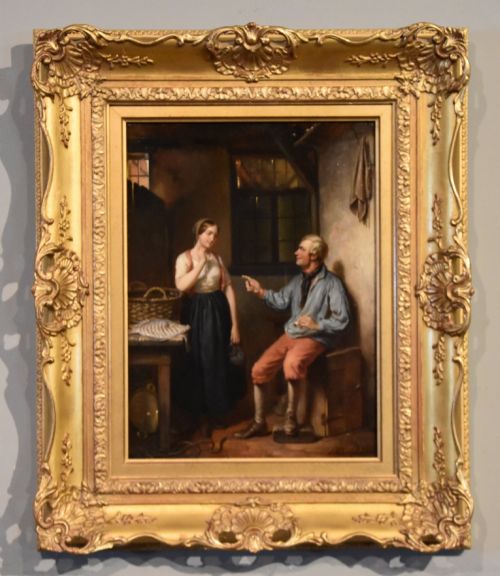
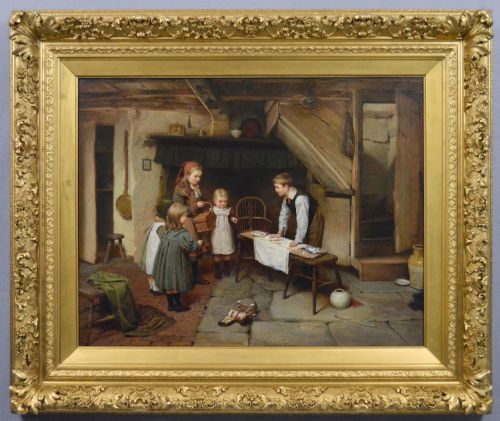
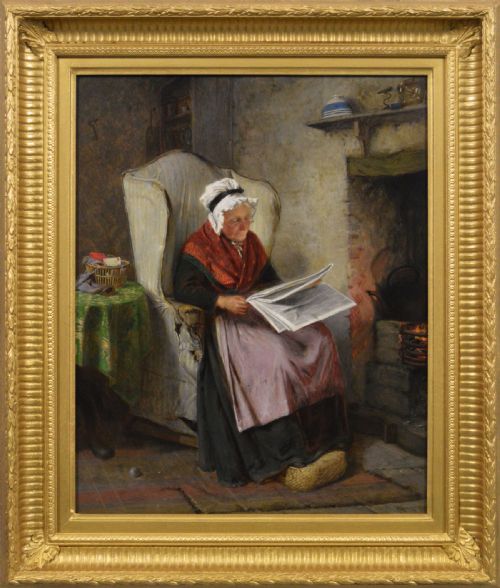
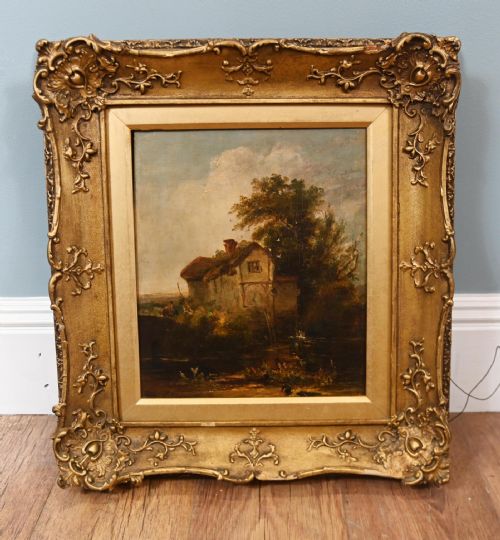
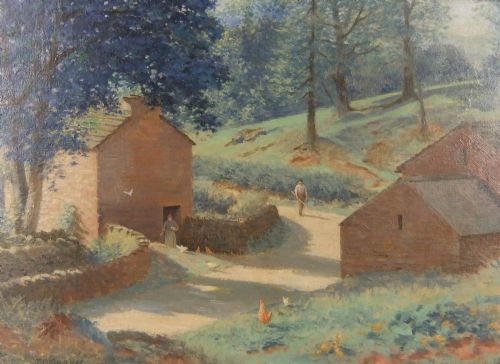
A rustic cottage oil painting captures rural dwellings, country lanes, and domestic scenes from centuries past. These works frequently depict figures engaged in daily tasks like spinning wool, tending hearths, or gathering outside thatched farmhouses. You will encounter nineteenth-century canvases alongside twentieth-century interpretations showing both English and continental European country life.
The selections range from detailed genre paintings featuring families and animals inside rustic interiors to broader landscapes dominated by remote bothies and village streets. The subjects offer a window into traditional rural occupations and domestic routines recorded by regional schools and individual artists. Many pieces emphasise the quiet atmosphere of the countryside through deliberate handling of light and shadow.
Victorian narrative works and British Impressionist interpretations form the core of what appears in this category. Painters such as Harry Brooker, Haynes King, and Charles Hunt Jnr specialised in intimate cottage interiors filled with human activity and domestic animals. Other examples turn toward broader landscapes by figures like Abraham Hulk Junior and Joseph Thors, balancing architecture with natural surroundings.
How they were made
These works rely primarily on oil paint applied to stretched canvas, wooden panels, or boards prepared with gesso grounds. The medium allowed artists to build rich textures and deep tones, particularly when depicting shadowed cottage interiors or illuminated hearths. Gilding and carved wood frames often complete the presentation of these historic paintings.
Techniques range from the fine brushwork of Victorian genre scenes to the looser application found in Post-Impressionist and British Impressionist pieces. Artists utilised chiaroscuro effects to draw focus toward figures working near windows or fireplaces inside humble rural dwellings. Support materials evolved from early wooden panels to standard canvas formats as the nineteenth century progressed.
Keep an eye out for hidden pets; many cottage interiors secretly pack a dog, a couple of pigs, and a stray guinea pig into the corner.
What varies in quality
The strength of a composition and the handling of light distinguish exceptional works from standard decorative pieces. Master painters manipulated tone and colour to create genuine depth within confined cottage interiors, whereas lesser works rely on flat planes and rigid perspectives.
Detail in narrative elements, such as facial expressions and the rendering of textiles or animals, indicates the skill of the artist. Works by established regional schools or documented painters demonstrate a firmer grasp of anatomical proportion and atmospheric perspective than anonymous folk art.
Charles Houben·Jacob Akkersdijk·Harry Brooker·Haynes King·James Kyd·Charles Vickers·Abraham Hulk Junior·Ernest Higgins Rigg·T.B. Garvie·William Greaves·James Ward·George Morland·Henry Singleton·Alfred Provis·Jonathan Pratt·Charles Hunt Jnr·John F. Pasmore·Georgina Lara·Joseph Paul·Kershaw Schofield·Amédée Degreef·Joseph Thors·Enoch Crosland·William J.J.C. Bond
The Rustic Cottage Oil Painting Glossary
- Genre painting
- A style that depicts aspects of everyday life by portraying ordinary people occupied in common activities. These scenes often take place inside rustic cottages or village streets.
- Chiaroscuro
- An artistic technique using strong contrasts between light and dark to give a sense of volume to figures and objects. This method frequently defines domestic interior scenes.
- Oil on panel
- A painting executed on a flat wooden support rather than stretched fabric. This base was common in earlier works before canvas became the dominant medium.
- Gesso
- A plaster-like mixture applied as a ground to canvas or wood panels before painting. It provides a stable and smooth surface for the application of oil pigments.
- English School
- A loose term used to classify artists trained or working primarily in England during specific historical periods. It encompasses various regional landscape and genre traditions.
Rustic Cottage Oil Painting: Frequently Asked Questions
What is a genre oil painting?
A genre oil painting depicts scenes from everyday life, usually featuring ordinary people in domestic or rural settings. These works focus on human activities rather than grand historical or mythological subjects.
In the context of rural art, they often show cottage interiors with families working, spinning, or gathering by the hearth. This approach provides a record of traditional ways of living and domestic labour.
How do I identify a Victorian cottage painting?
Victorian cottage paintings typically date from the nineteenth century and emphasise narrative detail, sentiment, and realistic depiction of interiors. They frequently feature story-driven subjects involving family life, children, and farm animals.
Artists from this era often utilised careful brushwork to highlight textures like homespun wool, wooden furniture, and thatched roofs. Signatures, framing styles, and canvas stamps can also help narrow down the period.
What is the difference between canvas and panel?
Canvas consists of woven fabric stretched over a wooden frame, offering a flexible surface that became standard for most professional painters by the nineteenth century. Wooden panels provide a rigid, solid support that was common in earlier works and specific regional traditions.
Panel paintings tend to have a smooth surface without the texture of a textile weave. Both materials were widely used for rural scenes depending on the preference of the artist and the date of creation.
How should I care for an antique oil painting?
Antique oil paintings require stable environmental conditions away from direct sunlight, excessive heat, and high humidity. Keeping them out of fluctuating temperatures prevents the canvas or wooden panel from warping and the paint layers from cracking.
Dust should be removed gently with a soft, dry brush without applying pressure to the surface. Professional conservation should be sought if cleaning or canvas repair becomes necessary.