

English School Landscape
An English school landscape brings the quiet rural charm of past centuries straight into a room through historic oils and watercolours.
What They Are
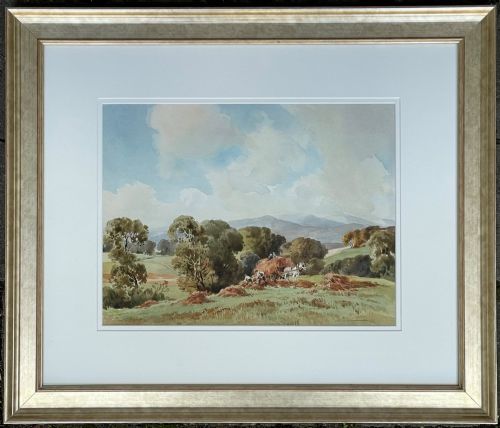
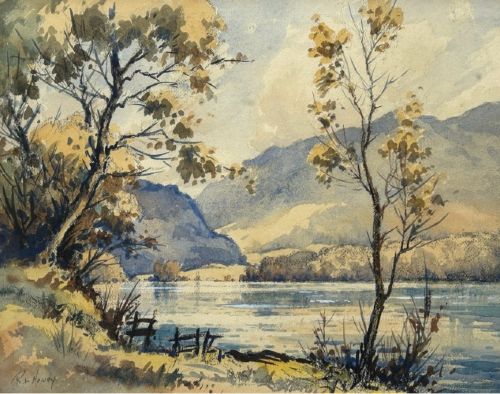
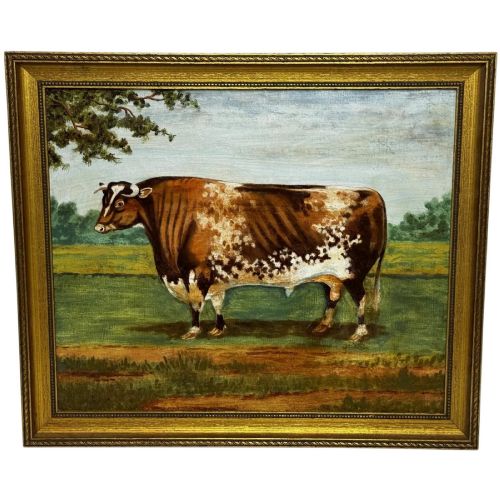
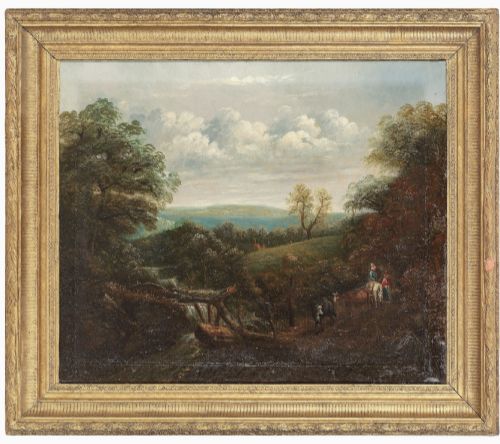
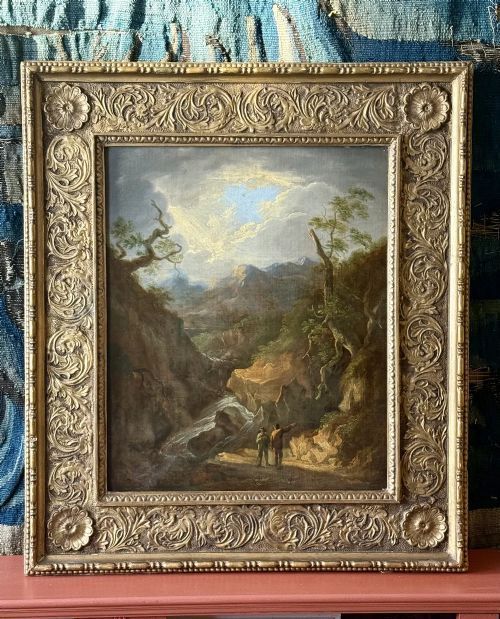
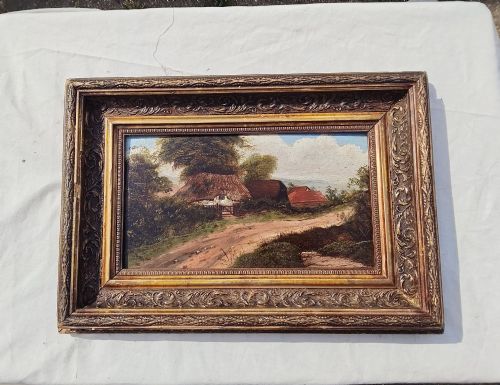
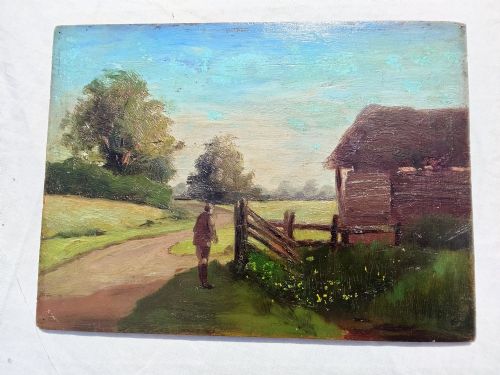
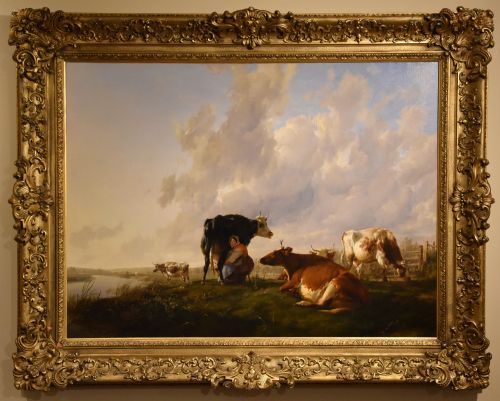
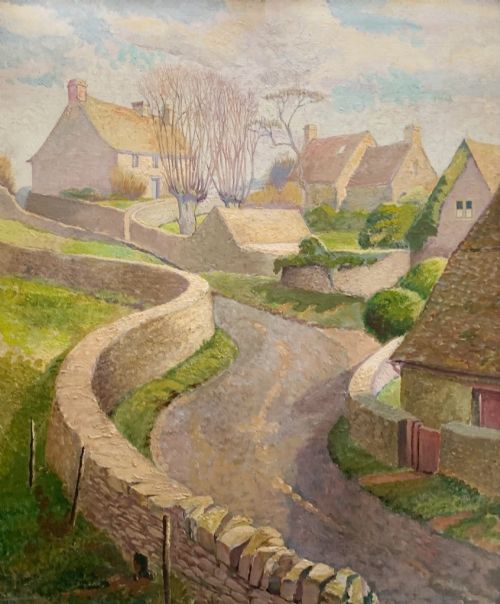
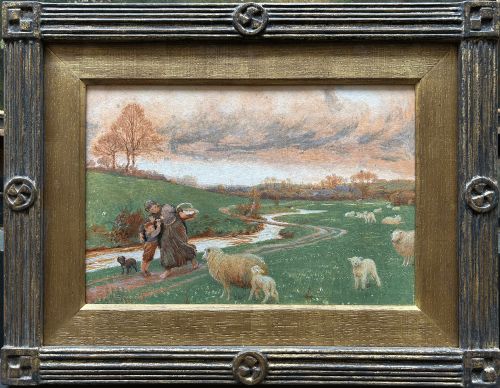
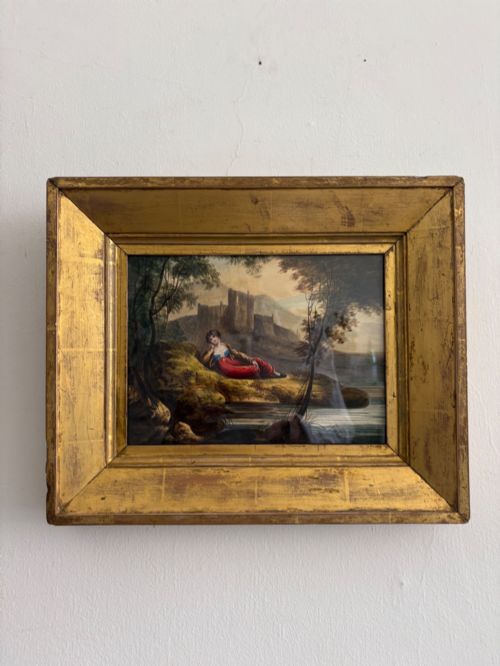
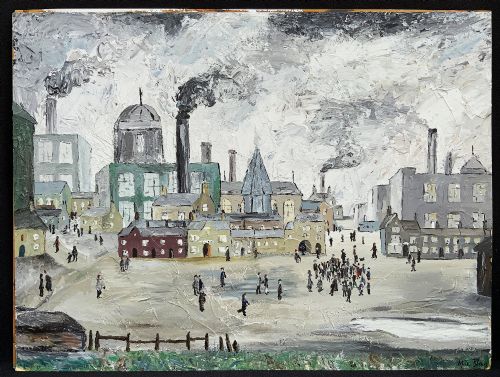
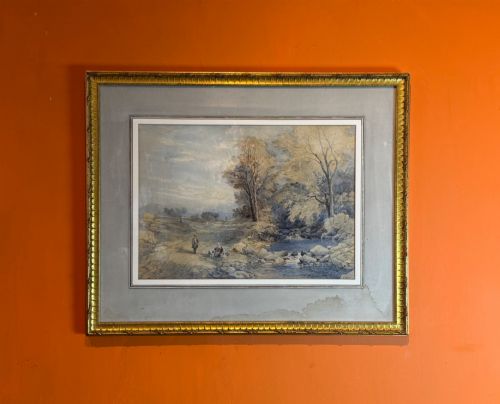
When searching for an English school landscape, collectors look at historic works depicting rural idyls, castles, cottages, rivers, and coastal scenes. These pieces capture the changing face of the countryside, often featuring figures, cattle, or farm buildings integrated into pastoral settings.
The versions most frequently met on this page date from the 18th, 19th, and early 20th centuries, reflecting Georgian, Victorian, and Edwardian periods. They span various formats, from intimate watercolours on paper to substantial oil paintings on canvas, wood panel, cardboard, and board.
How They Were Made
Artists painted using oil or watercolour mediums, applying pigment to prepared surfaces such as stretched canvas, wooden boards, oak panels, cardboard, and paper. These materials dictate the texture and preservation of each composition.
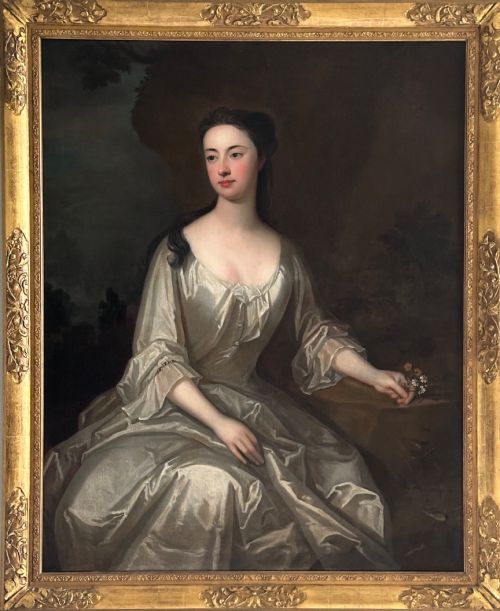
Many surviving works retain their period frames constructed from wood and giltwood, complementing the painted scenes with traditional decorative mouldings.
Retail Price Guide 2026
Typical UK retail prices for english school landscape, calculated from the Sellingantiques database of over a million retail prices indexed since 2003. This retail price guide relies exclusively on Sellingantiques data; no external sources or auction records are used, so the figures do not describe the wider market.
Surviving supports include canvas, oak panels, cardboard, and paper, frequently housed within period giltwood frames.
What Varies in Quality
Quality rests in the handling of light, atmospheric depth, and the naturalistic rendering of figures and animals within the topography. Stronger compositions command attention through confident brushwork and balanced perspective.
The integrity of the original support surface and the preservation of the pigment layers distinguish superior examples from heavily restored or faded works.
David Cox Jnr·John Cawthorn·Majorie Hoare·J Morris·F W Jackson·Thomas Sidney Cooper
The English School Landscape Glossary
- Oil Paint
- A slow-drying paint made by mixing pigments with oils such as linseed, allowing for rich colour blending and textured impasto.
- Watercolour
- A paint consisting of water-soluble pigments used on paper to create transparent washes of colour and delicate light effects.
- Giltwood
- Wood carved and coated with gold leaf or a gold-coloured metallic finish, commonly used for traditional picture frames.
- English School
- A classification for works produced by artists trained or working in England, often without a designated individual master.
- Georgian Romanticism
- An artistic movement focusing on emotion, awe of nature, and picturesque rural or ruined subjects during the Georgian era.
Frequently Asked Questions
What is an English school landscape?
It is a painting or watercolour created by an artist trained or working in England, depicting countryside scenes, rivers, cottages, or coastal views.
These works date predominantly from the Georgian, Victorian, and early 20th-century periods.
How do I know the age of a painting?
Age is indicated by the materials used, such as early canvas supports, wooden boards, and period giltwood frames.
Stylistic elements and historical clothing on figures also help narrow down the period to the 18th or 19th century.
Were these painted outdoors?
Some watercolours and oil sketches were produced directly in the open air to capture natural light and local topography.
Larger finished canvases were typically developed in studios using preliminary sketches and studies.
How should I frame these artworks?
Historic watercolours require careful framing behind glass with acid-free mounts to protect the paper from humidity and light damage.
Oil paintings on canvas or board are best housed in traditional wooden or gilt frames that allow the surface to breathe.