



Framed Cattle Artwork
Framed cattle artwork captures rural scenes of pastoral life, offering buyers authentic pastoral paintings from the nineteenth and early twentieth centuries.
Framed Cattle Artwork
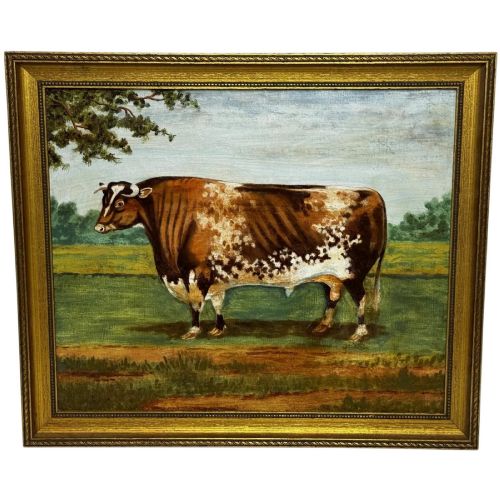
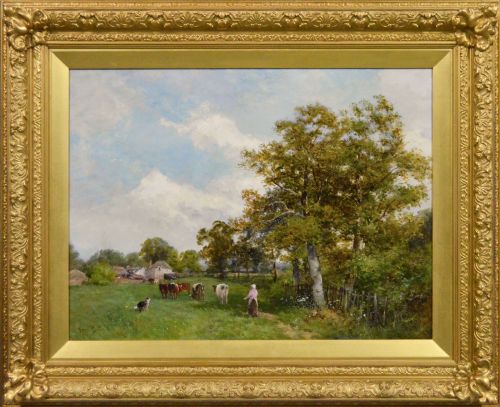
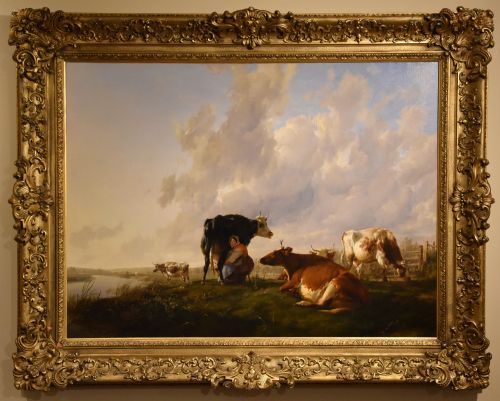
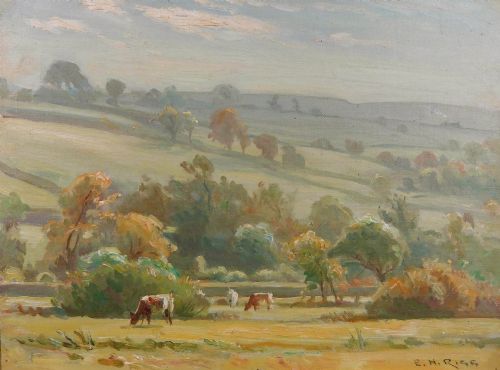
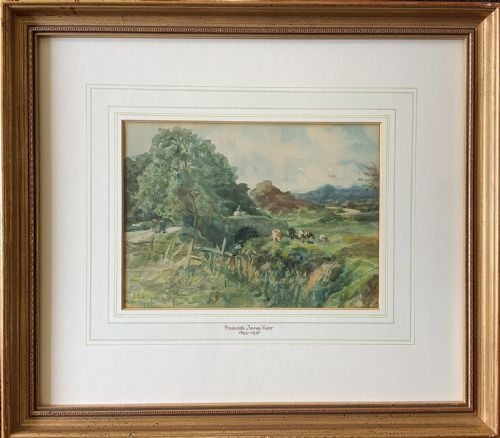
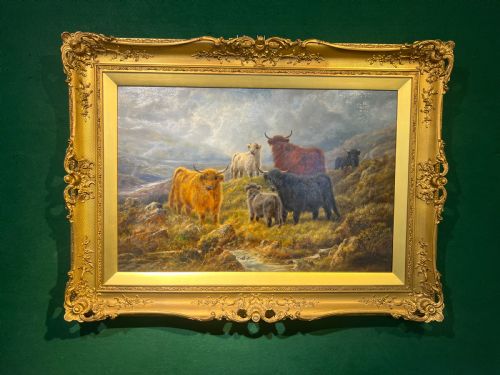
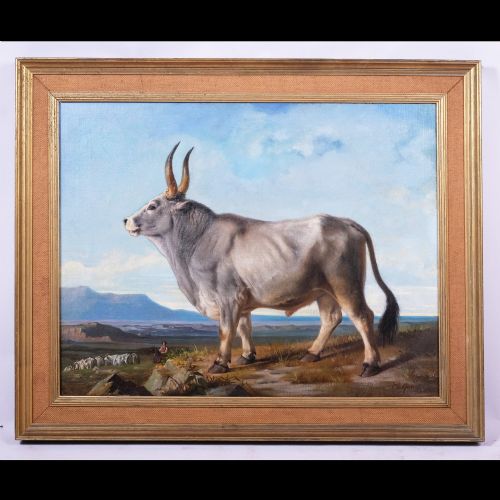
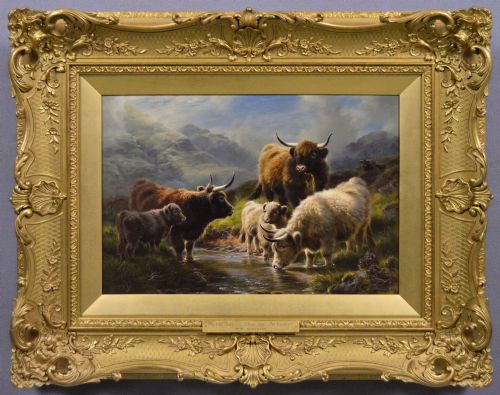
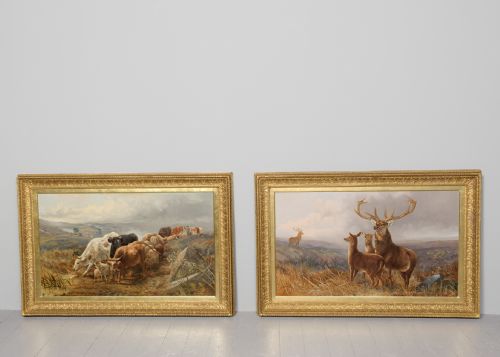
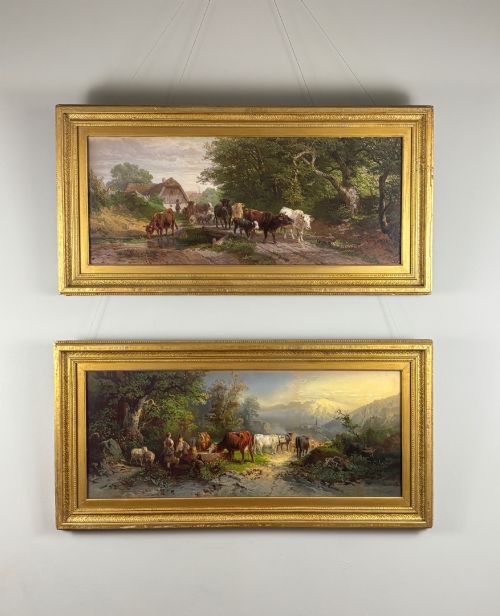
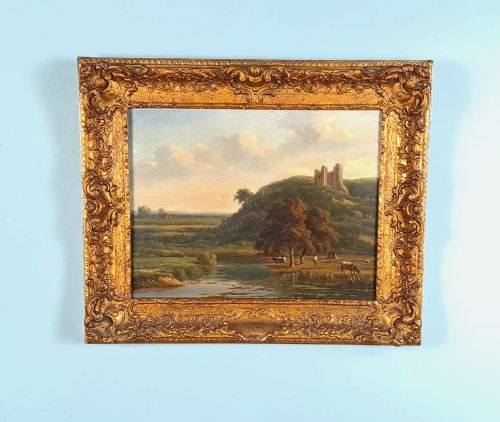
Framed cattle artwork comprises traditional paintings depicting cows, bulls, and calves situated within rural landscapes, river scenes, and pastoral settings. These pieces primarily date from the nineteenth century through the Edwardian period, capturing agricultural life and highland scenery across Britain and Europe.
Buyers encounter oil on canvas works, watercolours, and mixed-media pieces enclosed in period frames such as giltwood and gesso. The subject matter ranges from individual prize-winning shorthorn bulls to herds grazing by Scottish lochs and riversides.
The selections reflect various regional schools, including Victorian British pastoral art, Scottish landscape painting, and continental European works. Each piece preserves historical farming animals and rural topography through detailed brushwork.
How they were made
Artists applied oil paint to stretched canvas or board, utilising fine brushes to render the texture of animal hides and surrounding landscapes. Watercolours on paper also appear, often protected beneath glass within period frames.
Frames themselves consist of wood decorated with moulded gesso and gilt finishes, designed to complement the tonal palette of the paintings. These protective surrounds often retain their original nineteenth or early twentieth-century character.
Listings feature oil paintings and watercolours executed on canvas, board, and paper, housed in giltwood and gesso frames.
What varies in quality
Quality depends upon the artist's ability to render the anatomy and posture of the cattle with anatomical precision while capturing natural light in the landscape. Works by established nineteenth-century exhibitors demonstrate superior brushwork and compositional balance compared to anonymous studio pieces.
The preservation of both the painting and its original giltwood or gesso frame influences the overall integrity of the piece. Clean paint surfaces showing minimal retouching sit at the upper end of the range.
Thomas Sidney Cooper·William Watson Jnr·Robert Cleminson·Henry Robinson Hall·David Bates·Sidney Richard Percy
The Framed Cattle Artwork Glossary
- Giltwood
- Wood carved and covered with a thin layer of gold leaf or metallic gilt. This finish provides a reflective border suited to Victorian oil paintings.
- Gesso
- A plaster-like mixture applied to wooden frames before gilding or painting. It allows craftsmen to mould ornate decorative reliefs.
- Pastoral
- A genre of art depicting rural life, shepherds, and farm animals in natural landscapes. These scenes emphasise a calm, agrarian existence.
- Oil on Canvas
- Pigments bound with drying oils applied to a woven fabric support. This combination permits rich colour blending and lasting durability.
Framed Cattle Artwork: Frequently Asked Questions
What periods do these paintings date from?
The works span the nineteenth century and the early twentieth century, encompassing the Victorian and Edwardian eras. Artists active during these decades produced detailed depictions of rural farming life.
Dates often align with known exhibition periods of the painters, ranging from the early eighteen-hundreds through to the nineteen-twenties.
What mediums are used in these pastoral scenes?
Painters utilised oil on canvas, oil on board, and watercolour on paper to record rural landscapes and farm animals. Mixed-media approaches also appear in select works.
Each medium offers distinct textural qualities, from the heavy impasto of oil paintings to the delicate washes of watercolours.
Where were these cattle scenes painted?
Locations include British agricultural regions, Welsh river valleys, and Scottish highlands near lochs and streams. Continental European scenes also feature in the selection.
Artists frequently travelled to rural areas to sketch livestock and farming communities directly from life.