


Vintage Livestock Painting
A vintage livestock painting brings rural British pastoral life and prized agricultural stock directly into the home through oils and watercolours.
Vintage Livestock Painting
A vintage livestock painting captures farm animals and rural landscapes, taking forms such as oil paintings and watercolour paintings on canvas, wood, and paper. These works document agricultural heritage through pastoral scenes, prize-winning bulls, and riverbank grazing.
The selections span the Georgian, Victorian, Edwardian, and 1920 periods, with Victorian pastoral works and British Impressionism appearing regularly. You will frequently encounter cattle, sheep, and horses set against coastal views, rivers, and Yorkshire dales.
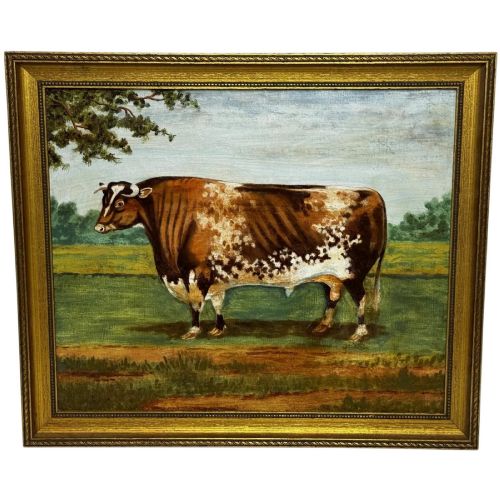
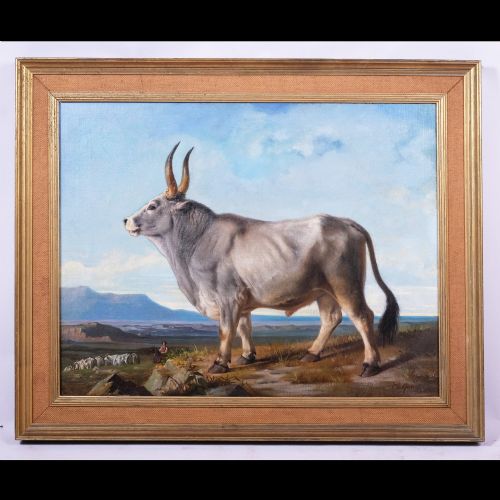
Rural scenes range from quiet watercolours in original frames to large canvases depicting cattle gathered at watering holes. The artistic approaches shift from detailed realism of prize Shorthorn bulls to looser impressionistic brushwork.
Materials and methods
Artists relied primarily on oil paint applied to stretched canvas or wooden panels, alongside watercolours worked on paper. These mediums allowed painters to build rich textures in animal coats and atmospheric depth in landscape skies.
Frames play a structural role in the survival of these pieces, utilising giltwood and burr finishes to protect the edges. Original framing often dates the piece securely alongside the painted canvas or paper support.
Vintage Livestock Painting Retail Price Guide 2026
Typical asking prices for vintage livestock painting among the pieces listed under this phrase on Sellingantiques today, from the lower quarter to the upper quarter. They describe what is for sale here now, not the wider market.
Listings feature works executed in oil on canvas, watercolour on paper, and wood, spanning the Georgian to 1920 periods.
Distinguishing quality
Quality rests upon the anatomical precision of the animals and the handling of light within the wider landscape. Master painters render the heavy musculature of prize shorthorns and the soft wool of sheep with convincing weight.
The distinction between standard decorative works and finer pieces lies in the articulation of the background and the handling of the pigment. Stronger compositions integrate the livestock naturally into riverbanks, coastlines, and pastoral valleys.
A M Gauci·Ernest Pile Bucknall·Eugene Joseph Verboeckhoven·Claude Cardon·W A Clark·William Sidney Cooper·Ernest Higgins Rigg·Owen Bowen·Thomas E Francis
The Vintage Livestock Painting Glossary
- Oil on Canvas
- Pigments bound in drying oils applied to a woven fabric support stretched over a wooden frame. This method was the standard medium for substantial nineteenth-century rural scenes.
- Watercolour Painting
- Pigments suspended in a water-soluble vehicle applied to paper. These works offer a lighter touch and frequently appear preserved behind glass in period frames.
- Giltwood
- Wood carved and surfaced with a thin layer of gold leaf. Frames executed in this material elevate the presentation of Victorian and Edwardian canvases.
- British School
- A designation for works produced by artists trained or working within Britain. It groups together regional painters who recorded domestic livestock and pastoral landscapes.
Vintage Livestock Painting: Frequently Asked Questions
What periods do these paintings cover?
The available works span from the Georgian era through the Victorian and Edwardian periods up to the 1920s.
Nineteenth-century pieces form a substantial core of the selection, reflecting a strong period interest in rural and agricultural subjects.
Are the frames original to the art?
Many works retain their period surrounds, including giltwood and burr frames that complement the painting style.
Original framing helps preserve the piece and often provides clues to the date of execution.
What animals appear in these works?
Cattle dominate the selections, particularly prized shorthorn bulls and cows depicted grazing by rivers or gathered at watering holes.
Sheep, horses, and ducks also feature prominently within the wider landscape and coastal settings.
How should I display a canvas?
Oil paintings on canvas suit principal rooms where stable indoor humidity and indirect sunlight protect the pigment and ground.
Watercolours require placement away from direct sun exposure to prevent fading on the paper support.