
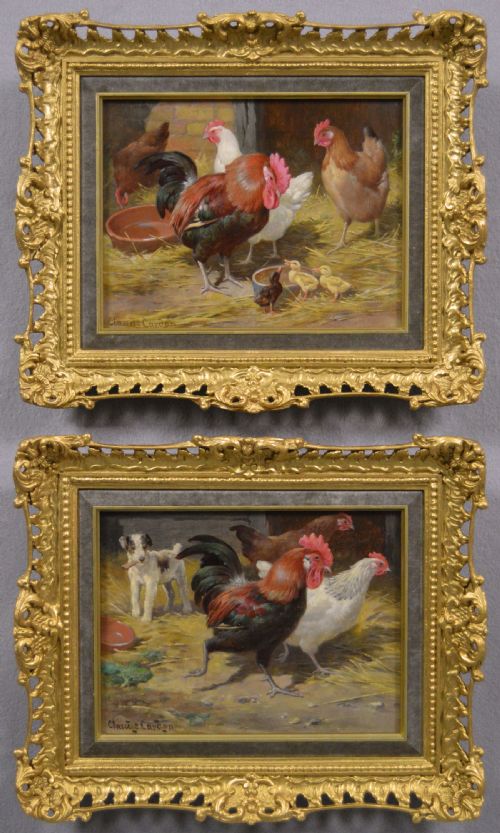


Antique Farm Painting
An antique farm painting captures the enduring rhythm of rural life through detailed depictions of livestock, harvests and pastoral homesteads.
Antique Farm Painting
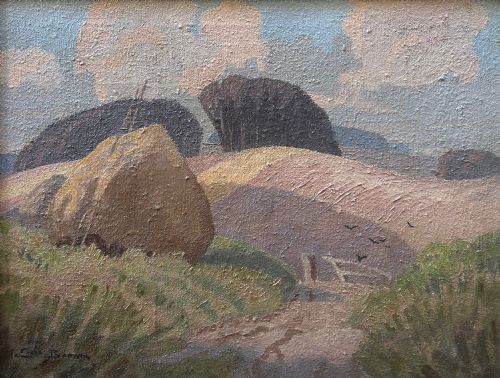
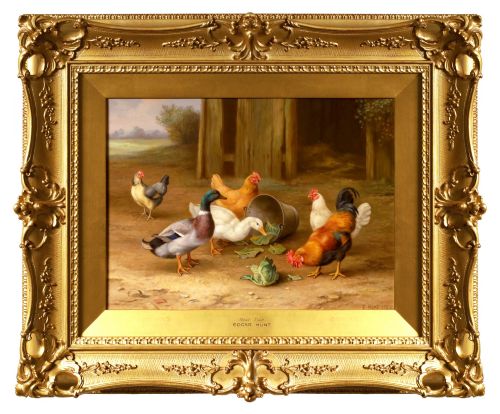
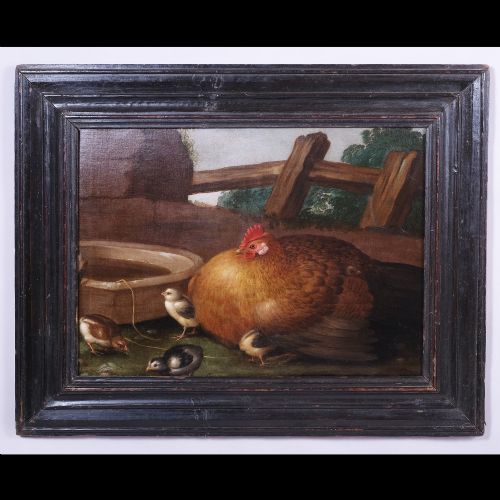
An antique farm painting captures the rural landscape and daily agricultural labour, featuring prominently in nineteenth-century and early twentieth-century British and European art. These works range from detailed portraits of prized livestock to sweeping valley views and intimate farmyard scenes complete with poultry, horses and working figures. Buyers seek these pieces to bring a sense of historical pastoral calm and authentic rural heritage into domestic interiors.
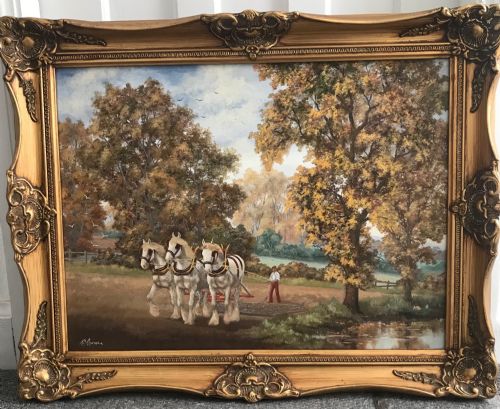
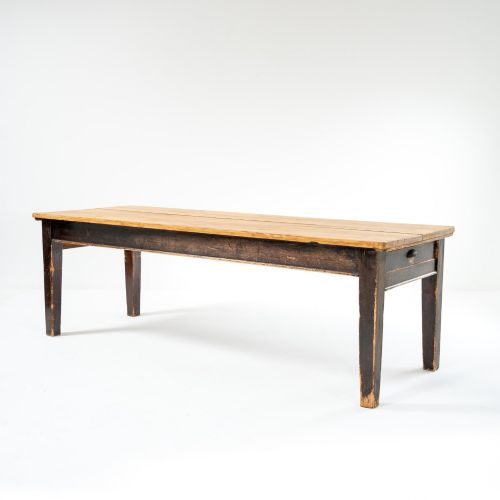
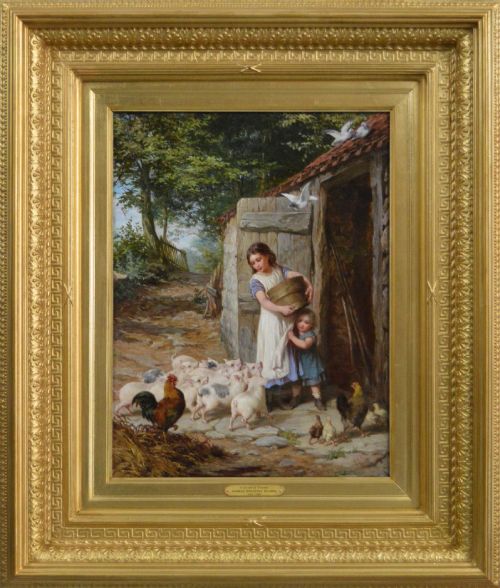
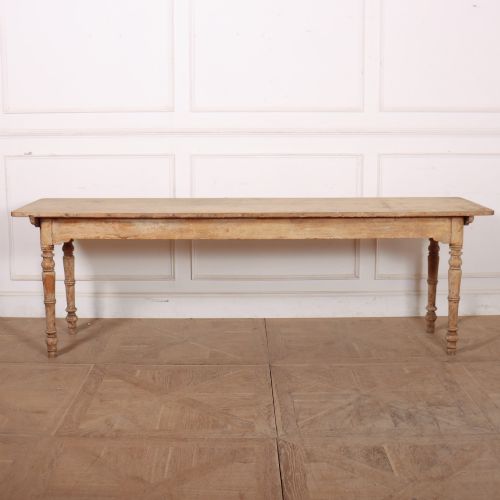
The selections available here lean heavily into Victorian pastoral scenes, British Impressionism and regional realisms. Canvases depict shire horses at the water trough, pigs feeding alongside farmhouse doors, and hay carts moving through Yorkshire or Normandy fields. Alongside traditional canvases, the listings occasionally include related rustic furnishings and architectural elements that share the same agrarian provenance.
How They Were Made
Artists relied primarily on oil paint applied to stretched canvas or wooden panels, building up rich textures for fields, animal coats and weathered timber buildings. Watercolour on paper also appears frequently, capturing lighter atmospheric effects in landscapes and farmstead studies. Frames constructed from giltwood or plain timber often complete the presentation of these historic works.
Pigments were worked with varied brushwork, shifting from the tight realism favoured by animal painters to the looser, more vibrant strokes characteristic of impressionist landscapes. Painters utilised natural light to define the contours of heavy draught horses, cattle and flocks of sheep within working farmyard settings.
Listings feature nineteenth and early twentieth-century oil paintings and watercolours on canvas, wood panel and paper, created by British and European schools.
What Varies in Quality
The distinction between superior works and simpler decorative pieces rests on the artist's anatomical precision and compositional skill. Master painters render livestock, particularly horses and cattle, with accurate musculature and individual character, whereas weaker examples present stiff, formulaic animals lacking proportion or life.
Atmospheric depth and handling of light also separate fine art from routine topographical illustration. Superior paintings integrate figures, animals and landscape into a coherent, balanced scene with nuanced colour harmonies, while lesser works rely on repetitive formulas and flat, uninspired backgrounds.
George Augustus Holmes·Edgar Hunt·Claude Cardon·Raimond Louis Lecourt·Herbert Royle·William JB Jenkins·Franz van Severdonck·James William Booth·John Frederick Herring Jnr·Ernest Pile Bucknall·Samuel Joseph Clark·Eugene Verboeckhoven·John Atkinson·Charles Vickers·Frederick W Jackson·Percival Glenfern·John Linnell·J C Grey·George Soper·C Lainé·Pierre Emmanuel Dielmans·Florence Hess·Arthur Winter Shaw·Owen Bowen·Henry Farmer
The Antique Farm Painting Glossary
- Canvas
- A heavy woven fabric stretched across a wooden frame to form the primary surface for oil painting. It provides a slight give and a textured weave that holds layered paint securely.
- Giltwood
- Wood carved and covered with a thin layer of gold leaf or metallic gilt. This finish creates a bright, reflective border around traditional artwork.
- Pastoral
- A style of art that idealises rural life, shepherds and agricultural scenes. These works emphasise harmony between humans, animals and the natural landscape.
- Realism
- An artistic movement focusing on everyday subjects and unidealised working conditions. In farm paintings, this approach depicts authentic agricultural tasks without theatrical exaggeration.
- Provenance
- The documented history of ownership and origin surrounding a work of art. Clear provenance confirms an artwork's authenticity and past exhibition history.
Antique Farm Painting: Frequently Asked Questions
What subjects appear most often in antique farm paintings?
These works predominantly feature working farmyards, heavy draught horses, cattle, sheep and poultry interacting with rural labourers. Scenes often capture seasonal tasks like haymaking or ploughing against a backdrop of historic farm buildings and rolling countryside.
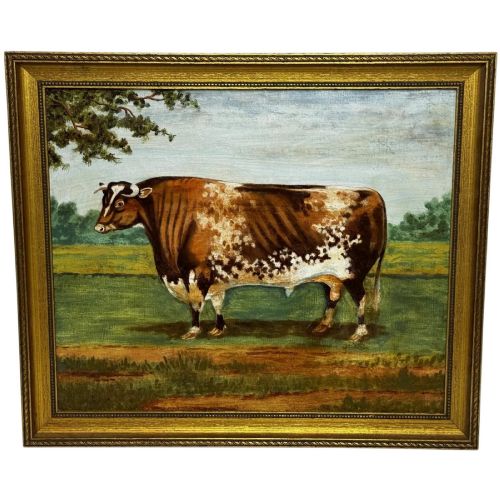
Artists also frequently painted prized individual animals, such as shorthorn bulls, commissioned by proud agriculturalists to document elite breeding stock. Human figures tend to take a secondary role to the animals and the expansive landscape.
How do I date an antique farm painting?
Dating relies heavily on stylistic clues, clothing styles of the figures, framing techniques, and signatures or biographical dates of the artist. Nineteenth-century works often show meticulous realism, while later pieces adopt looser impressionistic brushwork.
Examining the reverse of the canvas or panel can reveal old dealer labels, stamps, inscriptions, or exhibition markers that narrow down the exact period of creation.
Where were these paintings originally displayed?
Victorian and Edwardian landowners, tenant farmers and urban collectors hung these rural scenes in dining rooms, libraries and country houses. They served as a celebration of agricultural wealth, rural property and traditional country values.
Today, they suit similar domestic spaces, adding warmth and historical depth to both traditional country interiors and modern rustic settings.
How should I care for an oil painting on canvas?
Keep the canvas away from direct sunlight, damp environments and extreme temperature fluctuations to prevent the paint from cracking or warping. Dust the surface gently with a soft, dry brush without applying pressure.
Avoid using water, chemical cleaners or commercial sprays on the painted surface or the gilt frame, as these can cause permanent damage to the historic materials.