
Victorian Pastoral Scene
When you search for a victorian pastoral scene, you meet framed oils and watercolours of countryside life, rivers and grazing livestock.
Victorian Pastoral Scene
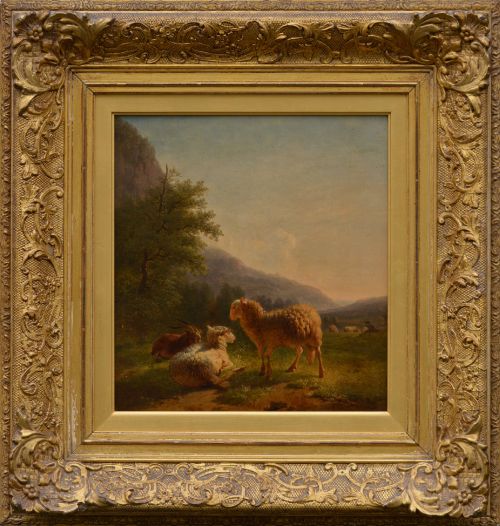
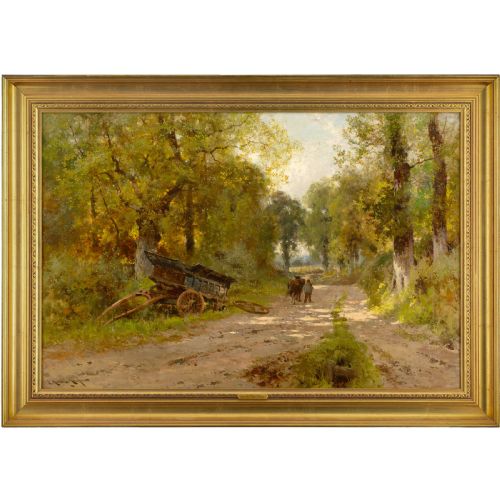
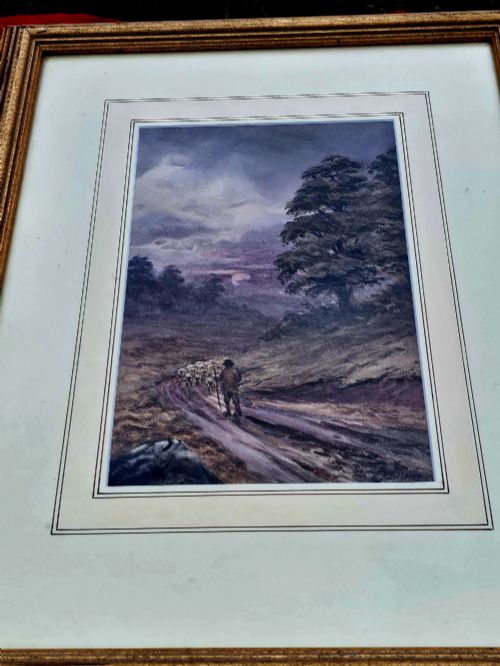
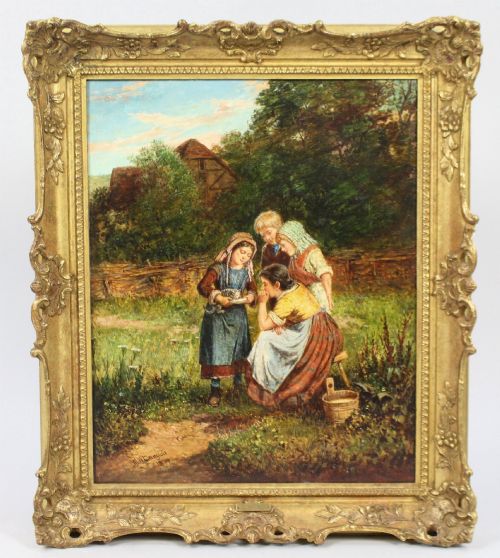
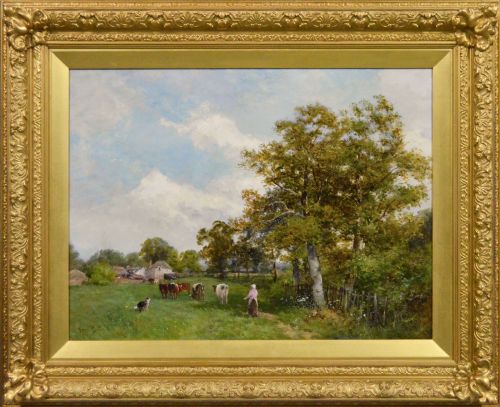
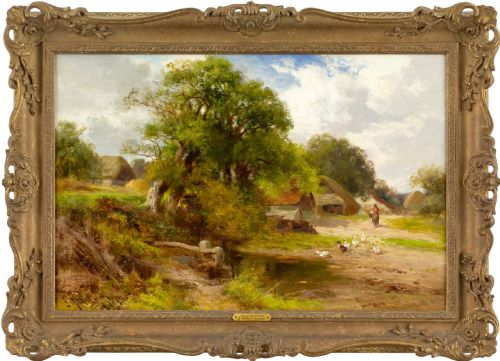
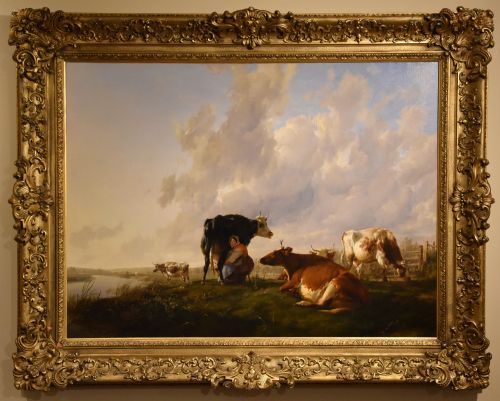
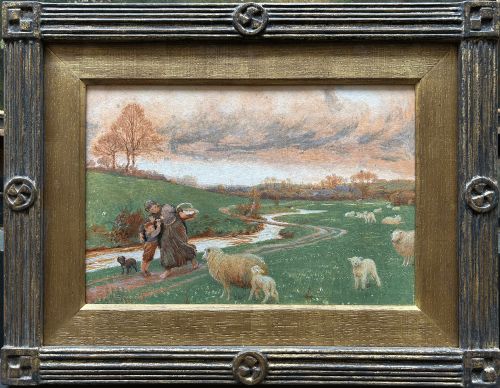
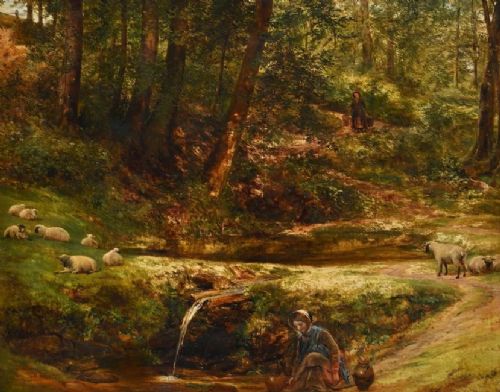
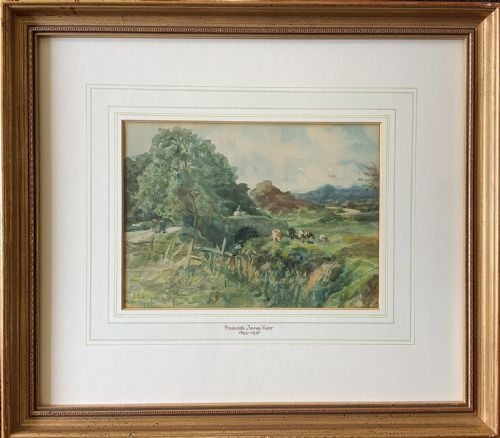
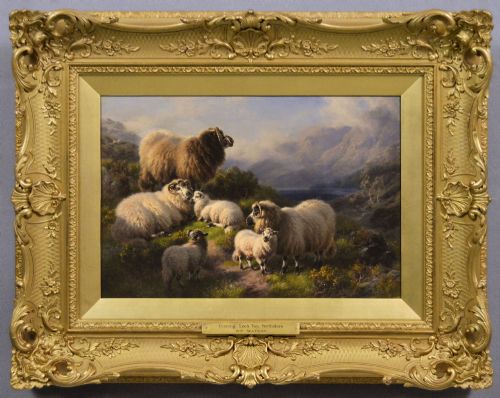
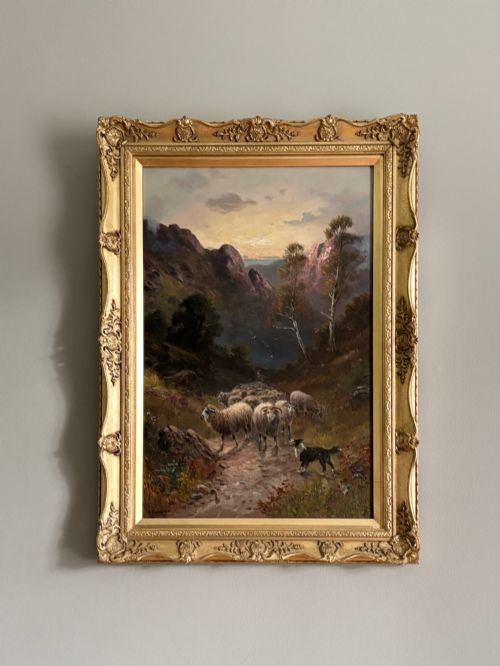
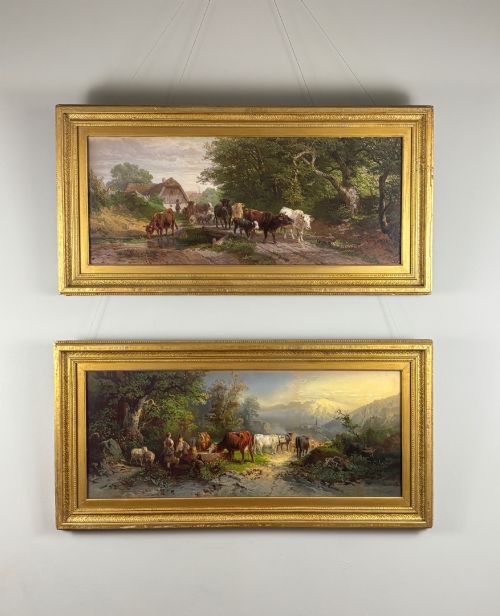
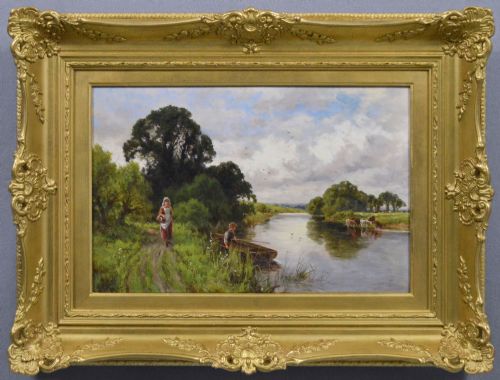
A victorian pastoral scene typically takes the form of an oil painting or watercolour depicting rural life, farmland, riverbanks and agricultural workers. You will frequently encounter representations of shepherds, cattle drovers and milkmaids alongside sheep, cows and horses in open landscapes.
The selections span the nineteenth century and into the early twentieth century, incorporating styles such as Victorian realism and romanticism. These artworks capture idealized views of the British countryside, often centred on rivers, harvest fields and country lanes.
How they were made
Artists worked primarily in oil paint on canvas or board, alongside watercolour and etching on paper. Canvases were secured in wooden frames finished with gesso and giltwood to complement the rich tones of the compositions.
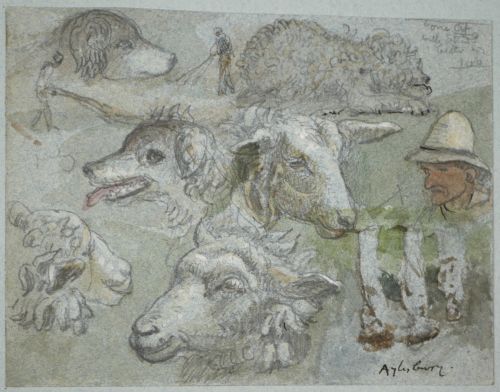
Pigments were applied with careful brushwork to render natural light, atmospheric skies and the textures of foliage, wool and water. Many works are signed by the artist, whilst others remain attributed to specific schools or followers of prominent painters.
Victorian Pastoral Scene Retail Price Guide 2026
Typical asking prices for victorian pastoral scene among the pieces listed under this phrase on Sellingantiques today, from the lower quarter to the upper quarter. They describe what is for sale here now, not the wider market.
Several canvases manage to include both sheep and a remarkably observant farm cat keeping watch over the rural proceedings.
What varies in quality
Quality rests upon the artist's ability to render light, depth and anatomical precision in figures and animals. Finer examples display confident brushwork and harmonious colour palettes that convey the distinct atmosphere of a rural afternoon.
The preservation of the paint surface and the original integrity of the frame also influence the overall standard. Works by established exhibited painters command greater attention than anonymous student studies.
Eugène Verboeckhoven·James Smetham·John Horace Hooper·David Bates·Thomas Sidney Cooper·Frederick Walker·Richard Redgrave·William Watson Jnr·Johann Friedrich Voltz·Henry H Parker·Henry Schouten·Frederick Hines·Thomas Baker·Henry John Kinnaird·James William Booth·Samuel Joseph Clark·Henry John Boddington·Andre de Moller·James Hardy Junior·Robert John Hammond·Robert Thorne Waite·Charles Vickers·Walter J Watson·John Linnell
The Victorian Pastoral Scene Glossary
- Oil on Canvas
- Pigment bound in drying oil applied to a woven fabric support stretched over a wooden frame. This medium allowed artists to build rich textures and deep tones.
- Watercolour Painting
- A work created using water-soluble pigments on paper. These pieces often capture lighter, more translucent atmospheric effects than oils.
- Giltwood
- Wood carved and coated with gold leaf or a gold-coloured metallic finish. It forms the decorative outer border of many traditional picture frames.
- Gesso
- A plaster-like mixture applied to wood surfaces as a base for gilding and ornamentation. It provides the smooth foundation seen on ornate frames.
- Etching
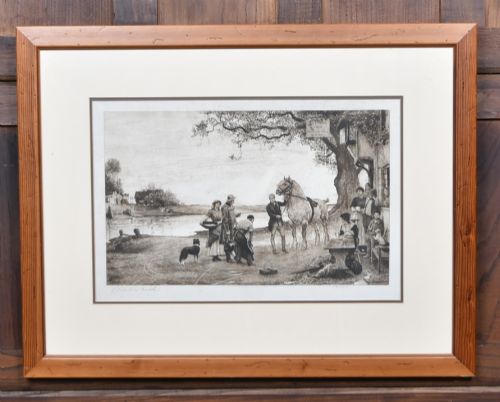
- A printmaking process where lines are incised into a metal plate with acid before being inked and pressed onto paper. This technique permits fine linear detail.
Victorian Pastoral Scene: Frequently Asked Questions
What subjects appear in these scenes?
These artworks typically show rural workers, shepherds with flocks, milkmaids and cattle drovers tending livestock. Landscapes feature rivers, harvest fields, country lanes and pastoral valleys.
Compositions often highlight traditional farming activities such as harvesting, ploughing and herding animals to market across the British countryside.
How do I display an oil painting?
Hang your painting on an interior wall away from direct sunlight and sudden temperature fluctuations. Adequate clearance from radiators protects both the canvas and the wooden frame.
Ensure the wall fixings match the weight of the framed artwork to support the piece securely over time.
Are watercolours different from oil paintings?
Watercolours use water-soluble pigments on paper under glass, resulting in a lighter and more translucent appearance. Oil paintings use pigment bound in oil on canvas or board, creating heavier textures and deeper colour saturation.
Watercolour works require protection from direct light to prevent fading of the paper and pigments.
How can I tell the period of a piece?
Examine the materials, framing style, stretcher bars and paper types used in the construction. Signatures, artist biographies and exhibition labels on the reverse often provide precise dates or active working years.
Stylistic cues such as costume details in the figures also help narrow down the decade of creation.