

British Rural Artwork
British rural artwork captures pastoral life and open country through paintings, watercolours and etchings.
British Rural Artwork
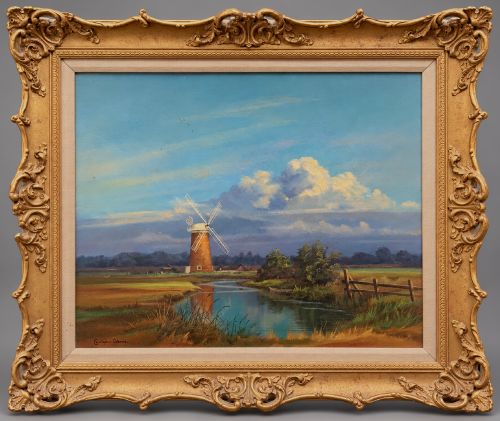
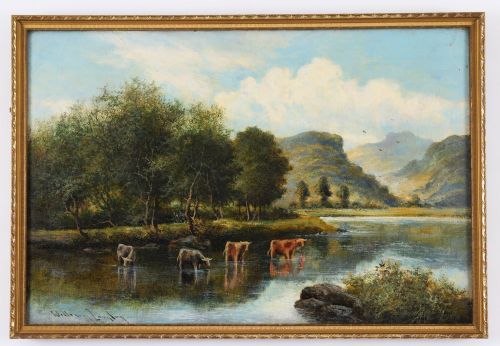
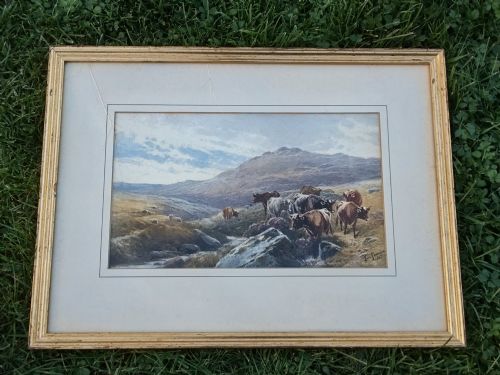
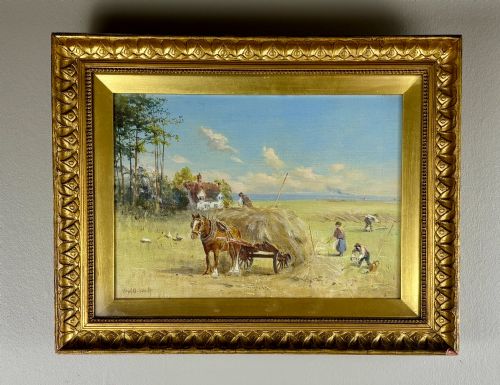
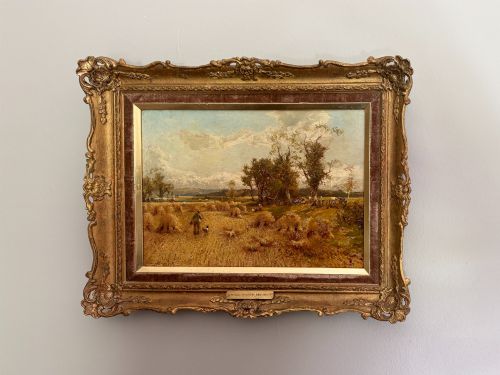
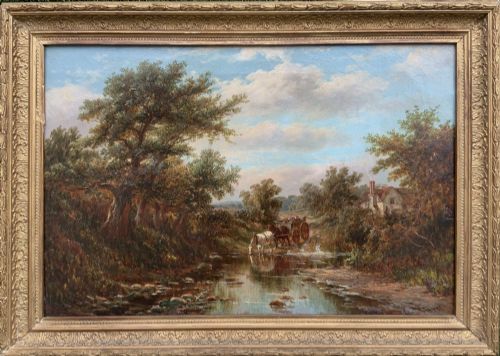
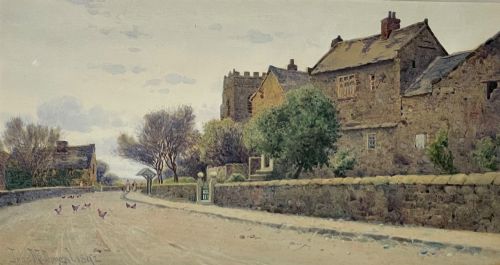
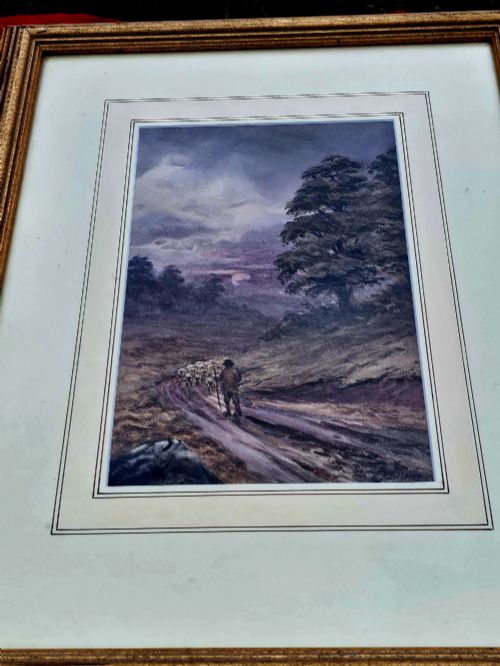
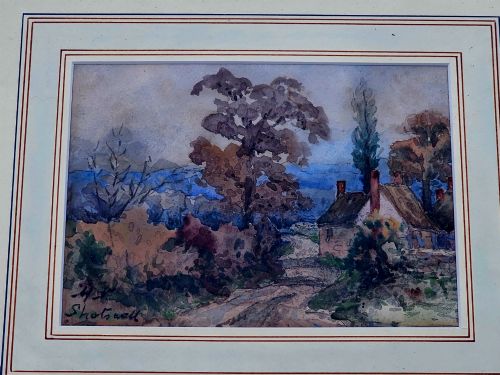
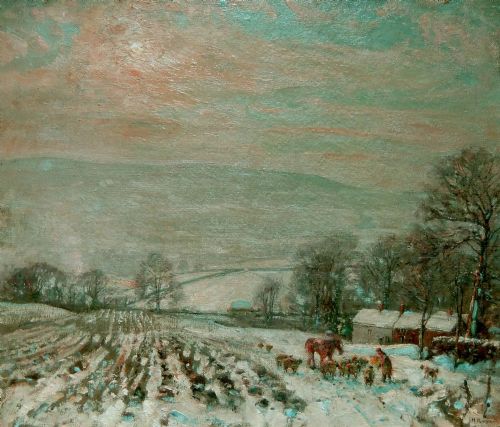
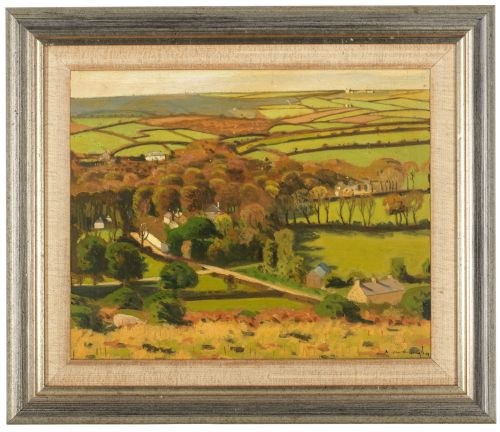
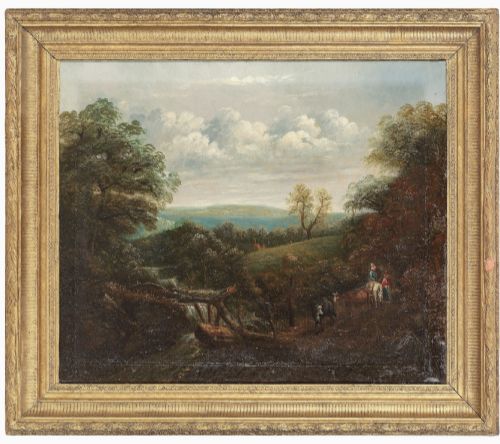
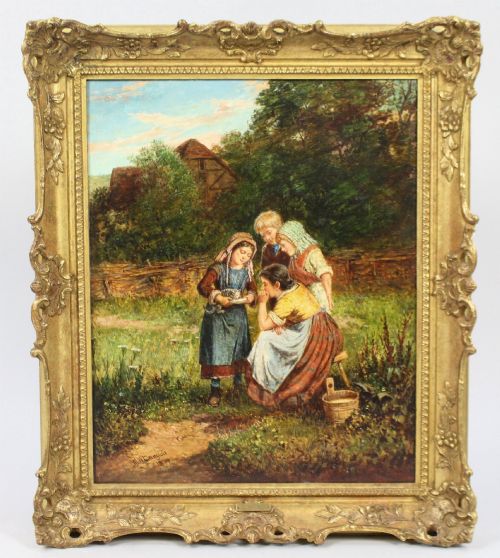
When you search for british rural artwork, you encounter depictions of fields, cottages, livestock and agricultural labour across the countryside. These pieces record rural scenes through various interpretations spanning the nineteenth and twentieth centuries.
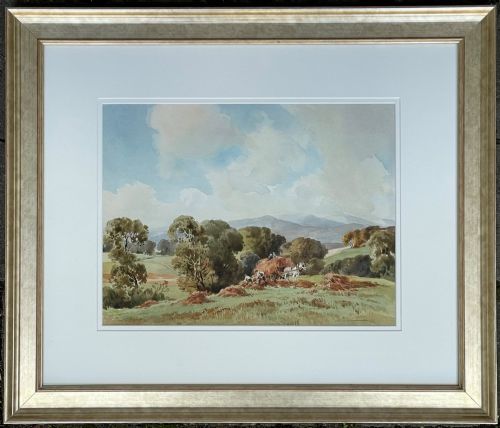
The selections on this page are most commonly found in the form of framed oil paintings on canvas or panel, alongside detailed watercolours on paper. They represent movements such as Victorian Pastoral, Victorian Naturalism and British Impressionism.
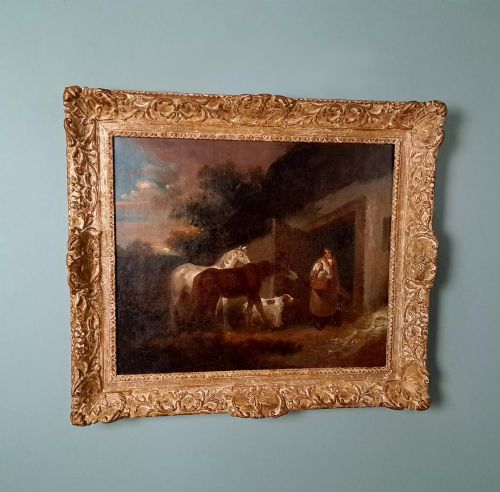
Subjects range from harvest fields and river valleys to cottages and farm animals, reflecting an enduring artistic interest in rural life. Artists observed local characters, grazing cattle and changing seasons within regions from Yorkshire to Cornwall.
How They Were Made
Works in this category rely primarily on oil paint applied to canvas or wooden panels, or watercolour pigments worked onto paper supports. Painters built compositions using brushes and palette knives to capture the light and texture of fields and skies.
Printmakers contributed original etchings on paper, incising lines into metal plates to produce detailed monochromatic views of country paths and open skies. Framed presentation typically involved wood mouldings, occasionally finished with gilt details.
Materials utilised across the collection include oil on canvas, watercolour, paper, wood and glass.
What Varies In Quality
Compositional balance and brushwork dexterity distinguish more accomplished paintings from simpler decorative efforts. Skilled artists managed light, atmosphere and perspective to create convincing depth within a pastoral view.
The handling of natural light and tonal harmony separates routine topographical records from perceptive artistic interpretations of the countryside. Condition of the pigment layer and the survival of the original frame also influence the character of each piece.
William Langley·Thomas Rowden·Fred Stead·Hugh Barry-Scott·William Manners·Thomas Thomas·Percy Lancaster·William Howard Hardy·William Joseph Shayer Senior·John McDougal·EJ Letheren·Herbert Royle·Robert Morson Hughes·Mark William Langlois·David Bates·Robert John Hammond·Walter Heath Williams·Robert W. Macbeth·John Horace Hooper·Raymond Booth·Eric Brown·Ernest Higgins Rigg·George Oyston·Frederick James Kerr·Edgar Hunt
The British Rural Artwork Glossary
- Oil on canvas
- Pigments bound in drying oil applied to a stretched woven fabric support. This medium allowed artists to build rich textures and blend tones smoothly.
- Watercolour
- A paint consisting of colorants suspended in a water-soluble vehicle, typically applied to paper. It produces transparent washes and delicate atmospheric effects.
- Etching
- A printmaking method where acid cuts into unprotected parts of a metal plate to hold the ink. Lines produced this way offer remarkable linear precision.
- Pastoral
- A genre of art depicting the rural life of shepherds, farmers and agricultural landscapes in an idealized or realistic manner. These scenes celebrate the tranquility of the countryside.
- Panel painting
- A painting executed on a flat piece of wood rather than canvas. Wooden supports were common in earlier works and provide a rigid foundation.
British Rural Artwork: Frequently Asked Questions
What subjects appear in british rural artwork?
These works depict agricultural scenes, farm animals, country lanes, cottages and figures engaged in seasonal labour like harvesting.
Artists focused on the daily realities and changing landscapes of rural Britain across different regions.
How do watercolours differ from oil paintings here?
Watercolours utilise transparent pigments on paper to achieve light, luminous effects suited to subtle atmospheric conditions.
Oil paintings use heavier pigments on canvas or panel, allowing for thicker impasto and deeper colour saturation.
Which periods do these pieces represent?
The listings span the nineteenth and twentieth centuries, covering Victorian, Edwardian and Mid-Century artistic movements.
Each era brought distinct approaches to depicting the natural environment and agricultural life.
How were these artworks traditionally framed?
Many pieces are presented in wooden frames, some featuring gilt finishes that complement the tones of the painting.
Original framing often helps anchor the work within its historical period of creation.