
Vintage Country Scene
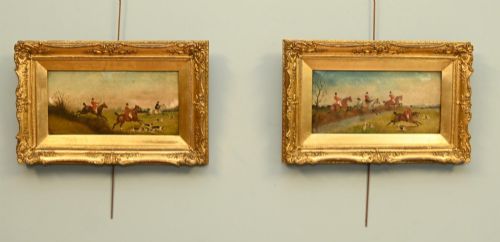
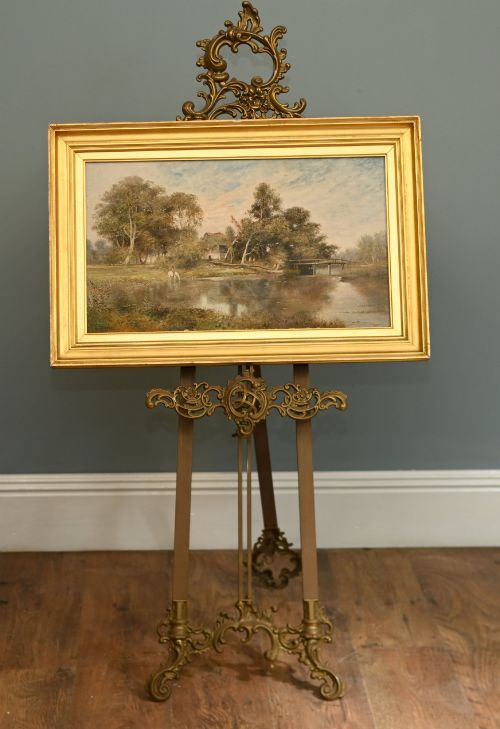
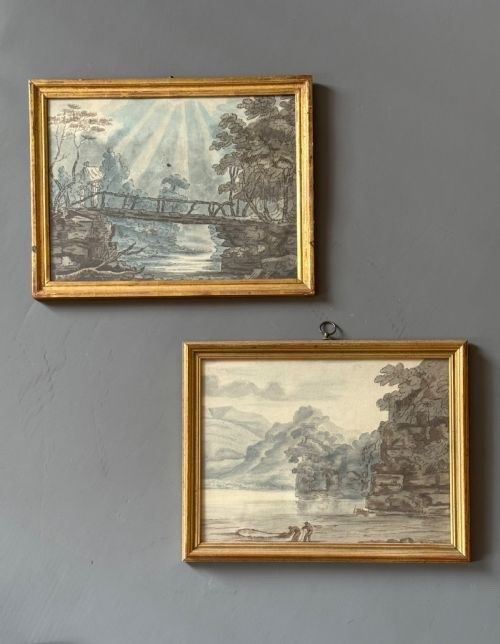
These vintage country scene works capture quiet lanes, agricultural toil and rural charm across oil paintings and watercolours.
Vintage Country Scene
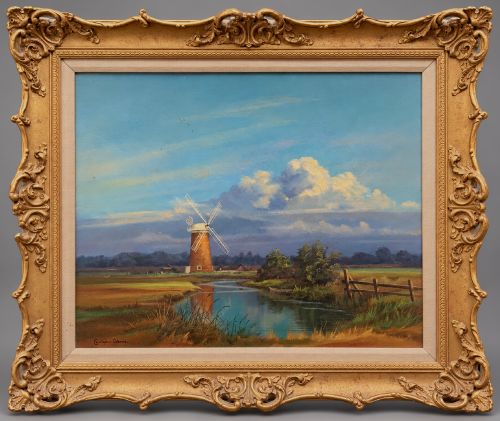
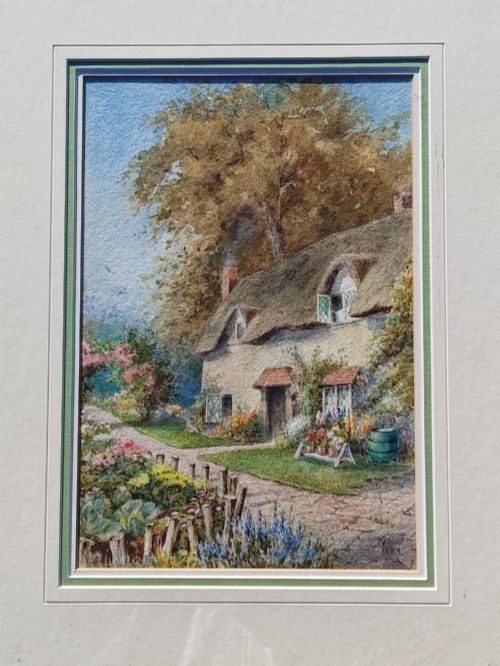
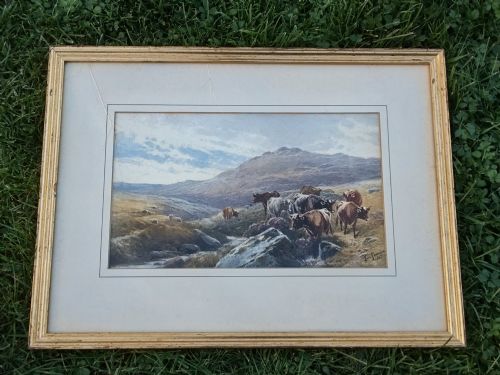
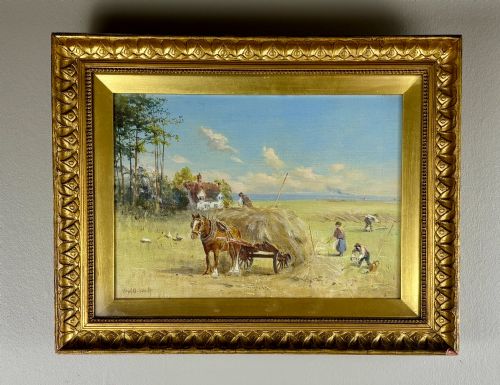
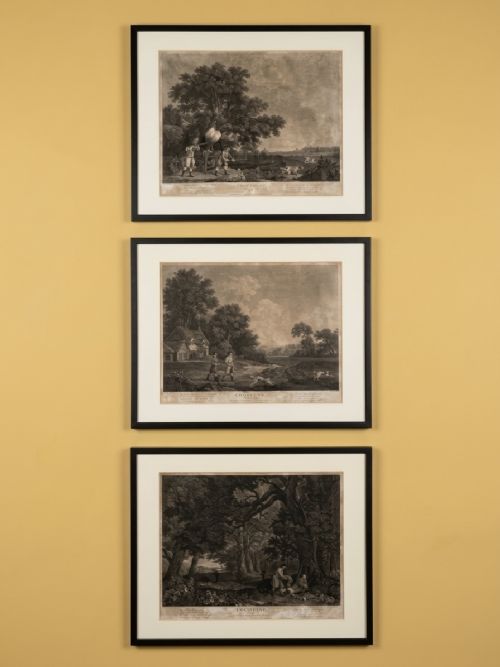
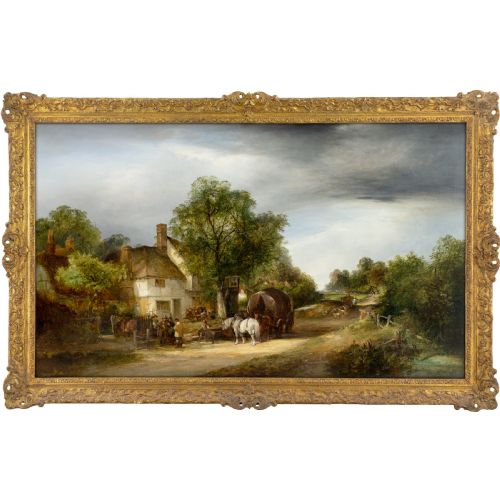
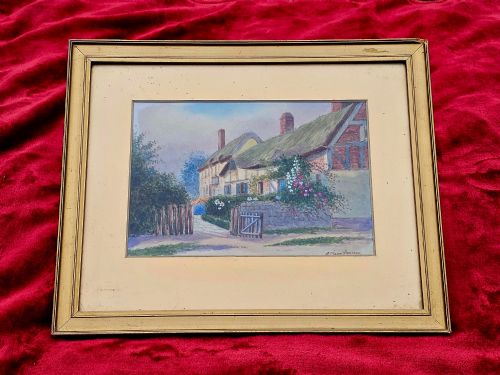
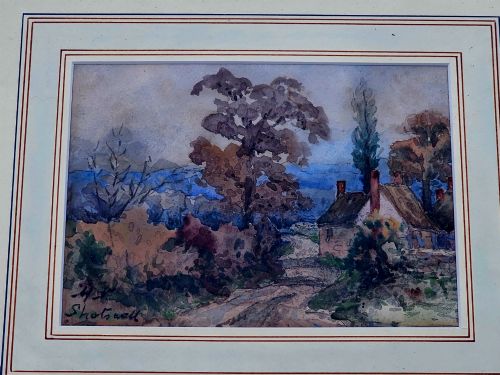
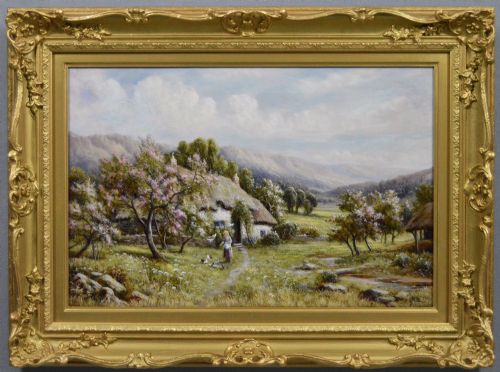
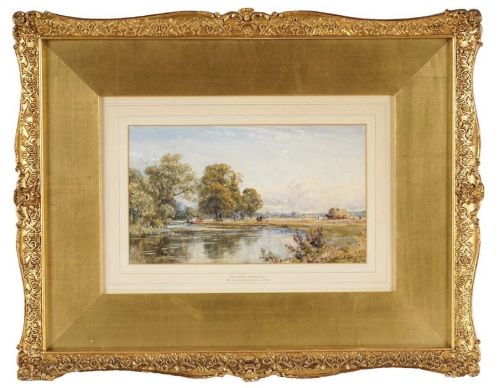
A vintage country scene brings rural British life, pastoral landscapes and agricultural work into domestic interiors through historic paintings and works on paper. When you search for this phrase, you meet framed watercolours, oil paintings on canvas or board, and engravings depicting cottages, farmyards, rivers and livestock.
The pieces span the nineteenth century, the Victorian era, and the early twentieth century, reflecting shifting artistic responses to the countryside. Most examples lean towards British Impressionism, Victorian realism and pastoral landscape traditions originating from regional artists and established schools.
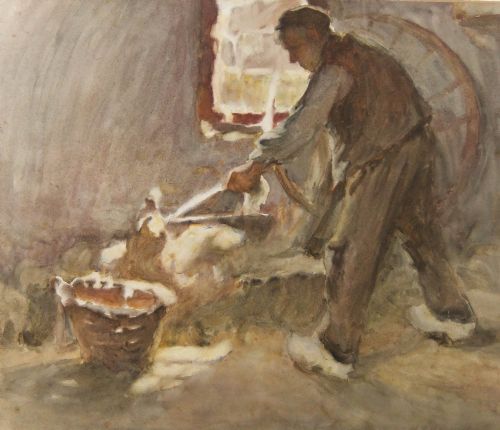
Subjects range from quiet blacksmith shops and thatched cottages to bustling harvest fields, river valleys and sporting pursuits. The prevalence of watercolours and oil paintings demonstrates a sustained demand for intimate depictions of rural tranquility.
Materials and technique
Artists relied primarily on oil paint applied to canvas, wooden panels, or card, alongside watercolour and ink pigments worked onto heavyweight paper. These materials were frequently finished with gold leaf accents on framing to enhance the visual depth of the composition.
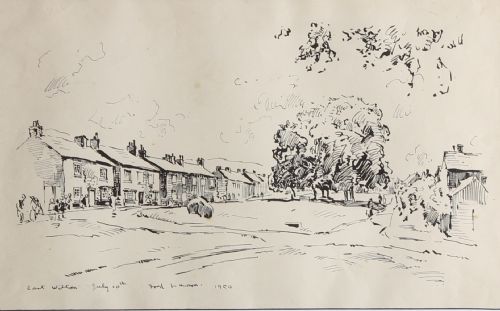
Working methods combined studio production with plein air observation, allowing painters to capture changing light across English and Welsh landscapes. Draftsmanship relied on precise pen and ink underdrawings, visible beneath translucent watercolour washes or built up with heavy oil impasto.
Subject matter across the selection focuses on agricultural labour, livestock portraits, rural cottages, and river landscapes by British and European schools.
Factors of quality
Quality rests upon the artist's handling of light, atmospheric perspective, and the naturalistic rendering of figures and animals within the landscape. Superior works demonstrate confident brushwork and balanced composition, whereas lesser examples rely on formulaic repetition without direct observation.
The integration of the subject into its setting distinguishes finer pieces from ordinary topographical records. Depth is achieved through careful tonal graduation rather than flat washes, giving the rural views a convincing sense of place and air.
Fred Stead·Hugh Barry-Scott·Edward Charles Williams·William Shayer·Henry Silkstone Hopwood·Robert John Hammond·Fred Lawson·Robert Thorne Waite·George Augustus Holmes·Frederick James Kerr·Edgar Hunt·Herbert Royle·Thomas Walker Bretland·Herman S Melville·Sydney Yates Johnson·Hubert Wellington·Henri Jaques Delpy·Richard Harry Carter·Ernest Higgins Rigg·Owen Bowen·John Frederick Herring Jnr
The Vintage Country Scene Glossary
- Watercolour
- A paint consisting of soluble pigment suspended in a water-based solution, traditionally applied to paper to achieve translucent washes of colour.
- Oil on Canvas
- Pigment mixed with drying oils, such as linseed, applied to stretched woven fabric to create durable, rich paintings with varied surface texture.
- Pastoral
- A genre of art depicting the rural lives of shepherds, farmers, and villagers in an idealized or romanticized natural setting.
- Impressionism
- A style of painting emphasising spontaneous brushstrokes and the accurate depiction of changing light rather than meticulous detail.
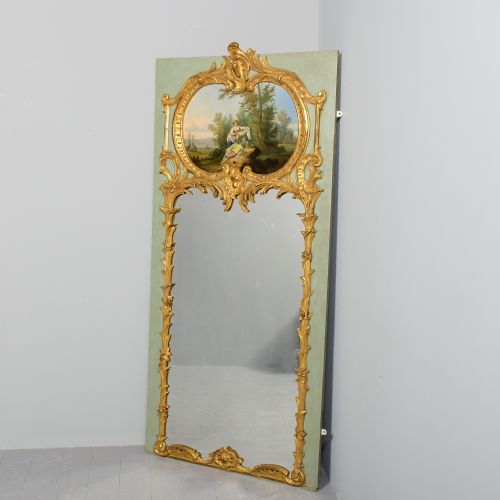
- Trumeau
- A decorative wall mirror or panel featuring painted or carved scenes, frequently integrated into period interior architecture.
Vintage Country Scene: Frequently Asked Questions
What defines a vintage country scene?
These works depict traditional rural life, encompassing farmyards, cottages, agricultural labour, and pastoral landscapes across Britain. They rely on historical painting media to record disappearing rural landscapes.
Subjects focus on the interaction between humans, animals, and the natural environment during the nineteenth and early twentieth centuries.
How should I hang these watercolours?
Watercolours and works on paper require protection from direct sunlight to prevent the fading of delicate pigments over time. Use UV-filtering glass and acid-free mounts within the frame.
Position them away from sources of moisture and extreme temperature fluctuations to preserve the paper support and backing.
Can I identify the exact location shown?
Many titles and inscriptions on the reverse point to specific rivers, villages, or counties, such as the Thames Valley or North Yorkshire. Artists frequently recorded real topographical locations during sketching trips.
Where inscriptions are absent, stylistic clues and regional architectural details offer hints regarding the depicted geographic region.
How do I tell oil paintings from watercolours?
Oil paintings display a textured, built-up surface on canvas, wood panel, or card with a variable sheen. Watercolours present a flat, matte appearance on paper where the grain remains visible beneath translucent washes.
Framing also differs, with oils typically mounted in heavier gilt frames without glass, while watercolours require protective glazing.