

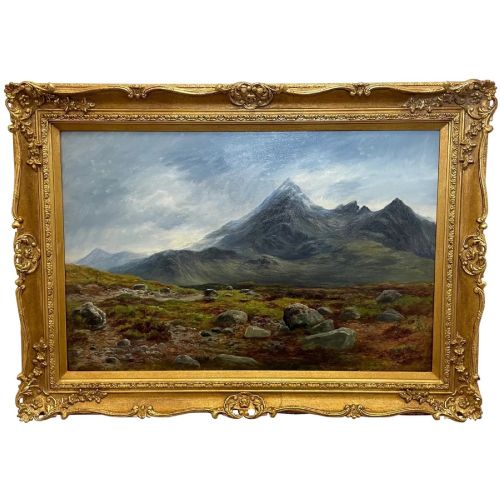
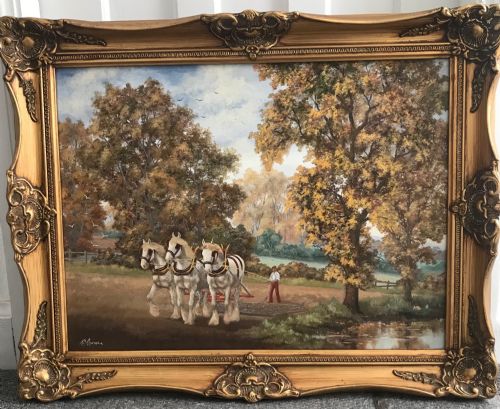
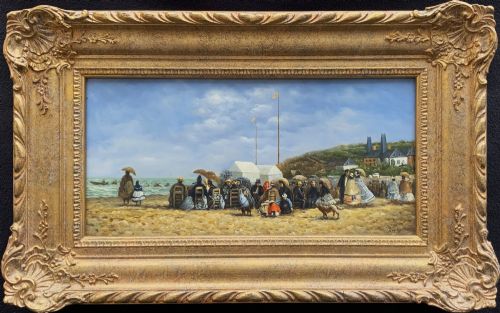


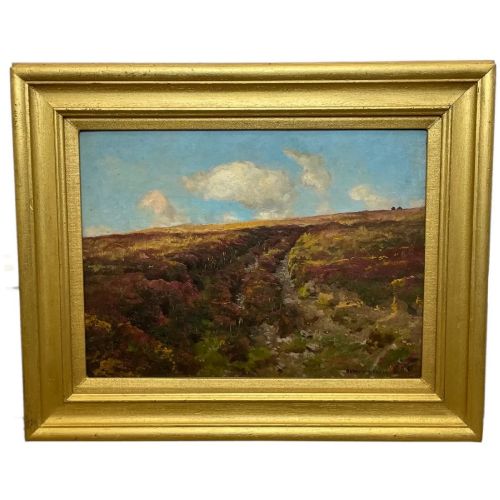
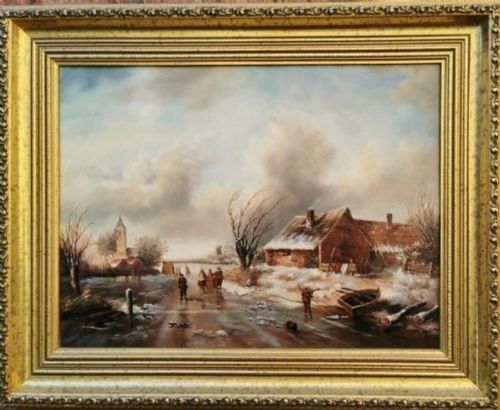
Gold Frame Landscape Painting
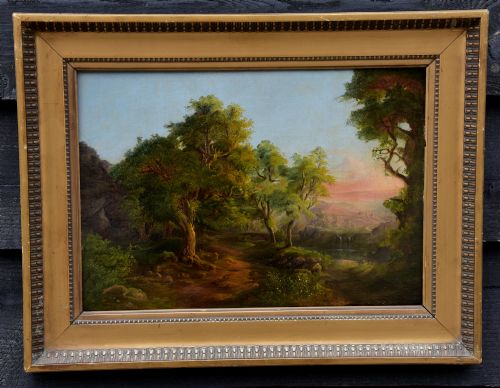
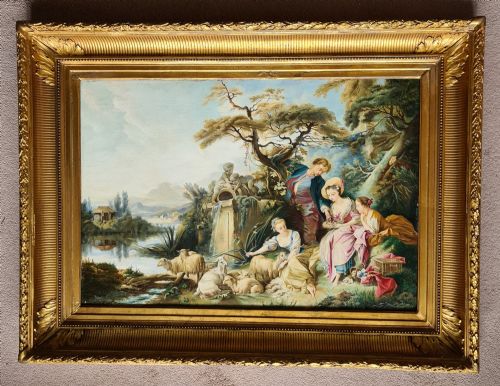
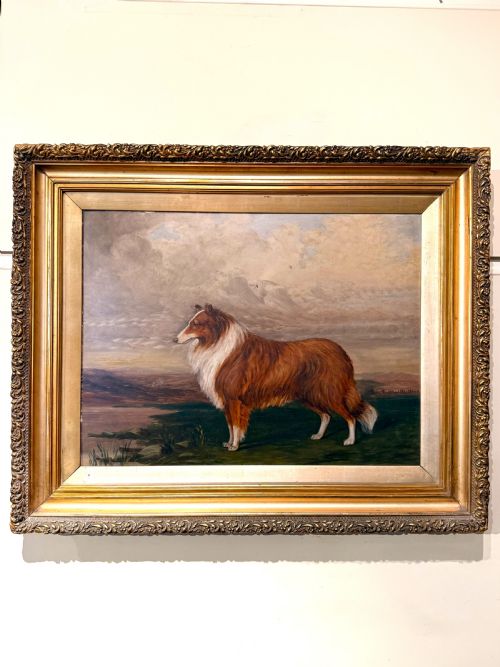
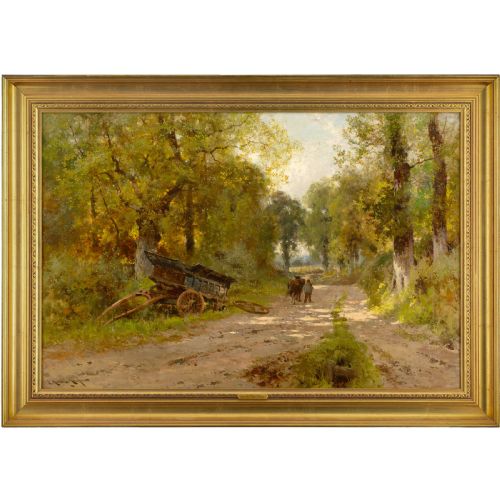
These gold frame landscape painting examples capture rural scenes and pastoral views encased in ornate moulding, offering collectors a classic window into historic countryside vistas.
Understanding gold frame landscape painting
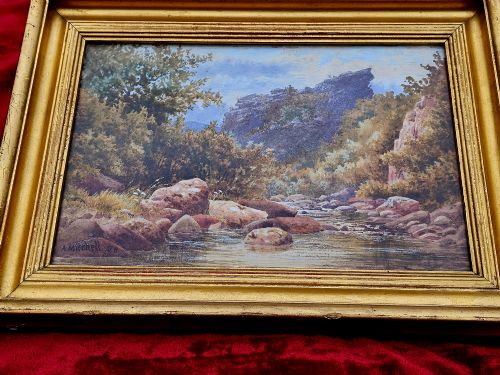
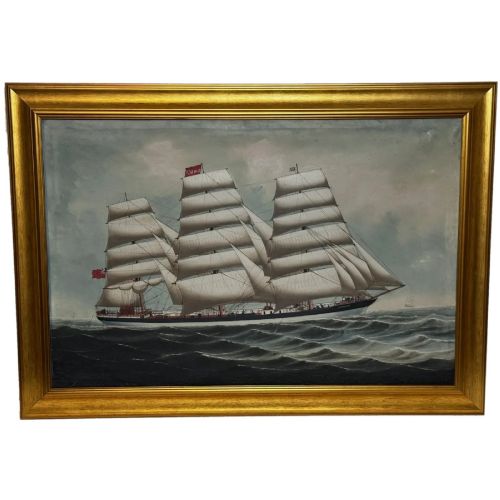
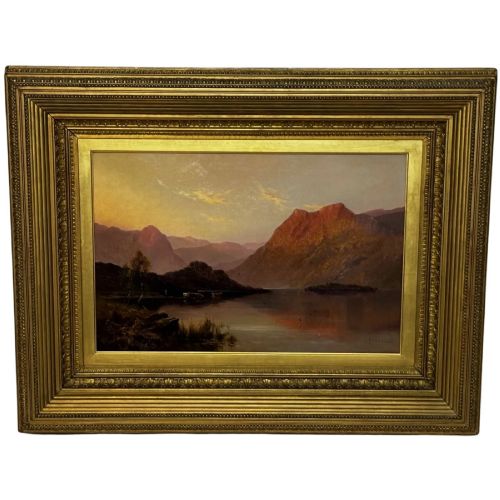
A gold frame landscape painting presents a pastoral or rural scene housed within a gilded border, drawing the eye directly into the depicted countryside or river view. These works capture historical vistas through oil on canvas, oil paint, and watercolour, framed in wood, gesso, and gilt wood.
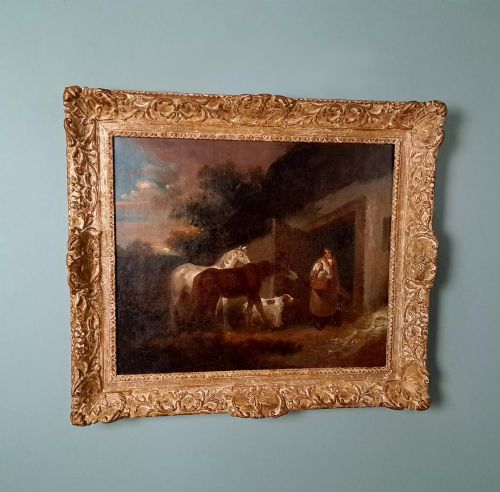
Collectors frequently encounter Victorian pieces alongside works from the nineteenth century, Dutch School, and twentieth-century interpretations. Subject matter ranges from mountain scenes and riverscapes to New Forest views, winter landscapes, and rural village life with horses and sheep.
The objects span oil paintings and framed artwork, often presenting traditional realism, British Impressionism, or Victorian romanticism. Each piece brings a specific regional or stylistic perspective, whether depicting Hampshire, Ireland, or imaginative Dutch manners.
Materials and construction
Artists built these works utilising oil paint or watercolour applied directly to stretched canvas or paper support. The underlying structure relies on wooden stretchers and canvas, capturing fine details of light and atmosphere across mountain slopes and riverbanks.
The surrounding mouldings utilise wood as a base, layered with gesso and finished with gold leaf or gilt wood to create a reflective border. Protective glass frequently covers the watercolour works on paper to prevent environmental damage.
Retail Price Guide 2026
Typical UK retail prices for gold frame landscape painting, calculated from the Sellingantiques database of over a million retail prices indexed since 2003. This retail price guide relies exclusively on Sellingantiques data; no external sources or auction records are used, so the figures do not describe the wider market.
Listings span the nineteenth century through to nineteen sixty, encompassing Victorian naturalism, British impressionism, and Dutch School traditions.
Distinctions in quality
Quality rests upon the handling of light, brushwork fluidity, and the depth of the composition within the landscape. Works by documented hands demonstrate a superior command of atmosphere and perspective compared to anonymous or derivative pieces.
The integrity and ornamentation of the surrounding frame also dictate value, with hand-carved gilt wood and well-preserved gesso moulding outperforming simpler or later replacements. Preservation of the original canvas and paint layer remains paramount.
Frank Hider·William Foster·GW Horlor·Frederick Golden Short·Owen Bowen
The Gold Frame Landscape Painting Glossary
- Gesso
- A plaster-like mixture applied to wood mouldings to prepare the surface for gilding. This substance allows artisans to carve intricate relief details before applying gold leaf.
- Gilt wood
- Timber treated with a thin layer of gold leaf or gold paint. It provides the characteristic metallic sheen seen around historic artwork.
- Oil on canvas
- Pigment mixed with drying oil applied to a woven fabric support. This combination offers durability and rich colour blending for pastoral scenes.
- Riverscape
- A painting depicting a river, stream, or waterway as the primary subject. These compositions often emphasise reflections and riparian vegetation.
- Watercolour
- Paint consisting of colourants suspended in a water-soluble vehicle, typically applied to paper. It yields a translucent quality distinct from opaque oil mediums.
Frequently Asked Questions
How do I date a gold frame landscape painting?
Dating relies on examining the canvas stretchers, the composition of the gesso beneath the gilding, and the stylistic conventions of the brushwork. Nineteenth-century works often exhibit specific framing profiles and canvas stamps distinct from later periods.
Secondary clues include the backing materials, handwritten inscriptions on the stretcher bars, and the specific chemical composition of the pigments used by the artist.
How should I care for a gilt frame?
Gilt wood and gesso frames require gentle dusting with a soft, dry brush to prevent the accumulation of abrasive particles. Avoid liquid cleaners, moisture, and chemical solvents, which can strip or dissolve the delicate gold leaf layer.
Maintain stable environmental conditions away from direct sunlight and central heating radiators to prevent the wood from warping and the gesso from cracking.
Are watercolours framed differently from oils?
Watercolour paintings on paper require a protective layer of glass and a mount to keep the paper surface from touching the glazing. This setup protects the delicate water-soluble pigments from airborne moisture and atmospheric pollutants.
Oil paintings on canvas are typically displayed open to the air within their heavy wooden frames, as the oil paint layer possesses greater resilience against ambient humidity.