

Traditional Hallway Furniture
Traditional hallway furniture brings immediate utility and historic character to an entryway through time-honoured wooden benches, stands, and racks.
Traditional Hallway Furniture
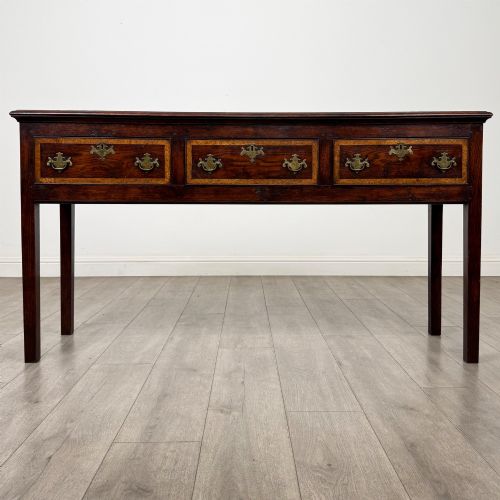
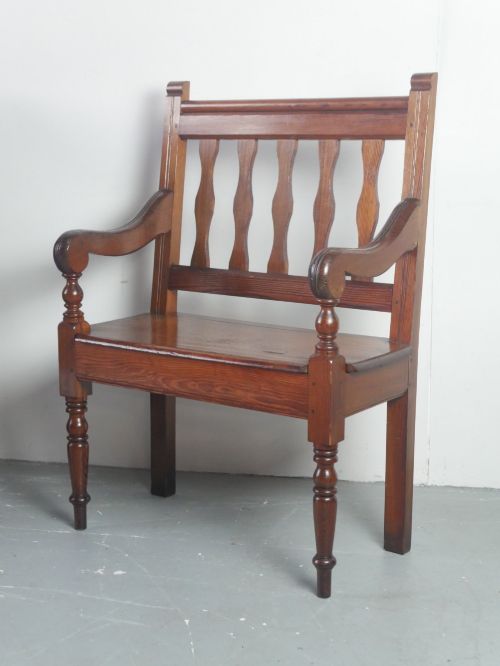
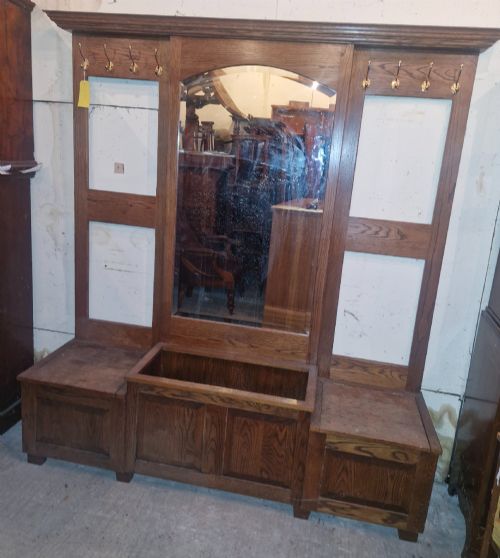
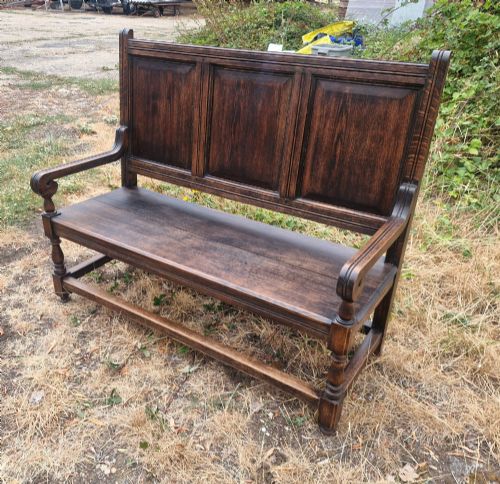
Traditional hallway furniture encompasses practical entrance pieces designed to seat visitors, store boots, and hold coats or umbrellas. Benches, settles, and hall stands form the core of what you will encounter when browsing.
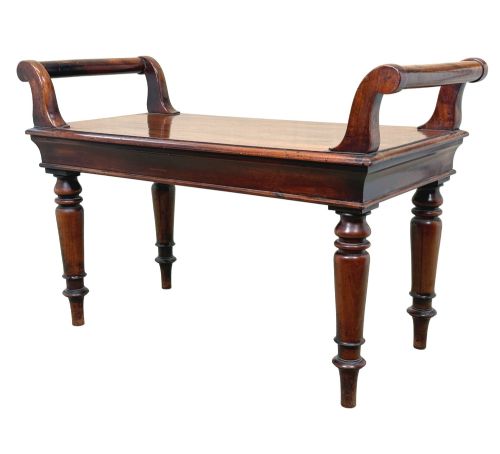
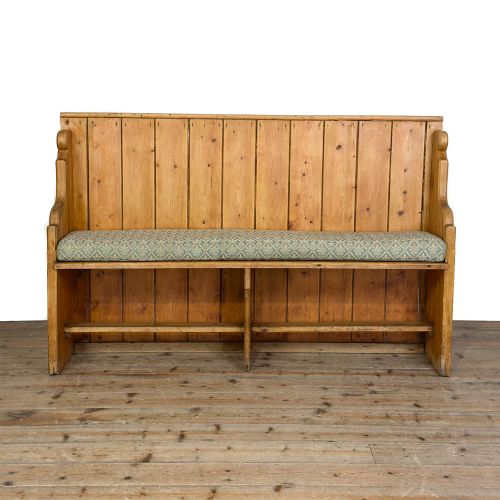
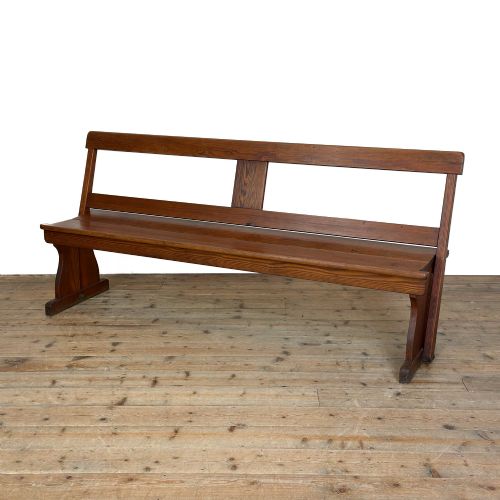
The pieces span several eras, reaching from the 18th century through the Victorian and Edwardian periods into the early 20th century. Pine, oak, and mahogany appear most frequently, shaped into functional forms like church pews, umbrella stands, and window seats.
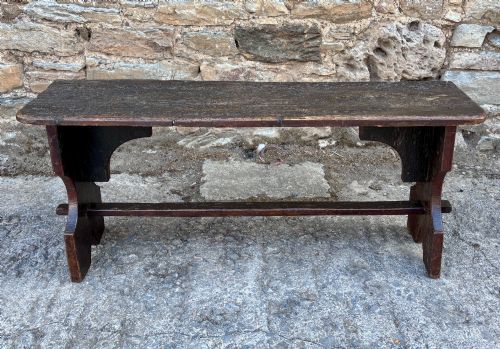
Country house and rustic styles dominate the selection alongside formal Regency and Georgian designs. You are just as likely to find a painted pine bench from Hungary as a carved oak box settle or a mahogany boot rack.
Construction and Materials
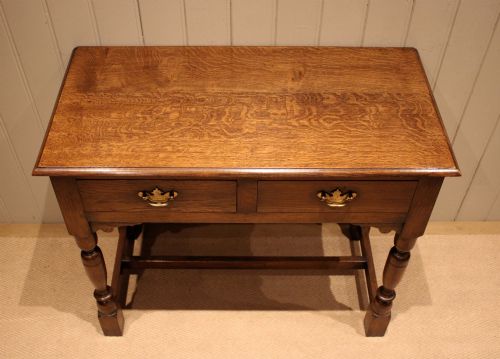
Solid timbers such as oak, pine, elm, and mahogany provide the structural foundation for these entrance pieces, joined using traditional cabinetry methods. Waxed, polished, or painted finishes protect the wood while highlighting the natural grain and patination built up over decades.
Metal elements appear in cast iron and brass for umbrella drip trays, coat hooks, and hardware. Bentwood techniques shape lighter items like hatstands, relying on steam to bend timber into curved forms.
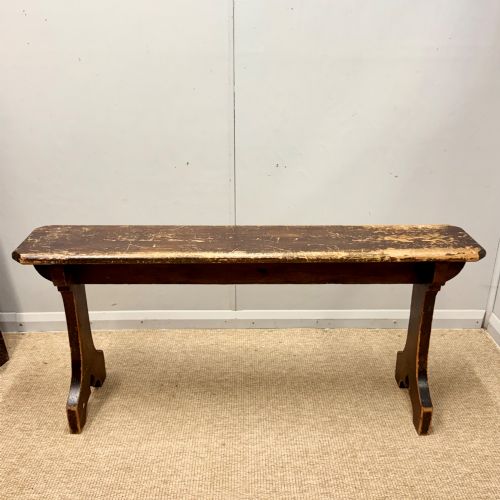
Some Hungarian pine benches arrive with their original blue or black paint stubbornly clinging to the timber.
Judging Quality
The integrity of the timber and the depth of the patination set better examples apart from standard utility items. Original surfaces, whether a honey-brown wax or early paint layer, carry significantly more character than stripped or overly restored wood.
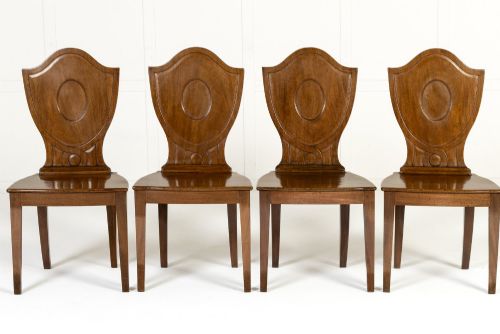
Proportion and functional cleverness distinguish superior pieces, such as settles with well-fitted lift-up seats, cleverly integrated boot stores, or finely carved details on oak panels and mahogany chair backs.
The Traditional Hallway Furniture Glossary
- Settle
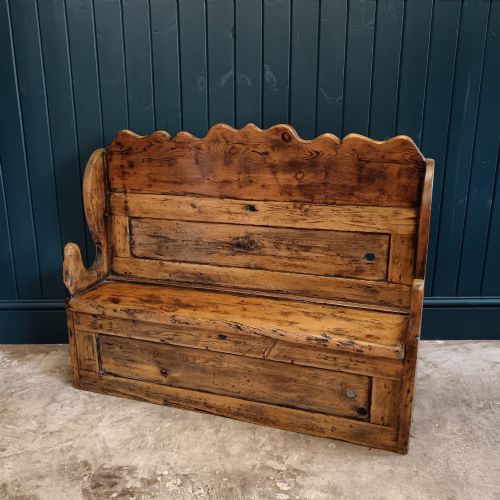
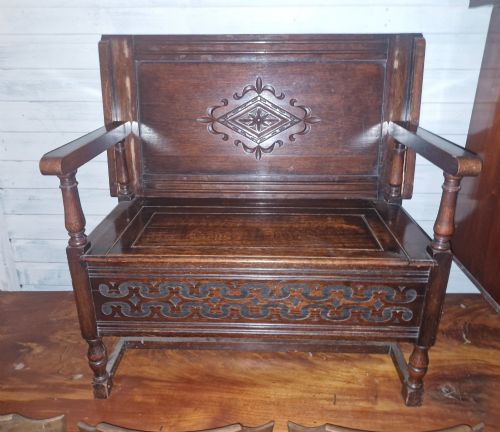
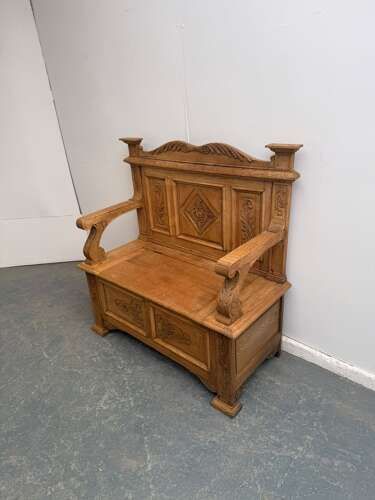
- A wooden bench with a high back, solid arms, and often a storage box beneath the seat. It was originally designed to keep draughts away from the entrance.
- Luggage stand
- A low wooden frame with slatted top straps, traditionally placed in hallways or guest rooms for holding bags.
- Bentwood
- Wood that has been heated with steam and bent into curved shapes. It is frequently seen in hallway hatstands and coat racks.
- Patina
- The surface sheen and mellow appearance developed on wood and metal through age, handling, and regular waxing.
- Boot rack
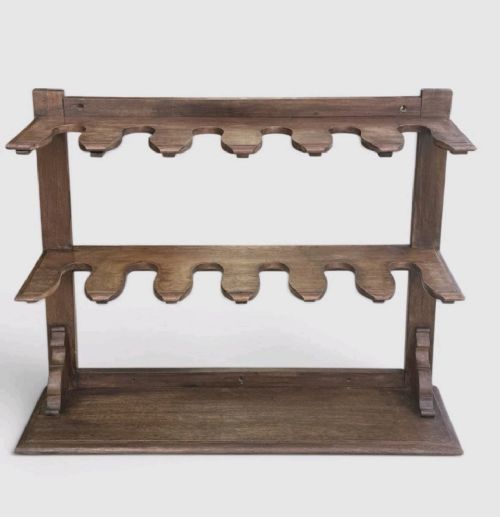
- A specialised piece of hallway furniture designed to store footwear off the floor. These often incorporate shoe shelves or inverted pegs.
Traditional Hallway Furniture: Frequently Asked Questions
How do I choose the right bench?
Measure your hallway width carefully to ensure clearance for doors and foot traffic. Consider whether you need enclosed storage underneath the seat for boots and umbrellas.
Match the timber tone and period style to your existing interior architecture for a cohesive look.
What is a box settle?
A box settle combines a high-backed wooden bench with a compartment hidden beneath a hinged seat. This design provided secure storage for household items near the entrance.
They were commonly placed in hallways and farmhouses to block cold draughts.
How do I care for antique pine?
Apply a quality beeswax periodically to nourish the dry timber and maintain its natural lustre. Avoid placing wooden hallway pieces directly against radiators or in damp areas.
Clean surfaces gently with a soft, dry cloth rather than harsh liquid polishes.
Where were hall stands placed?
Hall stands stood immediately inside the front door to catch hats, coats, sticks, and wet umbrellas. They acted as the primary greeting point for guests entering a home.
Their multi-functional design kept everyday outdoor garments organised in compact entrance spaces.