



Victorian Mahogany Hat Stand
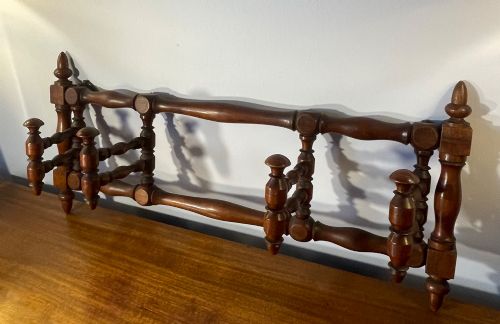
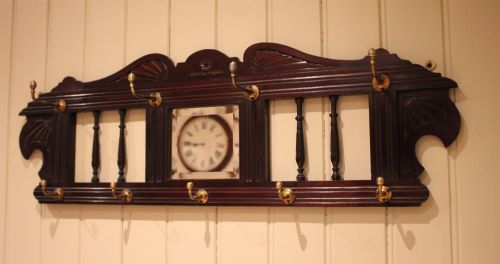
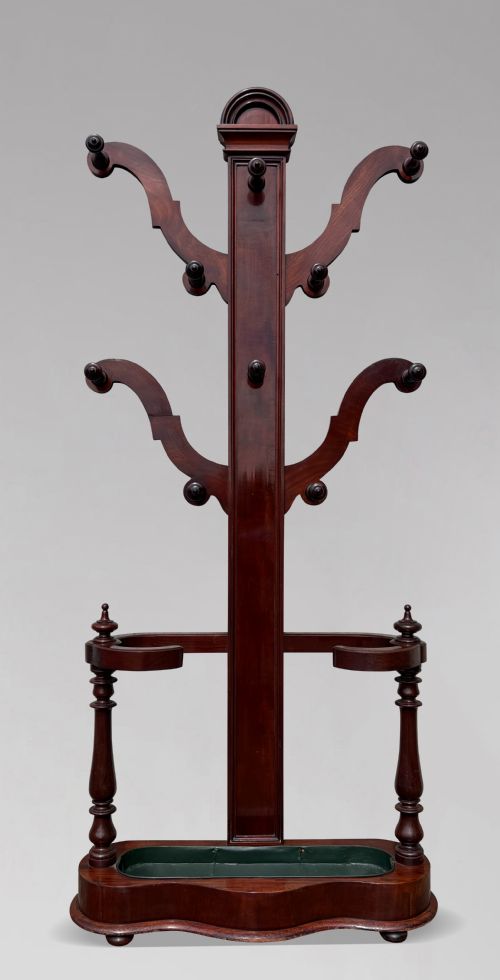
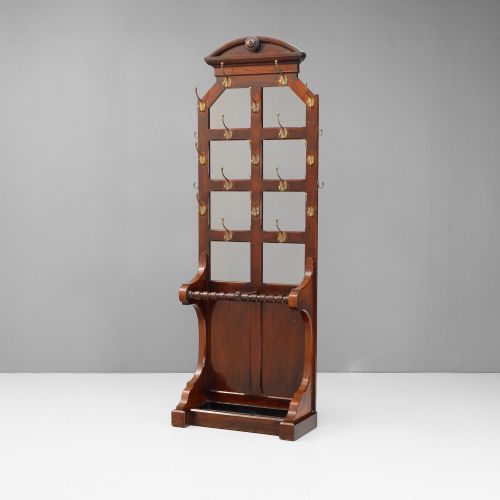
A victorian mahogany hat stand organises the entrance hall with timber warmth, fitted mirrors, and robust brass hooks for daily use.
Victorian Mahogany Hat Stand
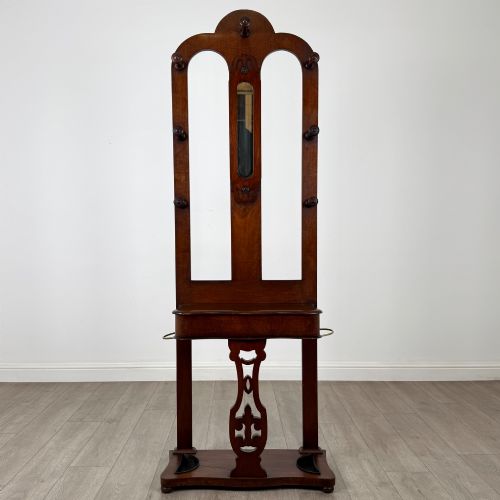
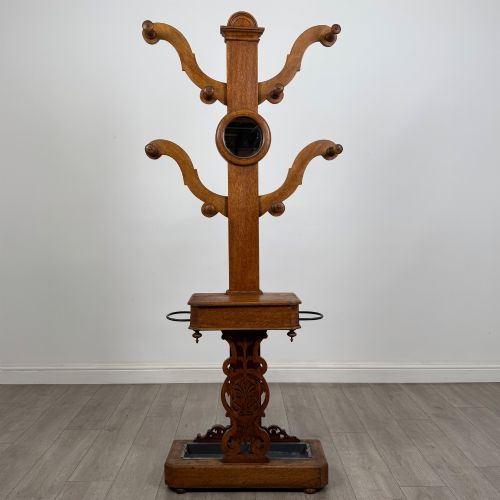
A victorian mahogany hat stand serves as the traditional entrance furniture for coats, hats, and walking sticks, appearing primarily as tall freestanding hall stands alongside wall-mounted coat racks. The core of this selection spans the nineteenth century, running from early Victorian examples through to late period pieces and Edwardian variants.
Most pieces combine utility with display, incorporating bevelled mirrors, marble shelves for visiting cards, and drip pans for wet umbrellas. Alongside standard hall trees, the historical record includes multi-tiered whatnots and specialised coat racks matching the primary timber.
How they were made
Makers utilised solid mahogany and mahogany veneers for the main structure, often combining the timber with cast iron frames, brass hanging hooks, and inset ceramic tiles for durability. Marble inserts provide a stable, water-resistant surface on the central shelf, while mirrored plates feature deep bevelling set into carved wooden frames.
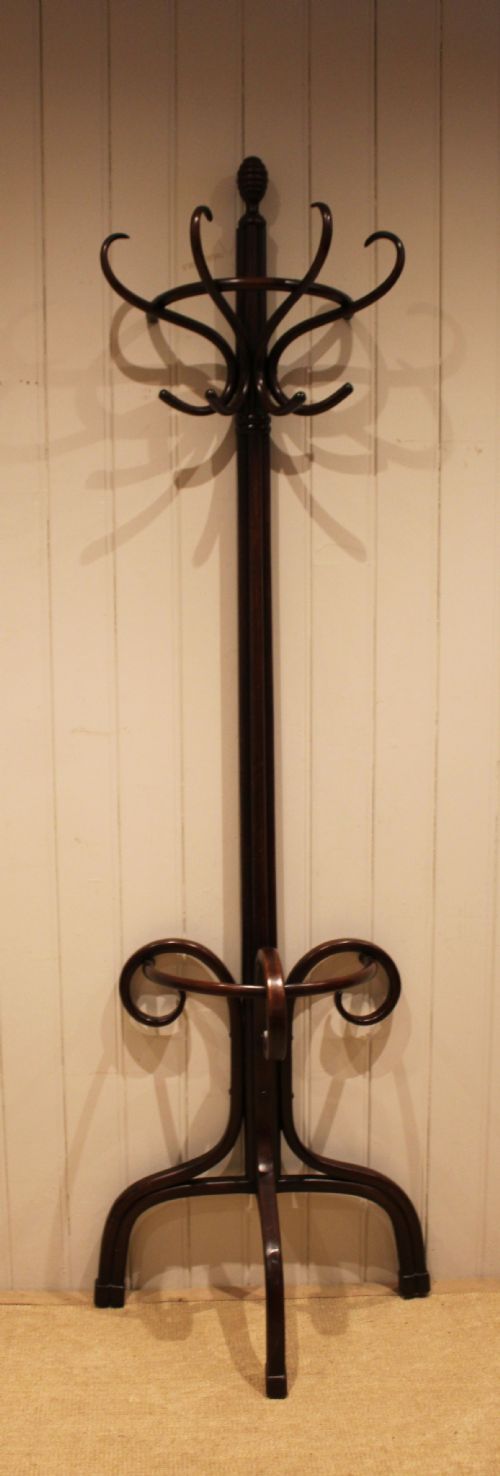
Construction techniques rely on robust joinery to support heavy winter garments, incorporating turned columns, carved scrollwork, and steam-bent components in later bentwood variations. Metal elements such as brass rods and iron umbrella rings are screwed directly into the timber framework to withstand daily household wear.
Some stands include integrated key boxes to ensure nobody lost their way out.
What varies in quality
The distinction between standard utility pieces and finer examples rests on the depth of timber carving, the integration of auxiliary materials like marble and tiles, and overall structural proportions. Elaborate architectural cornices, turned column supports, and substantial mirror frames elevate a piece beyond basic hallway furniture.
Hardware integrity and original fittings dictate the integrity of a piece, where solid brass hooks and intact marble slabs preserve the maker's original design intent. Secondary timbers and the quality of the mahogany grain further separate mass-produced items from workshop-commissioned items.
Ellen E. Houghton of Minton
The Victorian Mahogany Hat Stand Glossary
- Hall stand
- A tall entrance piece combining coat hooks, a mirror, and umbrella storage. These items anchor the hallway and often feature integrated glove boxes or marble surfaces.
- Whatnot
- A multi-tiered open shelving unit used for display or storage. These pieces share the mahogany construction and period aesthetic of adjacent hat stands.
- Etagere
- A French-derived term for a display stand with multiple tiers. These items function similarly to English whatnots in domestic room settings.
- Bentwood
- Wood shaped by heating and steam to form curved structural elements. This technique produces lighter coat racks popular in the later Victorian and Edwardian eras.
- Bevelled plate
- Mirror glass with angled, polished edges set into the frame. This treatment adds depth and light reflection to the central panel of the stand.
Victorian Mahogany Hat Stand: Frequently Asked Questions
How do I maintain the mahogany finish?
Dust the timber regularly with a soft, dry cloth to prevent surface build-up and preserve the natural sheen of the wood.
Avoid placing the stand near direct heat sources or strong sunlight, which can dry out the mahogany and cause splitting.
Were these stands made for homes?
These pieces were designed primarily for grand entrance halls and reception rooms of period townhouses and country residences.
They provided arriving guests with a convenient place to deposit wet coats, hats, and walking sticks before entering the main rooms.
How do I secure a tall hall stand?
Many tall freestanding hall stands benefit from additional wall anchoring to ensure stability, particularly when loaded with heavy winter coats.
Check the base and feet to ensure they rest levelly on the floor before hanging garments on the upper hooks.
What is the purpose of the marble shelf?
The central marble insert provided a durable, stain-resistant surface for placing calling cards, keys, and gloves upon entering the house.
This stone surface also offered protection against moisture from wet items placed temporarily near the centre of the stand.