


Brown Timber Hall Tree
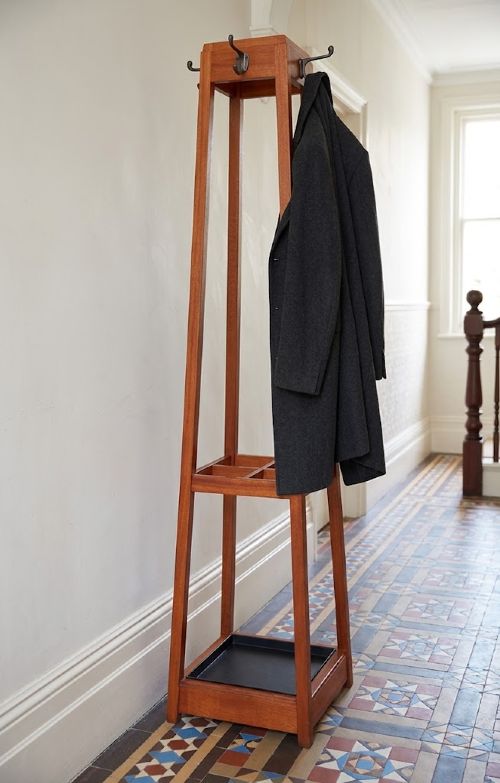
A brown timber hall tree provides a practical welcome in an entrance, holding coats, hats, and boots with period character.
Brown Timber Hall Tree
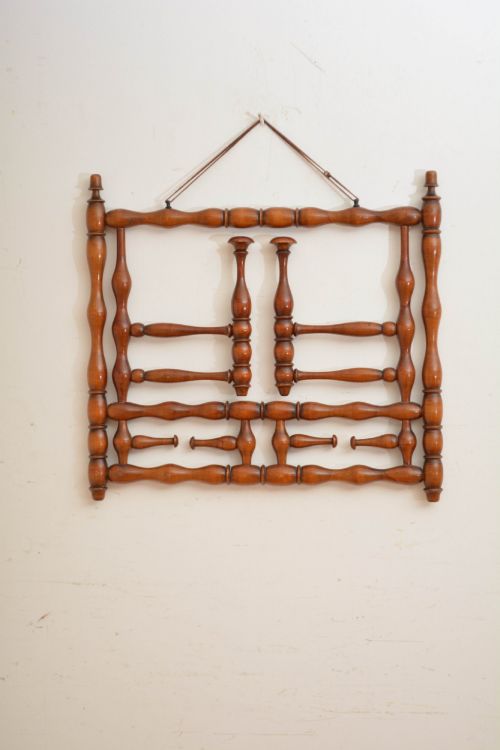
A brown timber hall tree serves as a functional piece of entrance furniture designed to hold coats, hats, and boots, appearing across Victorian, Edwardian, and Art Deco styles. These items take the form of coat stands, hall stands, boot racks, and hatstands, offering a structured place for everyday outdoor garments.
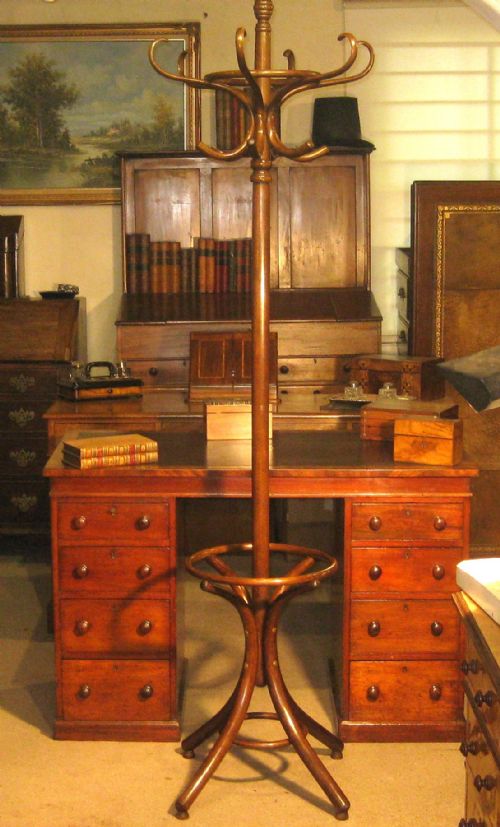
The pieces listed on this page span from the nineteenth century into the early twentieth century, including items from around 1850, 1880, 1900, 1910, 1920, and 1930. Buyers frequently encounter revolving bentwood designs, carved bear figures, massive pine structures, and mahogany column constructions among the available examples.
Materials and construction
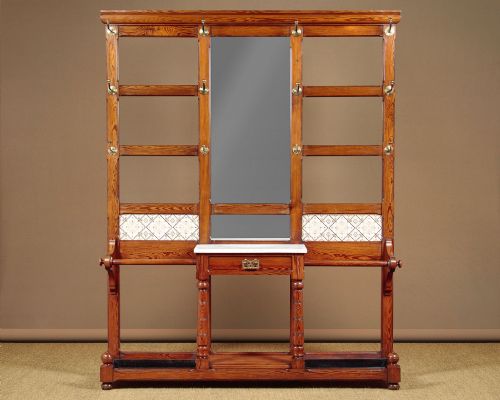
Construction relies heavily on solid woods such as mahogany, pine, beech, and oak, shaped into structural frames for daily domestic use. These wooden bodies are often complemented by brass fixtures, metal hooks, mirror glass panels, and inset marble elements.
Techniques range from the steaming and bending processes used for bentwood hatstands to detailed hand-carving seen on animal figures and column shafts. Makers combined these structural timbers with metal hooks and mirrors to create durable furniture for hallways.
Current listings feature pieces spanning the nineteenth century and the early decades of the twentieth century, including specific dates from 1850 to 1930.
Distinguishing quality
Quality in a brown timber hall tree rests on the selection of primary timbers and the integration of functional elements like mirrors and hooks. Superior examples demonstrate careful carving, substantial joinery, and the clever incorporation of boot racks or umbrella wells.
The execution of decorative details, such as carved bear motifs or turned mahogany columns, separates standard utility items from more ambitious workshop productions. Surviving original hardware, including brass and metal hooks, also contributes to the standing of an individual piece.
J. Parker of Woodstock·Astrola
The Brown Timber Hall Tree Glossary
- Hall tree
- A piece of hallway furniture combining coat hooks, a hat shelf, and often a mirror or boot rack. This form is sometimes called a hall stand.
- Bentwood
- Wood softened by steam and bent into curved shapes, commonly utilised in lightweight Edwardian hatstands. This method creates strong, flowing lines without complex joinery.
- Antler coat stand
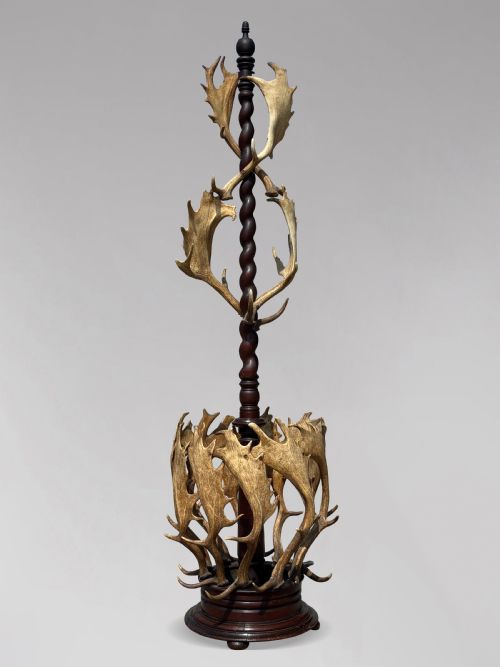
- A specific Victorian coat stand incorporating natural antlers for hanging garments. These pieces often date to the mid-nineteenth century.
- Boot rack
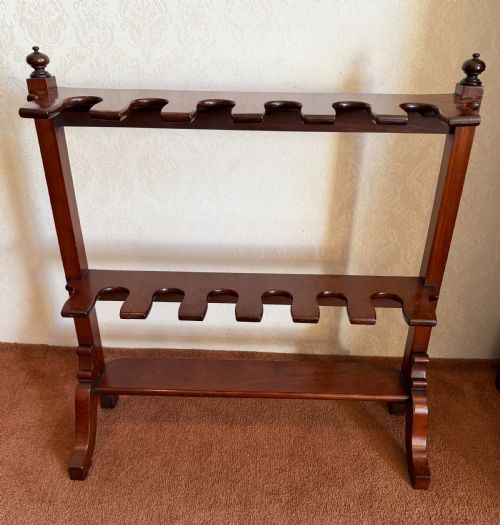
- A low rack or stand designed for holding riding boots and whips, frequently constructed from mahogany. Such items formed part of the furnishings in nineteenth-century country houses.
Brown Timber Hall Tree: Frequently Asked Questions
What is a brown timber hall tree?
A brown timber hall tree is a piece of entrance furniture designed to hold coats, hats, and walking gear. It combines upright wooden framing with hooks and often includes storage for boots or umbrellas.
These items were placed in entrance halls to manage outdoor clothing before guests entered the main living spaces. They range from simple bentwood frames to elaborate carved oak and mahogany structures.
How do I date a hall stand?
Dating a hall stand involves looking at the prevailing style, timber types, and construction methods. Pieces from the nineteenth century often feature heavy mahogany or pine, while early twentieth-century examples lean towards bentwood or industrial oak.
Design motifs also offer clues, such as the carved bear figures from the early decades of the twentieth century or the revolving mechanisms found on Edwardian hatstands.
Where should I place a hall stand?
A hall stand belongs in an entrance hall or boot room where coats and hats are deposited upon arrival. The footprint requires adequate floor space and clearance for hanging garments.
Many examples include mirror glass and umbrella wells, making them practical additions near an entryway where a final check of attire is useful.
What woods were used for hall trees?
Maker workshops utilised a variety of solid timbers including mahogany, pine, beech, and oak. These woods provided the necessary strength to support heavy winter coats and hats.
Additional materials such as brass, metal, mirror glass, and marble frequently appear alongside the primary timber structure to add utility and decoration.