
Dark Wood Coat Tree
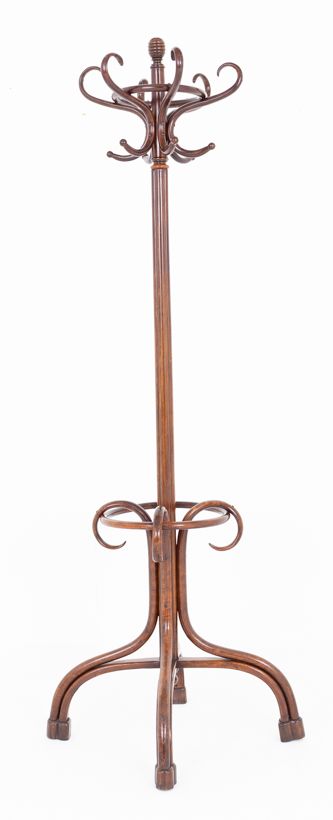
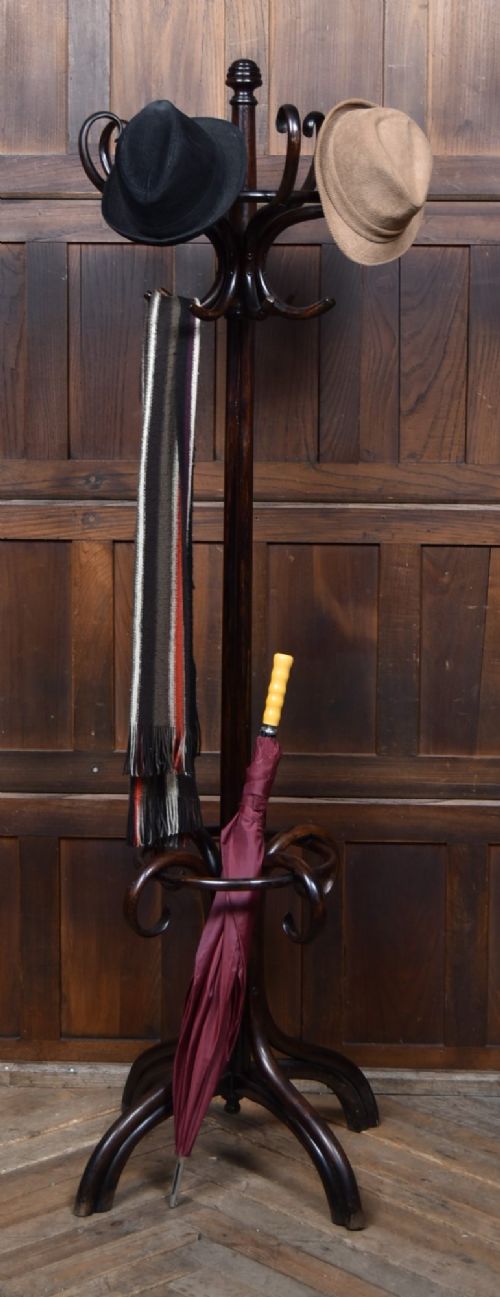
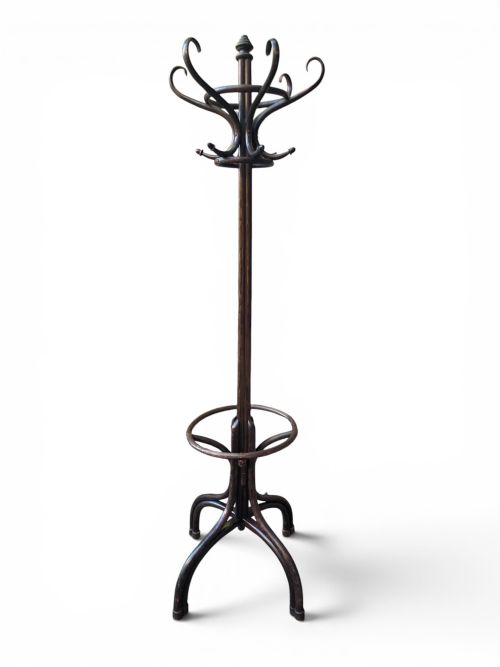
A dark wood coat tree is a tall freestanding timber hallway fixture designed to hold outerwear and hats.
Dark Wood Coat Tree
A dark wood coat tree brings vertical storage to entrance halls and vestibules through designs originating from the nineteenth and early twentieth centuries. These pieces encompass sturdy hall stands alongside steam-bent timber frames designed for daily utility in domestic spaces.
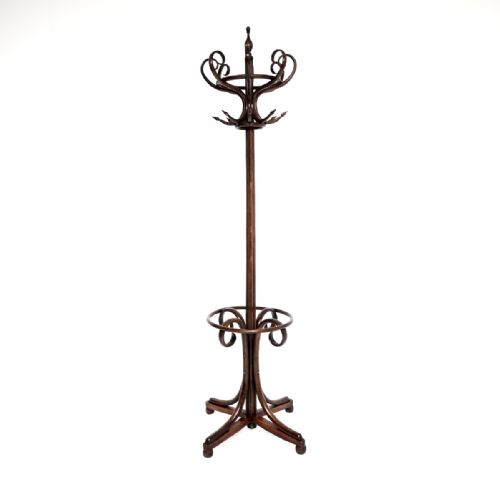
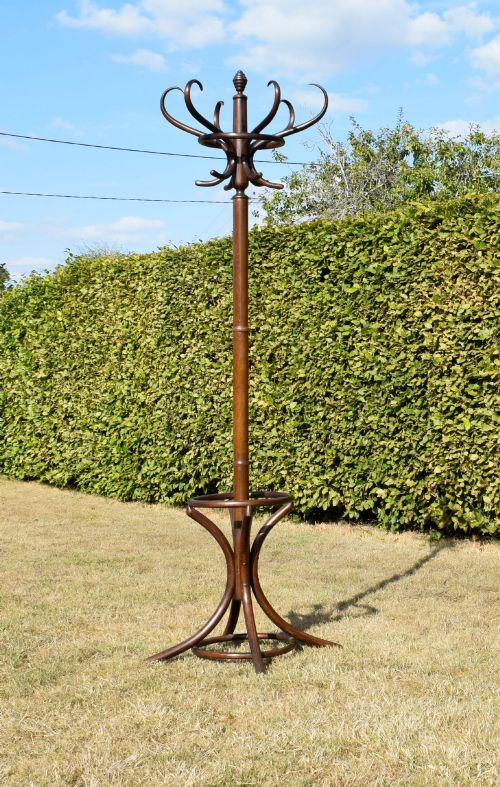
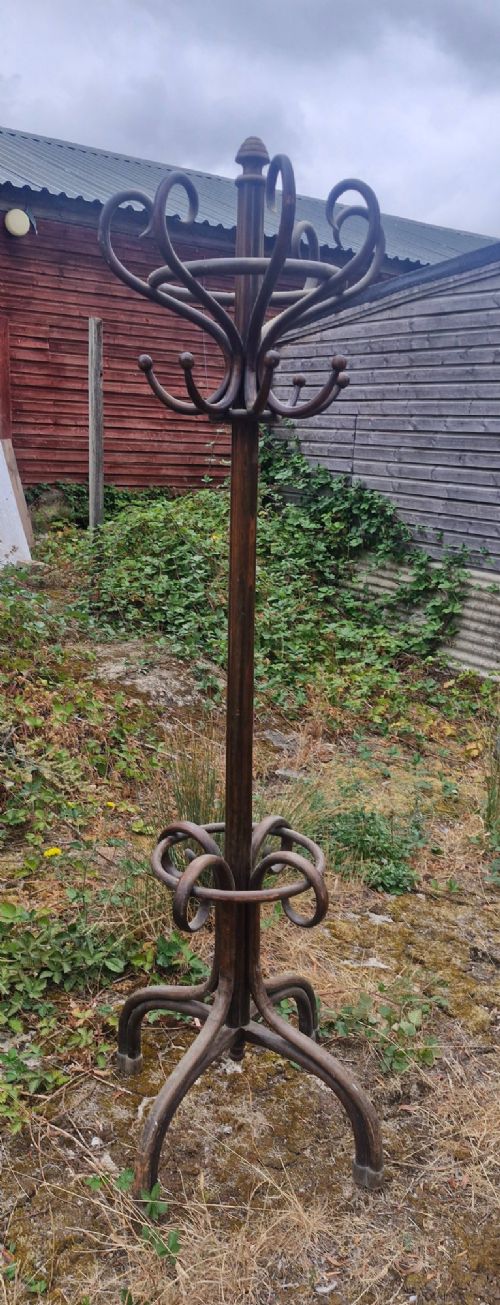
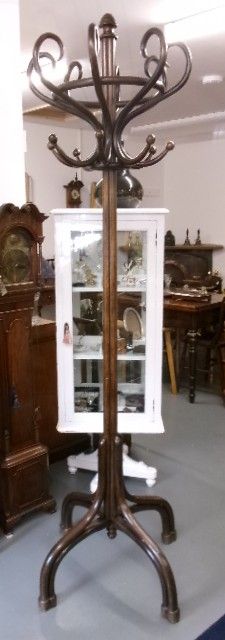
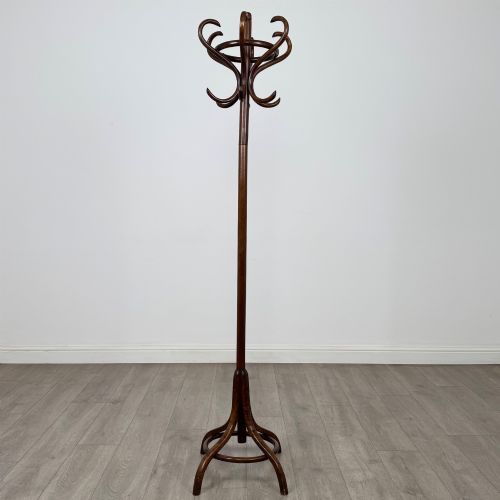
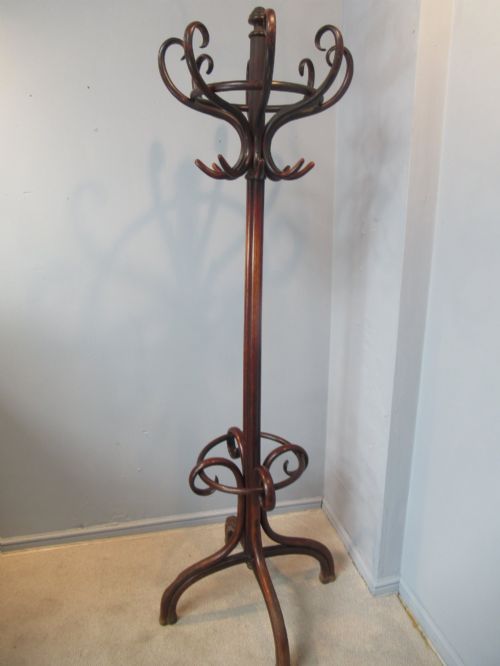
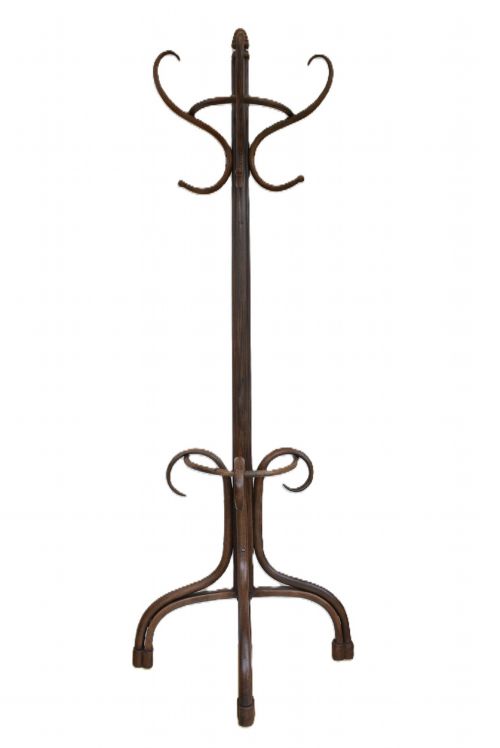
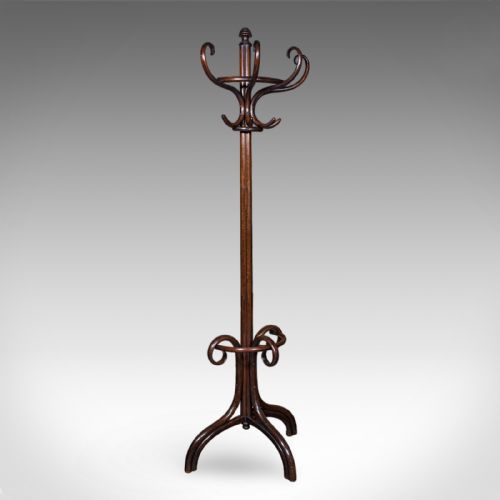
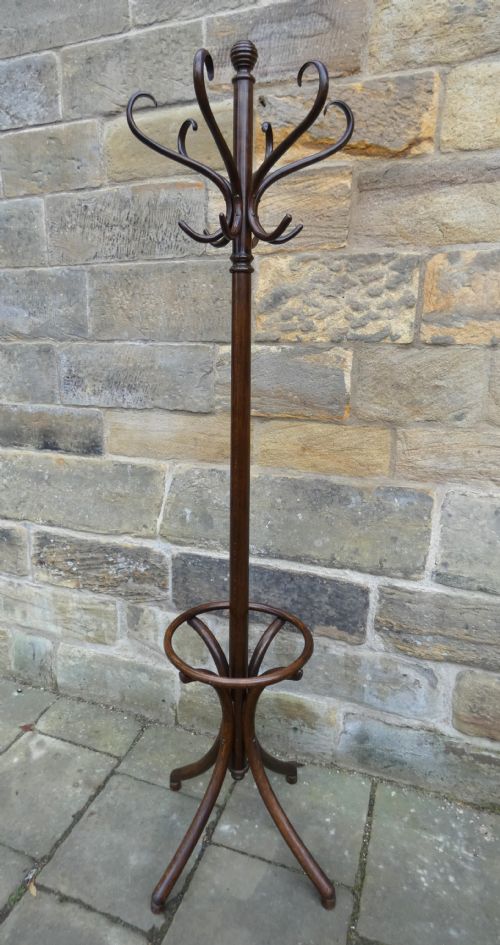
The version a buyer meets most frequently on this page is the bentwood hat and coat stand, often attributed to Austrian production methods. These items feature curved wooden profiles arranged around a central column with radiating upper hooks.
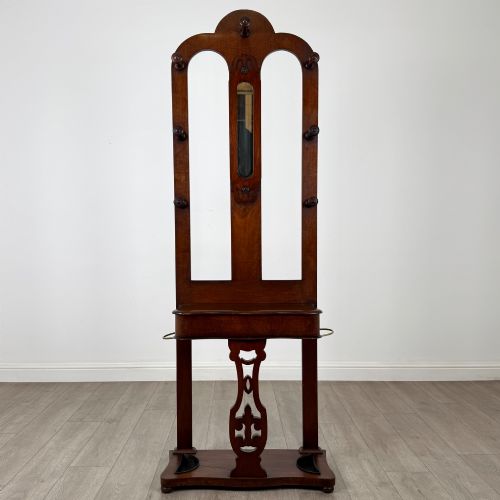
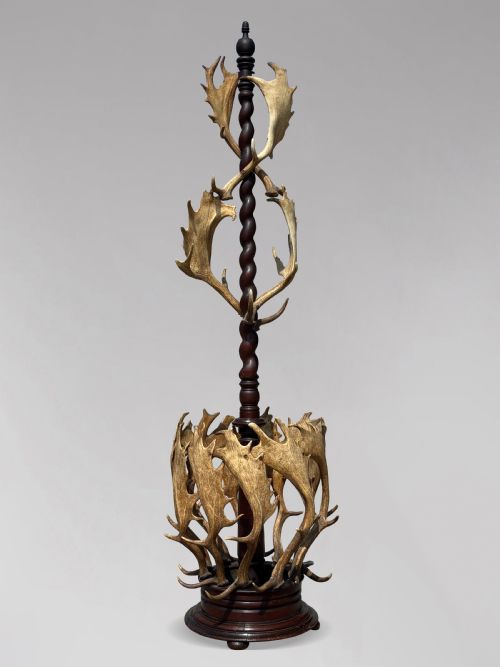
Alternative forms appearing alongside these bentwood examples include heavily carved oak and mahogany hall stands from the Victorian and Edwardian eras. Such pieces frequently incorporate mirror panels, umbrella trays and architectural mouldings into their upright wooden structures.
Materials and Construction
Steamed beech and beechwood form the backbone of the bentwood pieces, relying on moisture and heat to shape timber into smooth, continuous curves. Manufacturers secured these components using threaded joints and metal fixings to maintain structural integrity under heavy loads.
Solid mahogany, oak and walnut provide the heavy timber framework for carved hall stands originating from Victorian workshops. These denser hardwoods support intricate hand-carved details, applied mouldings and integrated mirror plates.
Several nineteenth-century hall stands feature carved wooden bears acting as silent attendants for visitors' hats and walking sticks.
Evaluating the Build
The distinction between standard utility items and finer examples rests on the complexity of the timber manipulation and the depth of the woodwork. Superior bentwood models display graceful, unbroken curves with balanced proportions across multiple tiers of hooks.
Carved pieces separate themselves through the crispness of the hand-carved ornamentation, such as figural animal carvings or foliage. Heavier gauges of timber and intact original hardware distinguish the sturdier survivals from ordinary production.
Thonet·Jas. Shoolbred·J. Parker of Woodstock·Fischel
The Dark Wood Coat Tree Glossary
- Bentwood
- Timber shaped through the application of steam and pressure. This technique allows for lightweight yet resilient frames.
- Hall Stand
- A hallway furniture piece combining coat hooks, umbrella storage and frequently a mirror or small compartment.
- Demi Lune
- A half-moon or semicircular shape. These stands sit flush against a wall to conserve floor space.
- Black Forest
- A regional style of nineteenth-century carved woodwork originating in Switzerland and Germany. These items often incorporate naturalistic animal forms like bears.
- Revolving
- A design feature allowing the upper tier of hooks to turn on a central axis. This mechanism provides easier access to garments.
Dark Wood Coat Tree: Frequently Asked Questions
How do I care for a bentwood coat tree?
Keep the wood conditioned with appropriate paste wax and avoid placing the stand in areas of extreme humidity.
Check the threaded joints periodically to ensure the upright sections remain tight and stable under heavy garments.
Were these stands used in homes or offices?
These tall stands served primarily in domestic entrance halls, vestibules and professional reception rooms to manage outdoor garments.
The vertical configuration maximised storage capacity while occupying minimal floor space in narrow hallways.
How do I distinguish Thonet pieces from other makers?
Many Austrian bentwood examples carry paper labels, stamped manufacturer marks or distinct fastening methods beneath the base.
Exact attribution often relies on catalogue matching and the refined execution of the steam-bent junctions.
Are wall-mounted versions different from freestanding trees?
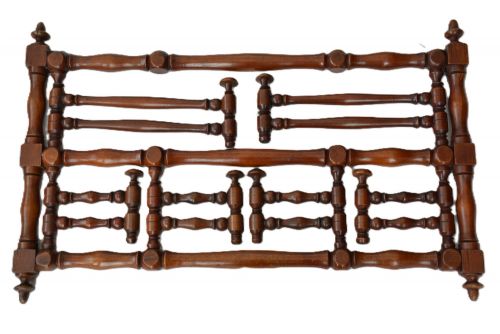
Wall-mounted racks fix directly to vertical surfaces to save floor space, whereas coat trees utilise weighted or splayed bases for freestanding balance.
Both types share similar nineteenth-century material origins and hook configurations.