

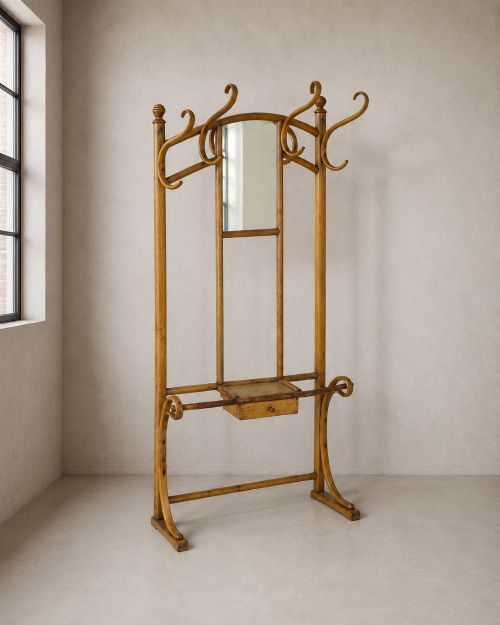
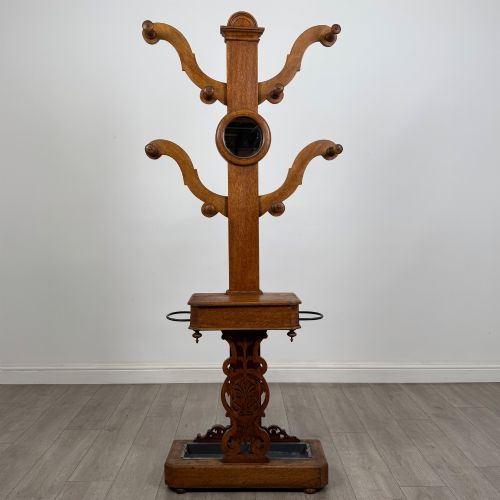
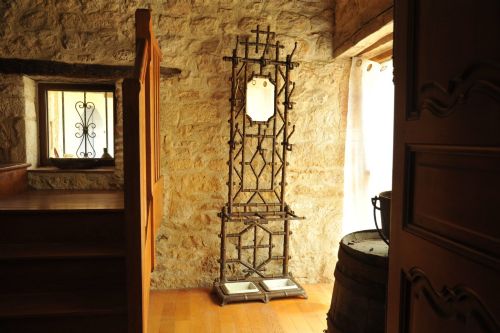
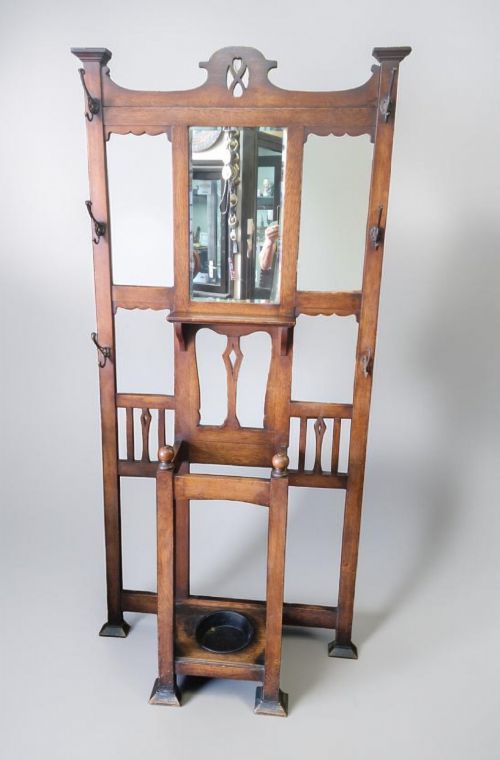
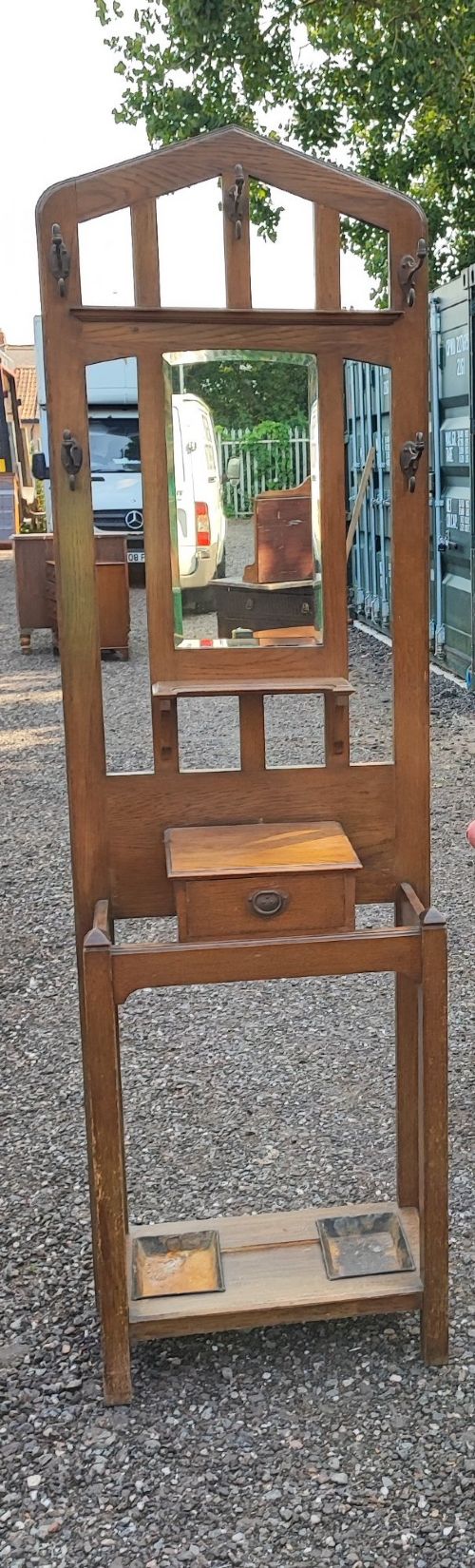
Hall Tree with Mirror
A hall tree with mirror combines a seat, coat hooks and umbrella storage into one practical piece of hallway furniture.
What these pieces are
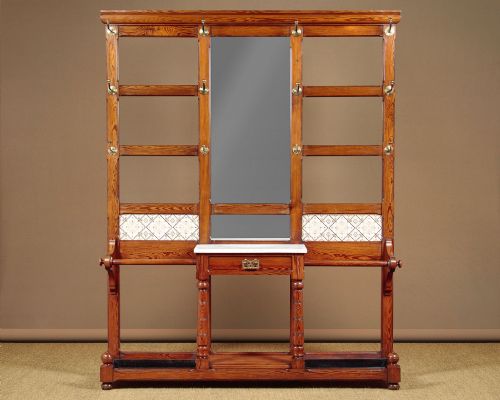
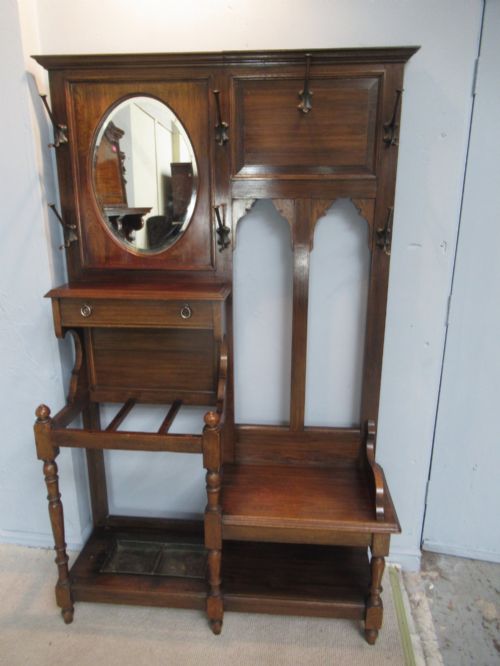
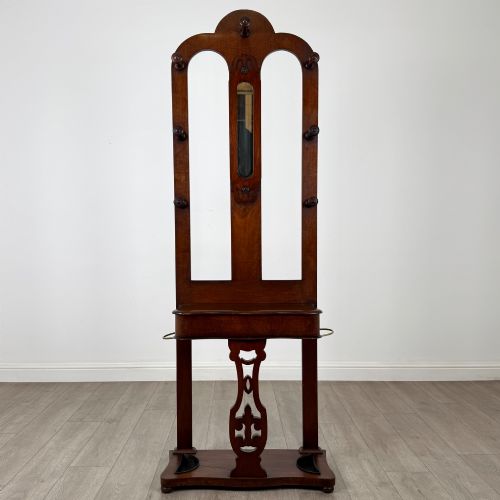
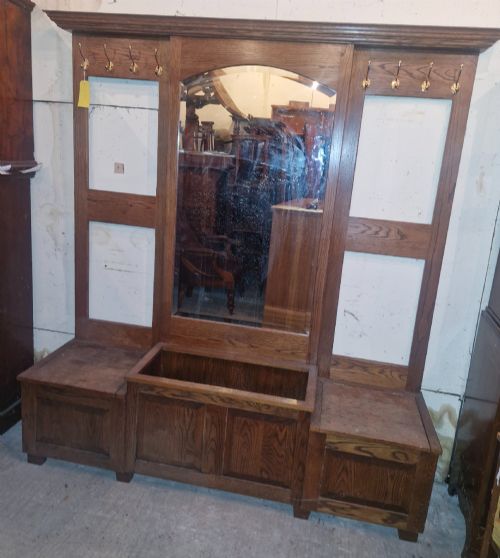
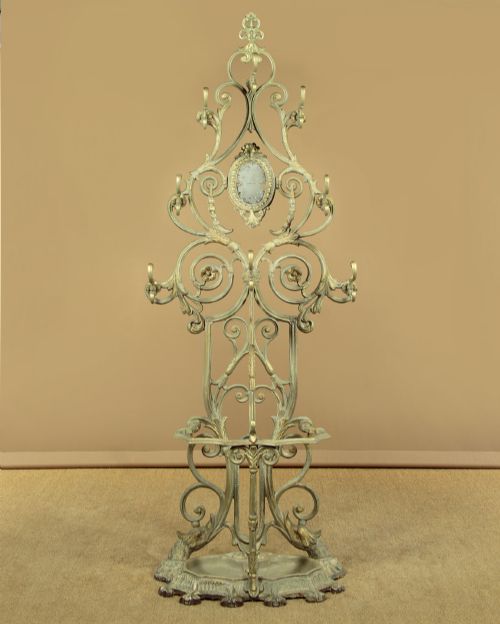
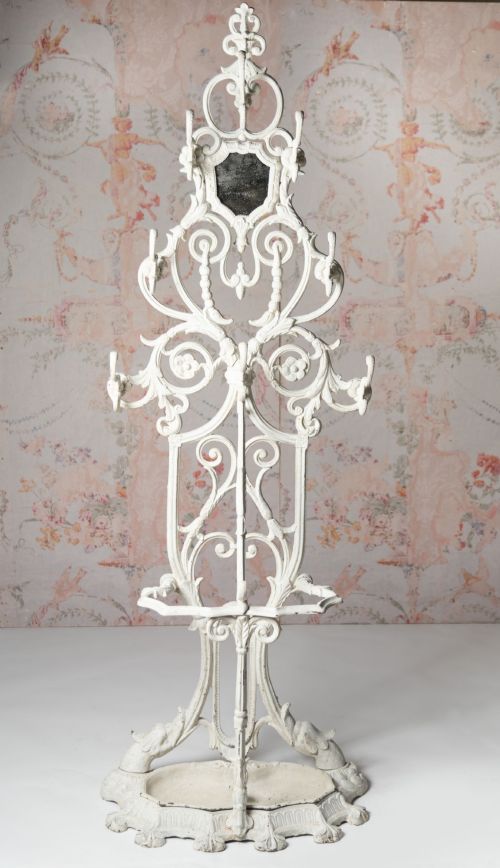
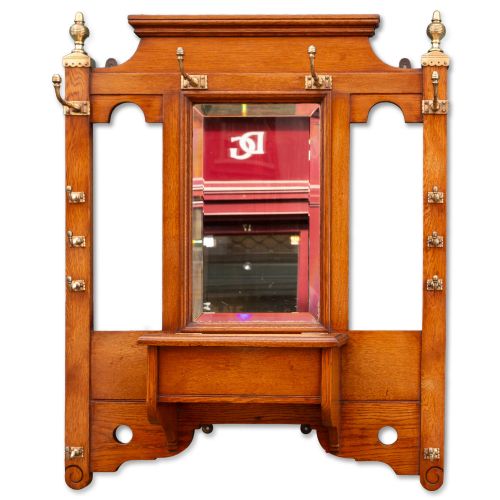
A hall tree with mirror serves as a functional entranceway piece designed for hanging coats, storing umbrellas and checking one's appearance before leaving the house. These items appear in various forms, including larger multi-functional hall seat stands and dedicated coat and umbrella stands.
The selection includes examples from the Victorian, Edwardian and mid-twentieth century periods, alongside French nineteenth-century interpretations. Materials range from traditional woods such as oak and mahogany to cast iron and pine.
How they were made
Maker construction relies heavily on solid timber framing in oak, mahogany and pine, shaped into substantial hallway structures. Metal components such as brass, cast iron and glass elements integrate directly into the framework to support heavy outerwear and provide reflective surfaces.
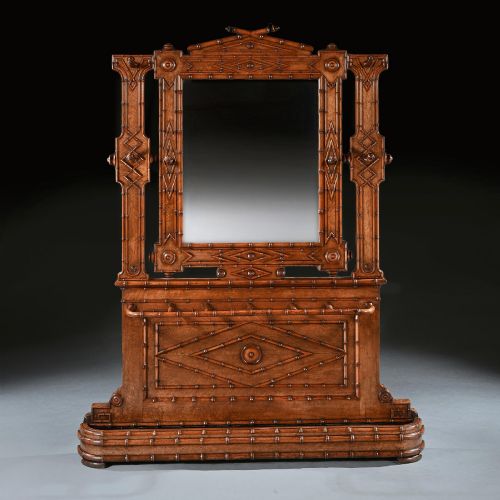
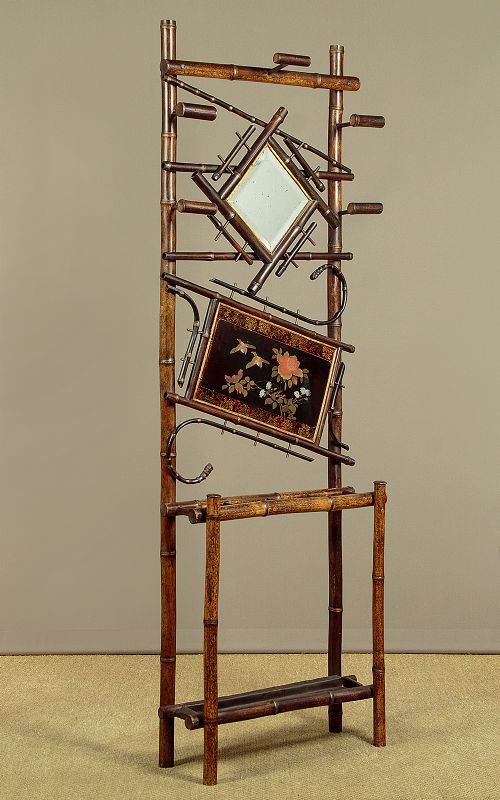
Some pieces incorporate decorative techniques including faux bamboo shaping in cast iron and carved woodwork typical of Victorian and Edwardian cabinetmaking.
Retail Price Guide 2026
Typical UK retail prices for hall tree with mirror, calculated from the Sellingantiques database of over a million retail prices indexed since 2003. This retail price guide relies exclusively on Sellingantiques data; no external sources or auction records are used, so the figures do not describe the wider market.
Current listings span pieces from the Victorian era, Edwardian period, and 1960, utilising oak, mahogany, cast iron, glass, brass and metal.
What varies in quality
The integration of functional elements, such as built-in seating compartments and securely mounted mirrors, defines the distinction between standard utility items and more ambitious multi-functional hall stands.
The Hall Tree with Mirror Glossary
- Hall Stand
- A piece of hallway furniture incorporating hooks for hats and coats, and often umbrella wells and a seat. These serve as the primary alternative descriptor for this furniture type.
- Faux Bamboo
- A decorative style where metal or wood is carved and painted to imitate natural bamboo shoots. This finish appears on nineteenth-century cast iron stands.
- Victorian Gothic Revival
- An architectural and decorative style drawing inspiration from medieval forms. Pieces in this style feature pointed arches and heavy carved ornamentation.
- Rococo Revival
- A mid-nineteenth-century style characterised by exuberant, asymmetrical scrollwork and naturalistic plant motifs. It influences the ornamental detailing of period hall furniture.
Frequently Asked Questions
What is a hall tree with mirror?
A hall tree with mirror is a piece of entrance furniture that combines clothes hooks, umbrella storage and a looking glass into a single unit.
These items organise outerwear in the hallway while providing a reflective surface for final adjustments before heading outside.
How do I date a hall stand?
Dating relies on identifying the prevailing style, construction timber and manufacturing techniques associated with specific periods.
Victorian and Edwardian examples often feature distinct carved oak or mahogany details, whereas nineteenth-century French pieces utilise cast iron or specific faux bamboo finishes.
Where should I place a hall stand?
These pieces suit entrance halls, vestibules and corridors where household members and visitors remove outdoor garments.
The vertical design keeps coats and umbrellas tidy while occupying minimal floor space in narrow passageways.
What materials are used?
Construction materials span native and imported timbers including oak, mahogany, pine and walnut. Metal elements such as brass, cast iron and glass appear alongside marble inserts in various designs.