


Oak Cane Stand
An oak cane stand is a sturdy hall furnishing designed to hold walking sticks and umbrellas, combining practicality with robust traditional charm.
Oak Cane Stand
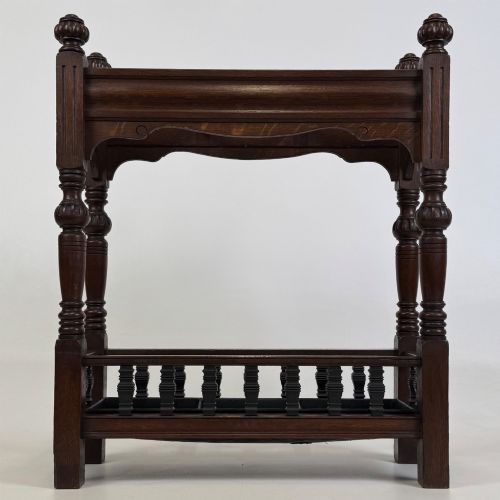
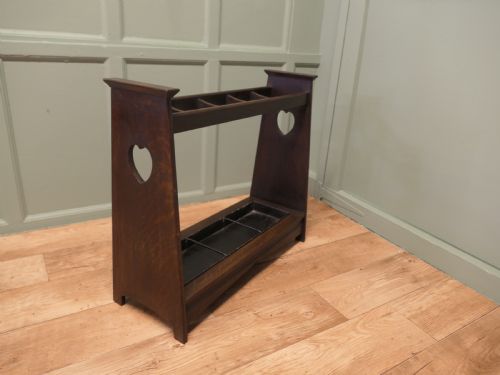
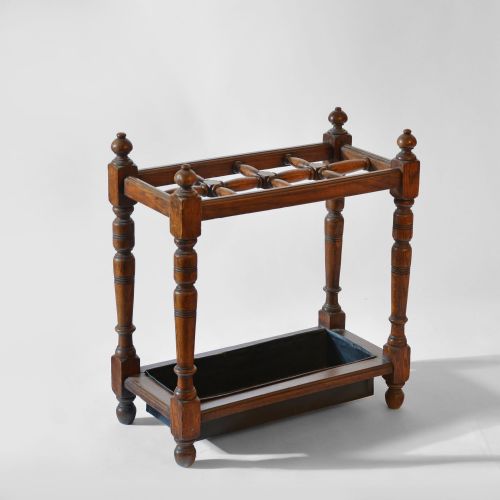
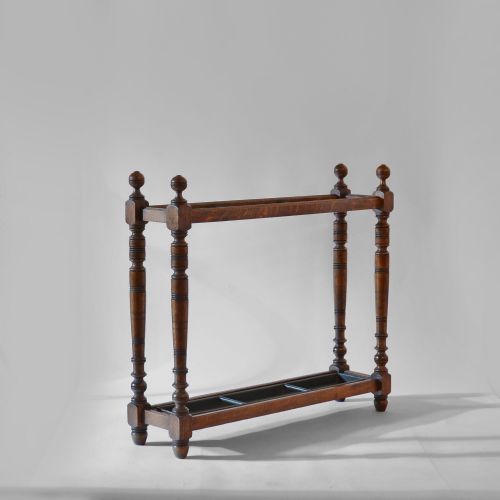
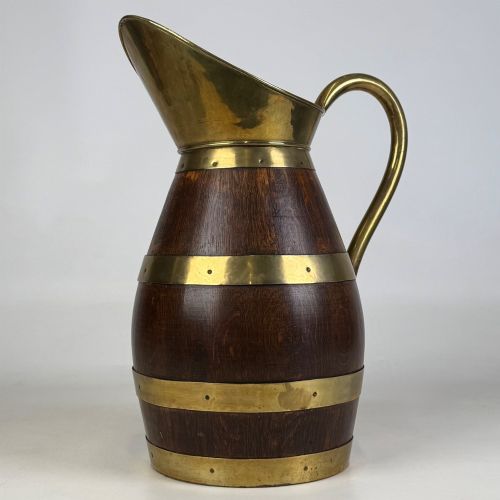
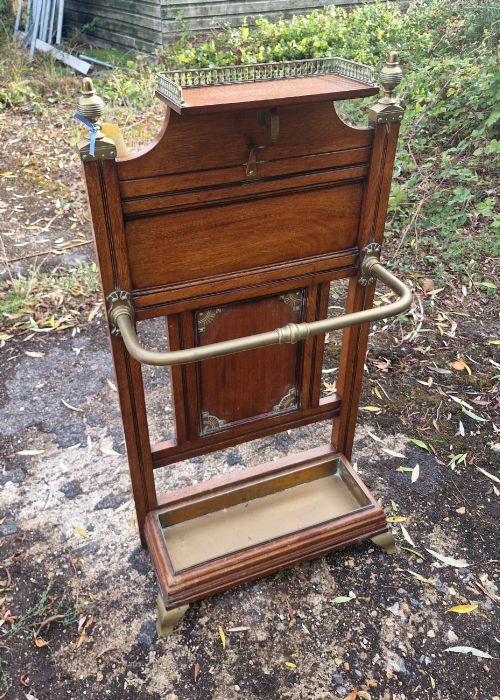
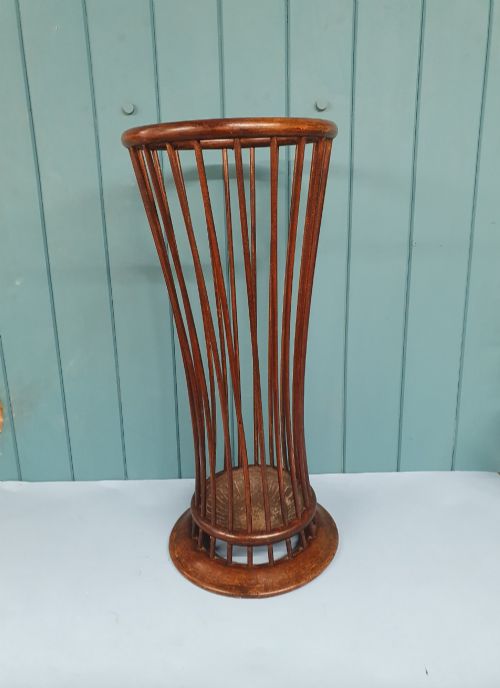
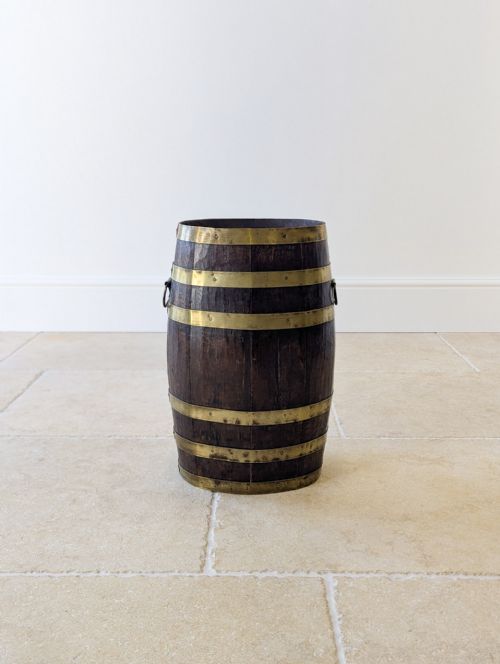
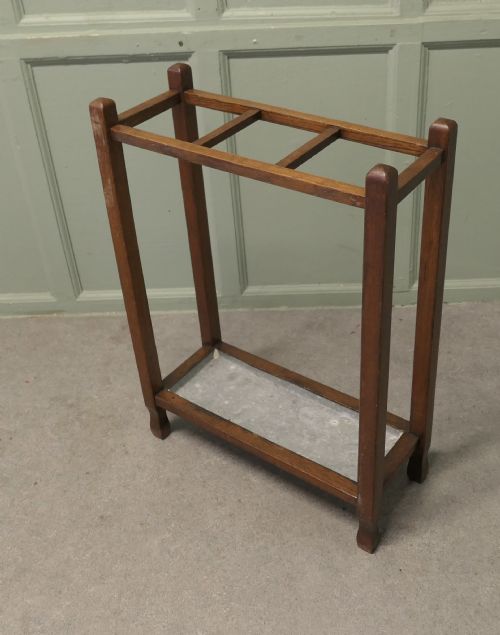
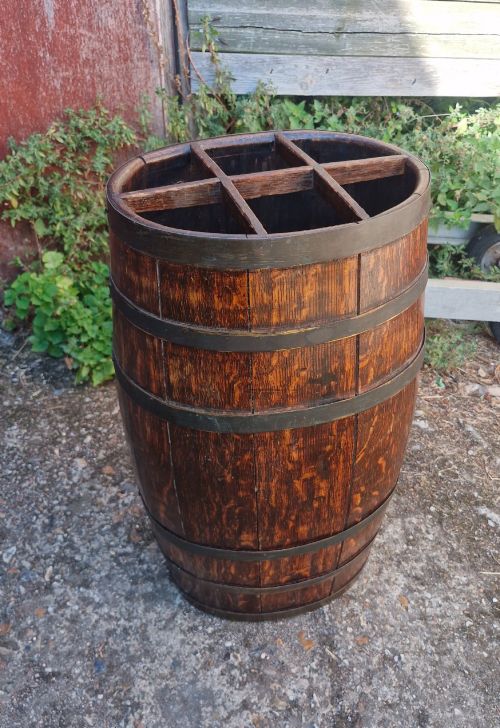
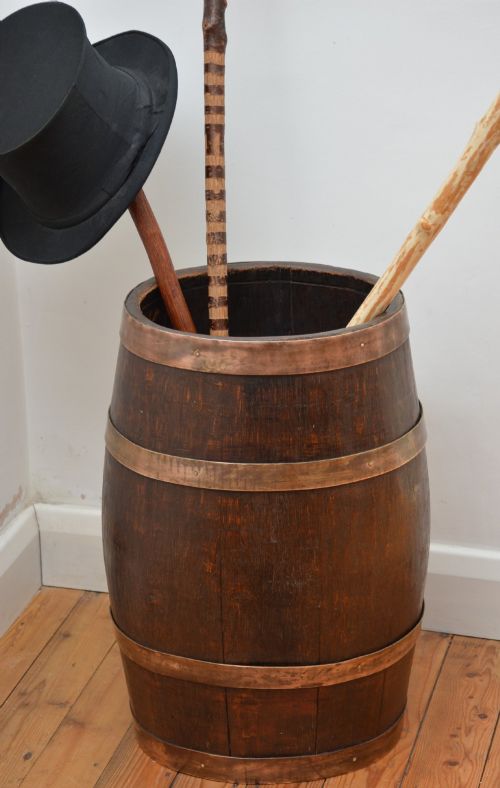
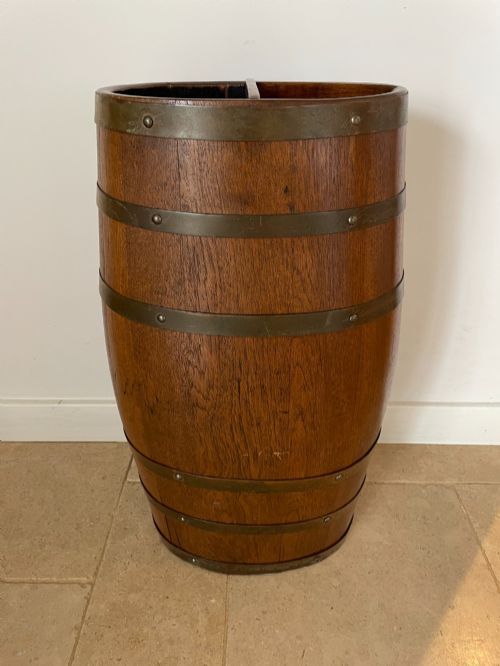
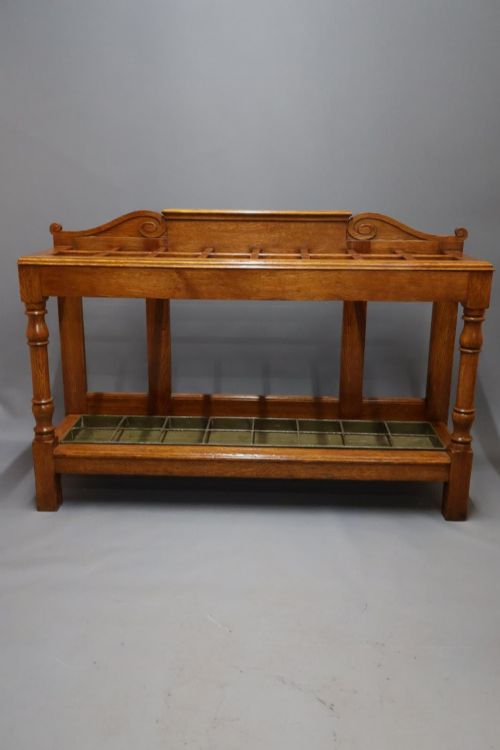
When searching for an oak cane stand, buyers encounter hall furnishings originating primarily from the nineteenth and twentieth centuries, spanning Victorian and Edwardian eras. These pieces take various structural forms, including coopered barrels bound with metal, open frame racks, and half-moon hall stands intended for placement against a wall.
The selection frequently includes examples created in distinct aesthetic movements such as Arts and Crafts, Gothic Revival, and Jacobean Revival. Coopered barrel designs and simpler upright frames dominate the available selection, reflecting their original purpose in bustling Victorian and Edwardian entrance halls.
Materials and construction
These items rely heavily on solid timber and metal reinforcement, utilising oak paired with brass, iron, zinc, or copper bands and braces. Coopered examples employ tightly fitted wooden staves held together by metal hoops, mirroring traditional barrel-making techniques.
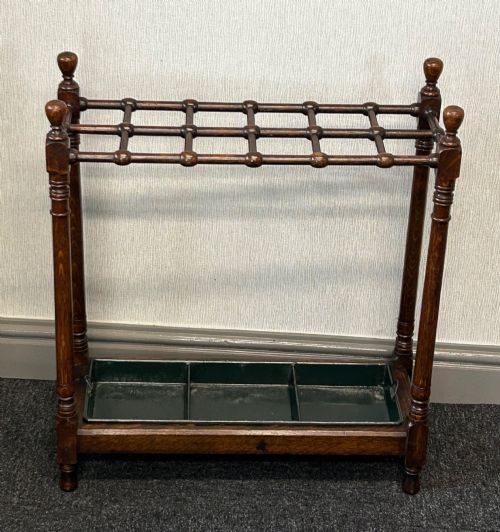
Many specimens incorporate functional water collection elements, featuring original metal drip trays or zinc liners positioned at the base to protect floors. Canework, carved detailing, and ceramic components occasionally appear alongside the primary wooden framework.
Some barrel stands come equipped with a built-in English coat of arms, ensuring your damp brollies rest beneath proper heraldic majesty.
Assessing craftsmanship
Distinctions in quality rest upon the integrity of the cooperage, the weight and finish of the metal mounts, and the crispness of any carved ornamentation. Superior examples display tight stave joints, robust brass or copper banding, and retained original internal drip trays.
The handling of the timber grain and the presence of documented workshop origins elevate certain pieces above standard utility items. Simpler country house versions rely on unadorned utility, whereas items with specific stylistic flourishes exhibit greater design ambition.
Heals of London·Liberty Design
The Oak Cane Stand Glossary
- Coopered
- Construction method using curved wooden staves bound together with metal hoops, typical of barrel-form items. This technique ensures structural stability for holding heavy walking sticks and wet umbrellas.
- Drip tray
- A removable metal basin placed at the base of a stand to catch water from umbrellas. Original trays significantly enhance the authenticity of a piece.
- Arts and Crafts
- A design movement prioritising traditional craftsmanship, visible grain, and simple construction. Pieces from this style often feature exposed joinery and honest materials.
- Demi lune
- A half-moon shape designed to sit flush against a hallway wall. This form saves floor space while providing adequate storage for sticks and canes.
- Gothic Revival
- An architectural and decorative style incorporating pointed arches, heavy moulding, and medieval motifs. Items in this style bring a dramatic presence to an entrance hall.
Oak Cane Stand: Frequently Asked Questions
How do I care for an oak cane stand?
Keep the timber nourished with appropriate wax and ensure metal drip trays are emptied and dried regularly to prevent moisture damage.
Position the stand away from direct heat sources to protect the wood and any historic metal bindings.
Where should I place a cane stand?
These items suit entrance halls, boot rooms, and reception spaces where visitors arrive and discard wet outerwear.
Their narrow profiles often allow them to fit neatly into tight hallways without obstructing passage.
How can I date an oak cane stand?
Examine the hardware, construction methods, and overall stylistic influences such as Victorian proportions or Arts and Crafts simplicity.
Wear patterns on the base and the presence of original zinc or metal liners also provide clues to the age.
Did these stands only hold umbrellas?
They were designed to accommodate walking sticks, canes, and riding crops alongside wet umbrellas.
The inclusion of multiple divisions and loops reflected the diverse array of walking aids used daily in the nineteenth and early twentieth centuries.