


Traditional Copper Kitchenware
Traditional copper kitchenware brings warmth and heavy craftsmanship to a working space, offering practical culinary vessels from past centuries.
Traditional Copper Kitchenware
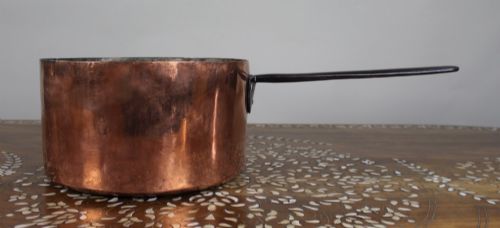
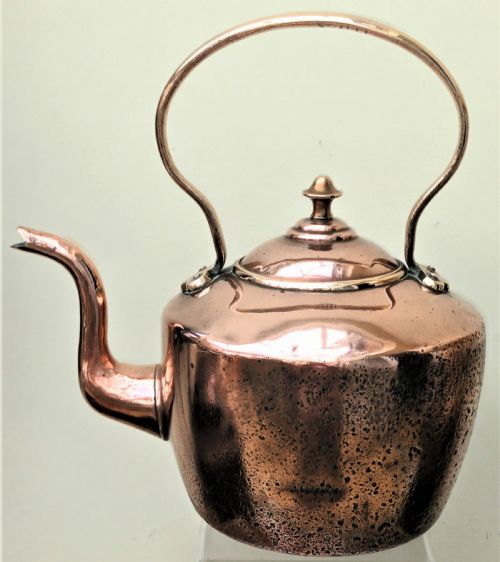
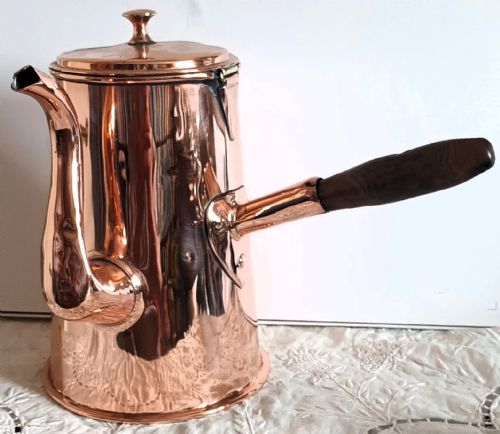
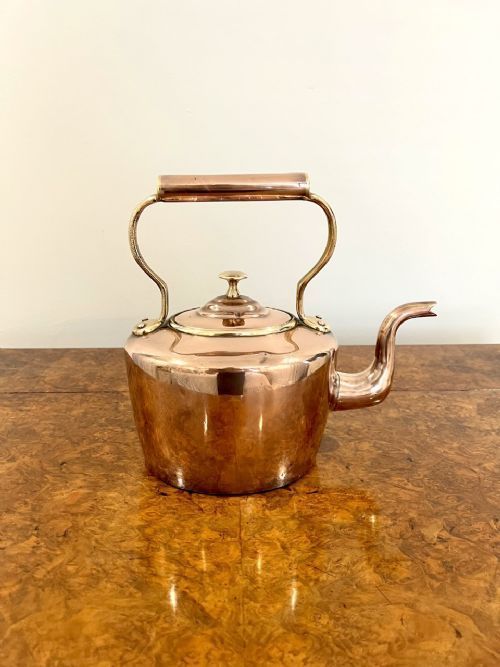
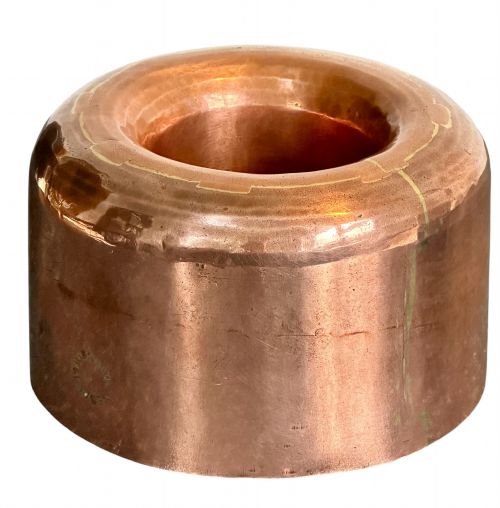
Traditional copper kitchenware spans utilitarian vessels designed for hearth and stove use, covering periods from the Georgian era through to the late Victorian decades. These objects take the form of kettles, preserving pans, saucepans, coffee pots, jelly moulds, jugs, and measures.
The version most commonly met on this page is the 19th Century or Georgian domestic pan or kettle, often found as single items or grouped in graduated sets. English and French country examples appear alongside occasional Middle Eastern and Anglo-Indian forms.
Buyers look for these pieces to anchor a rustic farmhouse aesthetic or to use functioning metalware that carries visible signs of age. Every item reflects the heavy utility demanded by historic kitchens before modern alloys took over.
Materials and construction
Construction relies heavily on sheet copper shaped by hand or hammered to achieve rigidity, often joined with brass fittings, iron handles, or wooden grips. Tin lining appears internally on cooking vessels to prevent direct contact between food and copper.
Cast iron and wrought iron frequently form the structural handles and fixings on larger saucepans and preserving pans, secured by heavy rivets. Brass provides contrasting metalwork for taps, measures, and decorative mounts on specific kettles and pots.
Listings feature items spanning the Georgian period, 1800, 1860, and the Victorian era, utilising copper, brass, iron, wood, and tin.
Factors influencing quality
Quality rests upon the thickness of the metal sheet and the integrity of the original construction, where heavier gauge copper resists warping under sustained heat. Superior pieces show careful hand-beating and robust dovetail or riveted seams rather than thin, modern sheet metal.
The presence of maker stamps or retailer marks elevates certain items, as does the completeness of matched sets or graduated nests of pans. Patina and the retention of original brass and iron hardware without unsympathetic replacement parts also distinguish better surviving examples.
Hodges & Sons
The Traditional Copper Kitchenware Glossary
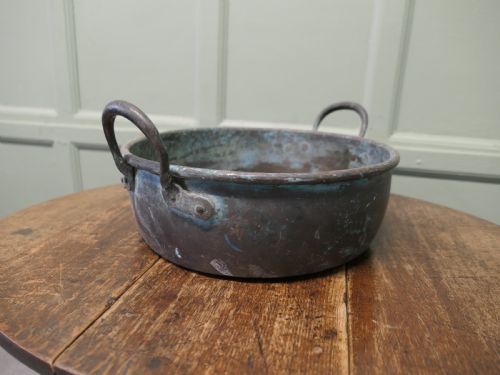
- Preserving pan
- A wide, open vessel designed for boiling fruit and sugar. These typically feature two handles or a single long iron grip for heavy lifting.
- Ale muller
- A specialised jug or container used for heating drinks by direct insertion into hot coals. They often feature long handles and stable bases.
- Jelly mould
- A shaped culinary vessel used to set aspics or desserts into decorative forms. They are fashioned with intricate internal patterns pressed into the metal.
- Seer measure
- A traditional unit measure used for capacity. These sets display graduated sizing for volume determination.
- Fish kettle
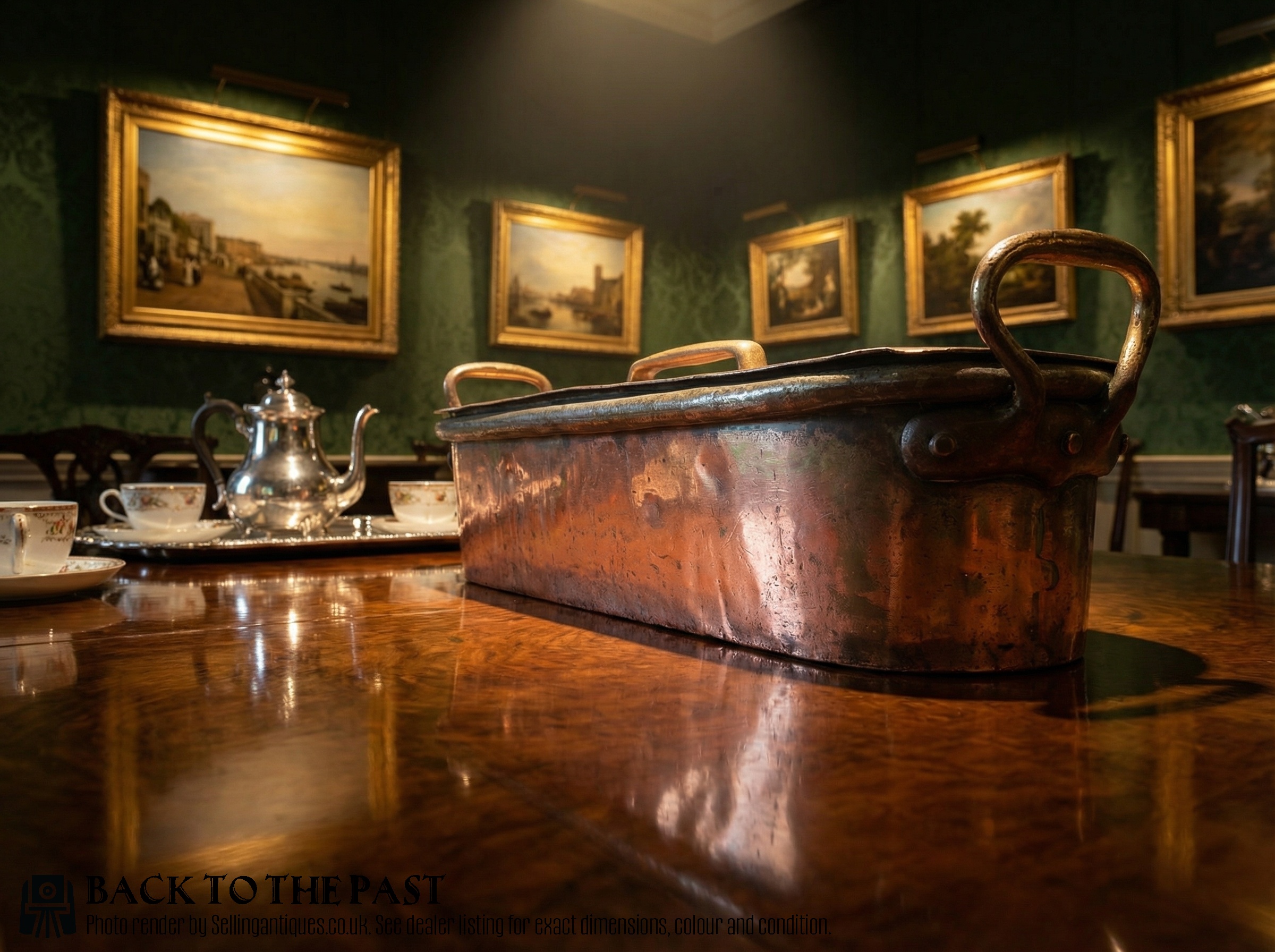
- An elongated oval pan designed to poach whole fish. They include internal draining trays to lift the contents safely out of liquid.
Traditional Copper Kitchenware: Frequently Asked Questions
What are traditional copper kitchenware pieces made of?
The primary material is copper, paired with brass, iron, wood, and tin. Iron and brass appear on handles, taps, and structural reinforcements.
Tin lining is common inside cooking vessels to provide a safe surface for food preparation.
How do I date an old copper pan?
Dating relies on stylistic markers, construction methods, and period traits such as Georgian or Victorian forms. Heavy hand-beating and specific handle designs point to 18th and 19th Century origins.
Maker marks or retailer stamps, when present, offer further clues to the exact decade of manufacture.
Can I still use antique copper pans for cooking?
Many historic pans remain structurally sound for modern use if the internal tin lining is intact. Heavy gauge copper conducts heat evenly across the base and sides.
Cookware requiring retinning should be assessed by a specialist before food preparation.
What is a preserving pan used for?
Preserving pans were built wide and open to allow rapid evaporation when boiling high-sugar mixtures like jams and jellies. Their shallow depth and broad surface area help prevent burning during long simmers.
Large sizes allowed households to process fruit harvests in single batches.
How should I clean copper kitchenware?
Maintenance involves standard metal cleaners designed to lift tarnish while preserving the underlying metal colour. Gentle washing avoids scratching the softer copper surface.
Many collectors prefer to keep a natural aged patina rather than polishing the pieces to a bright shine.