
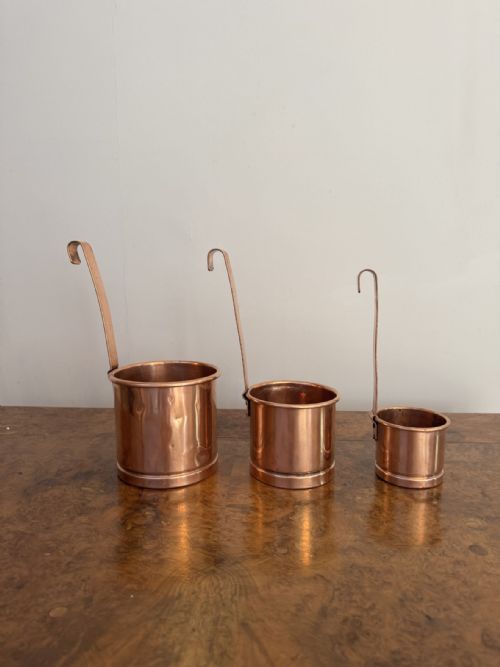
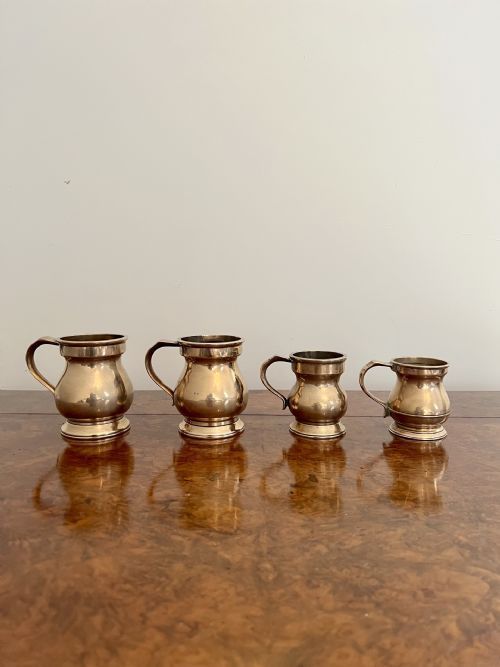


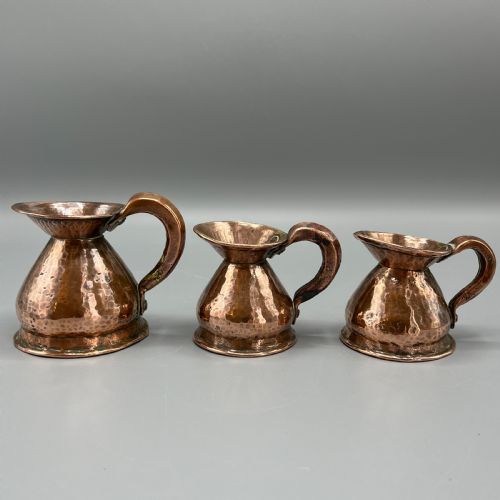


Victorian Copper Measure
These Victorian copper measure pieces are robust tavern and kitchen vessels that bring tactile warmth and utilitarian heritage to any room.

Victorian Copper Measure
A victorian copper measure is a functional liquid or grain container forged to exact capacity standards for trade and domestic use. You will most frequently encounter graduated sets, bell shaped tankards, and large harvest or haystack jugs across these listings.
The forms range from tiny apprentice piece miniatures holding fractions of a pint up to massive five gallon vessels and grain measures. Many examples carry regional stamps, VR marks, or tavern provenance from locations like Blackpool and Scotland.
Makers such as J. Bower and S. Hancock produced distinctive regional shapes including the haystack profile. These pieces survive either as solitary heavy flagons or as matched and harlequin sets spanning multiple capacities.
Materials and construction
These items rely primarily on heavy gauge copper sheet formed into cylindrical or bell shapes, joined with tight seams and reinforced with brass rims or handles. Tin linings protected the contents from the metal, while lead solder and verification stamps validated the correct volume for official use.
The manufacturing process combined hand beating with precise sheet metal working to achieve durability in busy kitchens and public houses. Brass fittings provide structural contrast to the warm reddish tone of the main body.
Tiny apprentice pieces allowed young trainees to prove their metalworking skill by shrinking giant tavern jugs down to palm sized miniatures.
Distinctions in quality
The standard of a victorian copper measure depends heavily on the integrity of its seams, the crispness of any verification stamps, and the retention of its original form without heavy distortion. Complete graduated sets and signed pieces by makers like J. Bower or S. Hancock demonstrate superior workshop provenance.
Weight is a primary indicator of substance, with heavier gauge metal and robust brass handles separating utilitarian workshop output from lighter decorative alternatives. Surface tone, absence of modern repairs, and survival of internal tinning elevate individual examples.
J. Bower
The Victorian Copper Measure Glossary
- Haystack measure
- A traditional Irish or British liquid container with a distinctive bulbous body resembling a stacked hayrick. These tall forms taper gently towards the neck and often feature brass strap handles.
- Apprentice piece
- A miniature version of a standard vessel created by a trainee artisan to demonstrate mastery of skill. These small items replicate the proportions of full sized measures exactly.
- Harlequin set
- A collection of graduated vessels gathered together later rather than manufactured as a single unit at the same time. The individual pieces match in general style while displaying subtle variations in age or maker marks.
- Imperial measure
- A container calibrated to the official British weights and measures system established in the nineteenth century. These items frequently display VR stamps for Victoria Regina alongside regional verification marks.
- Harvest jug
- A large vessel utilised for carrying cider, ale, or water to workers in the fields during agricultural seasons. They possess wide bases for stability on uneven ground and sturdy handles for transport.
Victorian Copper Measure: Frequently Asked Questions
What were victorian copper measures used for?
These vessels served as functional containers for measuring and dispensing liquids such as ale, spirits, milk, and water in domestic homes, farms, and public houses.
Larger capacities like harvest jugs and grain measures handled bulk agricultural goods, while small spirit measures regulated tavern sales.
How do I clean my copper measure?
Maintenance typically involves washing with warm soapy water and drying thoroughly to preserve the natural metallic surface.
Many collectors prefer to leave an aged patina rather than polishing the metal to a bright shine, as the darker oxidised finish highlights the age.
Are these measures still accurate for volume?
Most surviving items are collected as decorative antiques or historical artefacts rather than for modern kitchen accuracy.
Over the decades, dents, wear, and cleaning can alter the internal capacity slightly away from their original official trade standards.
What does a VR mark mean?
The VR stamp stands for Victoria Regina, indicating that the vessel was inspected and verified during the reign of Queen Victoria.
These official government marks confirm that the container met the legal requirements for commercial trade use at the time.