



Heavy Copper Bucket
A heavy copper bucket brings warmth and utility to a fireside, shaped by centuries of domestic and industrial service.
Heavy Copper Bucket
A heavy copper bucket serves primarily as a log bin, coal scuttle, or fireside vessel, designed to hold fuel or display plants in both country and industrial settings. These utilitarian objects span from the George III period through the Victorian era and into the Art Deco style of the twentieth century.
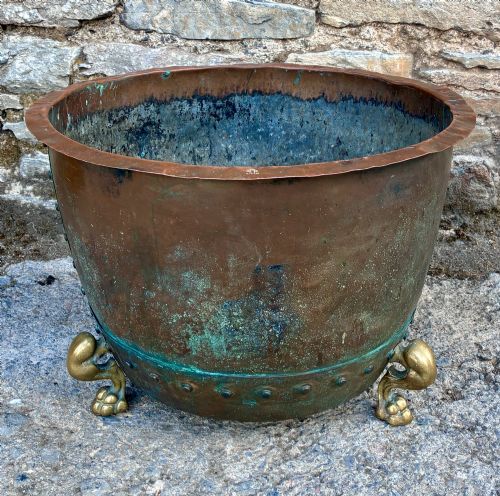
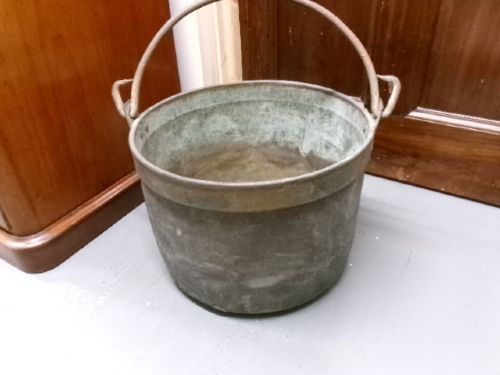
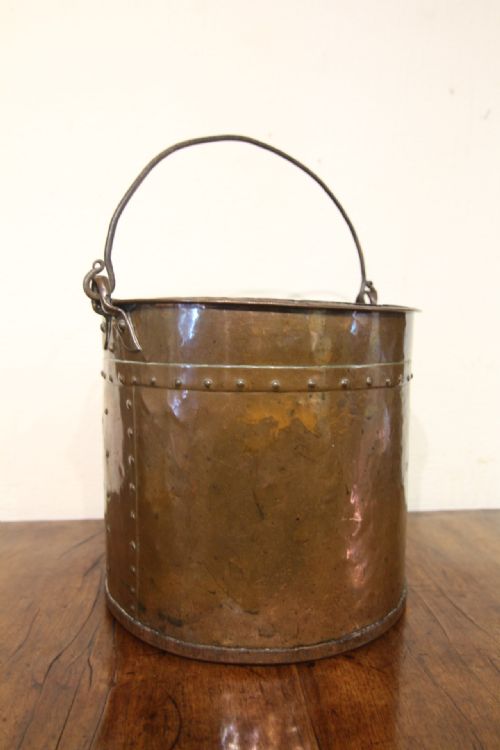
The pieces appearing most frequently on this page take the form of large log buckets, cauldrons, and coal bins dating from the nineteenth century. Buyers encounter robust vessels shaped for hearth use, often featuring swing handles and generous proportions suited to holding logs or coal.
Origins vary from English country workshops to French provincial kitchens, reflecting diverse domestic requirements across the nineteenth and early twentieth centuries. Each form demonstrates a practicality that transitioned from active kitchen or hearth duty into decorative interior use.
Construction and materials
Makers constructed these vessels using heavy gauge copper sheets, frequently joined with visible hand-beaten rivets that impart structural strength and visual character. Wrought iron and brass provide contrasting materials for swing handles, rims, and fixings, ensuring the vessels could support substantial loads of coal or logs.
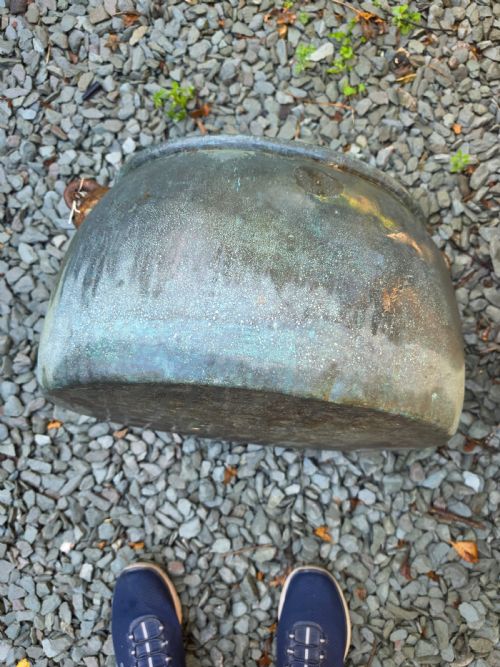
Surface finishes display the natural interaction of metal and time, ranging from polished surfaces to deep patinas and verdigris. Metalworking techniques combined sheet rolling, hand-riveting, and forging to create watertight seams and durable bases capable of withstanding heavy daily use.
Heavy Copper Bucket Retail Price Guide 2026
Typical asking prices for heavy copper bucket among the pieces listed under this phrase on Sellingantiques today, from the lower quarter to the upper quarter. They describe what is for sale here now, not the wider market.
Several heavy copper buckets doubling as grain measures retain faint measuring numbers stamped into their rims from their days of agricultural trade.
Markers of quality
Quality in these pieces rests upon the thickness of the metal sheet and the integrity of the riveted construction. Heavier gauges of copper resist denting and maintain structural rigidity, while tight, uniform riveting ensures lasting durability.
The refinement of the handle attachments and the harmony of proportion distinguish superior examples from standard utilitarian ware. Original wrought iron work and undisturbed patinas contribute significantly to the desirability of a piece.
The Heavy Copper Bucket Glossary
- Riveted
- A method of joining metal sheets by inserting a metal pin through overlapping sections and hammering the end flat. This technique provides immense structural strength before modern welding.
- Dinanderie
- An Art Deco term describing objects made from beaten brass, copper, or bronze, often featuring textured or patinated surfaces. The style draws on medieval brass-working traditions.
- Cauldron
- A large metal pot with a rounded base and a swing handle, traditionally used over an open fire for cooking or heating water. In later periods, these vessels found new life as planters and log holders.
- Patina
- The surface sheen and colour acquired by metal through age, handling, and exposure to the elements. Collectors value undisturbed patinas for the history they communicate.
- Coal Helmet
- A specific type of coal bucket featuring a flared mouth and a sloped body resembling a classical helmet. They were designed to facilitate the pouring of fuel onto a fire.
Heavy Copper Bucket: Frequently Asked Questions
How do I clean a heavy copper bucket?
Washing the surface with warm soapy water and a soft cloth removes everyday dust without disturbing the underlying patina.
Avoid abrasive metal polishes unless you specifically prefer a bright, reflective copper finish rather than an aged appearance.
Can I use these buckets outdoors?
Many examples function effectively as garden planters or log holders on sheltered patios, provided they have stable bases.
Constant exposure to moisture will accelerate the formation of verdigris, which some owners appreciate for its aesthetic contribution.
How do I date a copper bucket?
Examining the construction methods, particularly the style of the rivets and the composition of the handles, provides reliable chronological clues.
Hand-forged wrought iron fittings and irregular hand-beaten seams typically point to nineteenth-century or earlier Georgian origins.
What is a grain measure?
A grain measure is a cylindrical metal vessel once utilised for commercial or agricultural measurement of dry goods before standardisation.
These sturdy containers were subsequently adopted for domestic fireside use due to their generous proportions and durable construction.