



Polished Copper Measures
Polished copper measures are traditional kitchenalia and tavern vessels of capacity, prized for their warm metallic lustre and honest utility in historic service.
Polished Copper Measures
Polished copper measures are robust vessels designed for the precise measurement of liquids in domestic kitchens, busy taverns and commercial trade. These utilitarian pieces span the Georgian and Victorian periods, with origins rooted in practical English hospitality and household management.
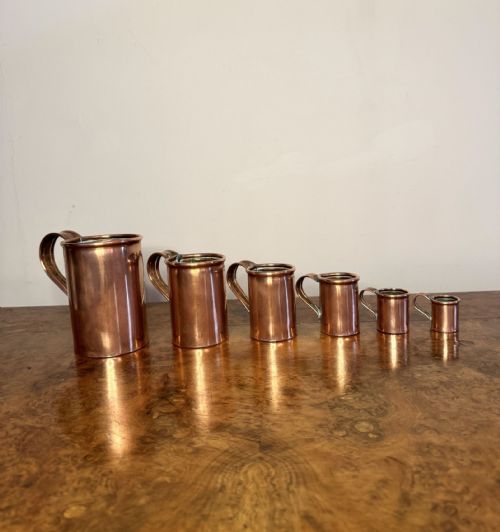
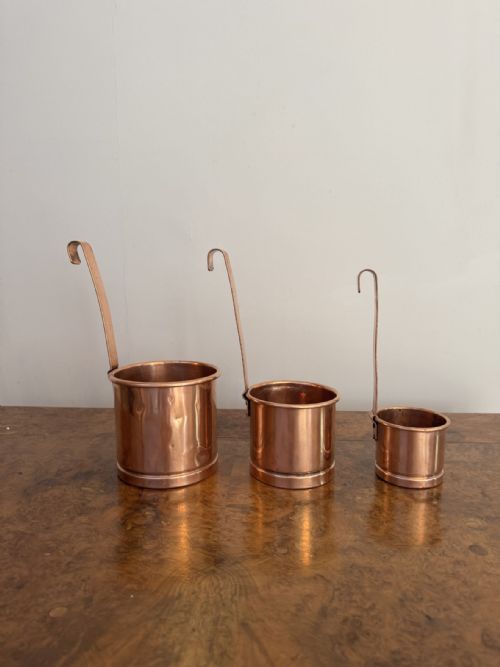
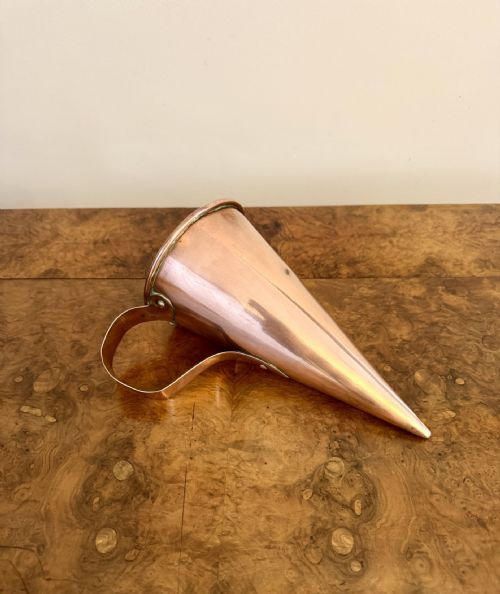
Collectors frequently encounter sets of graduated tankard measures or single large jugs, often bearing capacity designations such as gallon or pint sizes. The pieces listed on this page predominantly reflect Victorian and George III iterations, alongside regional variations like the Jersey can.
How they were made
Craftsmen built these measures from heavy sheet copper, shaping the metal by hand and joining seams with durable solder or dovetail joints. Brass components frequently form the rims, handles and reinforcement bands, adding structural strength to high-stress areas.
Interior surfaces typically feature a protective lining of tin to prevent chemical reactions between the copper and acidic liquids. Exterior finishes range from plain industrial metal to a high-polish sheen that accentuates the rich tone of the copper.
Polished Copper Measures Retail Price Guide 2026
Typical asking prices for polished copper measures among the pieces listed under this phrase on Sellingantiques today, from the lower quarter to the upper quarter. They describe what is for sale here now, not the wider market.
Makers like Loftus of Oxford Street stamped their London address onto jugs, proving that even humble measuring vessels enjoyed metropolitan pride.
What varies in quality
Quality rests upon the crispness of form and the structural integrity of the heavy-gauge metal. Superior examples display balanced proportions, clean soldering and maker details stamped directly into the surface, whereas lesser pieces show uneven hand-beating or crude repairs.
The presence of original brass reinforcement and intact interior tinning elevates an individual measure. Matched graduated sets that survive entirely intact demonstrate a higher degree of initial care and subsequent preservation than assembled groupings.
The Polished Copper Measures Glossary
- Tavern measure
- A vessel of certified capacity utilised in public houses for dispensing ales and spirits. These items often feature flared rims and sturdy side handles.
- Jersey can
- A distinctive bulbous jug originating from the Channel Islands, utilised specifically for measuring and storing milk. They possess a characteristic narrow neck and generous pouring lip.
- George III
- The stylistic period spanning from seventeen hundred and sixty to eighteen hundred and twenty. Pieces from this era exhibit restrained Georgian proportions and heavy-gauge construction.
- Tin lining
- A protective metallic coating applied to the interior of copper vessels. This layer prevents copper toxicity and protects the metal from corrosive liquids.
Polished Copper Measures: Frequently Asked Questions
What were polished copper measures used for?
These vessels served as functional standards of volume in homes, commercial kitchens, and public houses for dispensing wet goods reliably.
Over time, their role shifted from active tavern utility to decorative display, valued for their historical connection to domestic life.
How do I clean polished copper measures?
Maintenance requires gentle commercial copper creams applied with a soft cloth to preserve the polished surface without abrading the historic metal.
Avoid harsh scouring pads that can scratch the copper and strip away centuries of character.
How do I date an antique copper measure?
Dating relies upon stylistic markers such as handle attachment methods, rim profiles, and stamped capacity verification marks from specific royal reigns.
Georgian examples generally display heavier gauge metal and simpler lines, while Victorian pieces often come in graduated sets.
Are these measures safe for holding liquids?
While many retain their original interior tinning, historic measures are best enjoyed as decorative objects rather than for daily consumption of beverages.
Testing the condition of the interior lining is essential if you intend to use them for serving liquids.