


Copper Pub Measure
These copper pub measure pieces are robust tavern vessels that bring genuine historical utility and warmth to any country kitchen or interior.
Copper Pub Measure
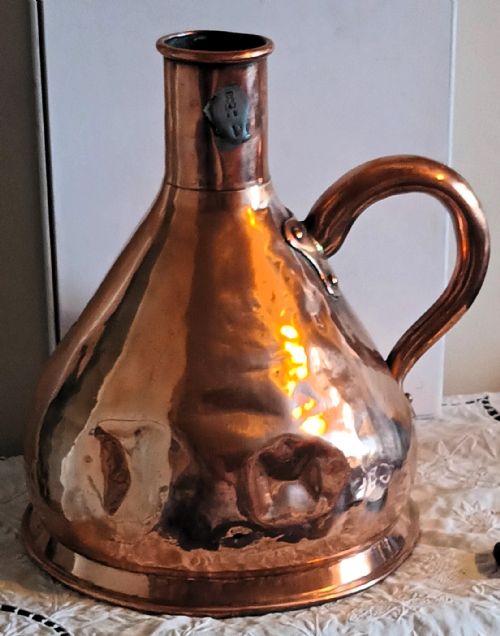
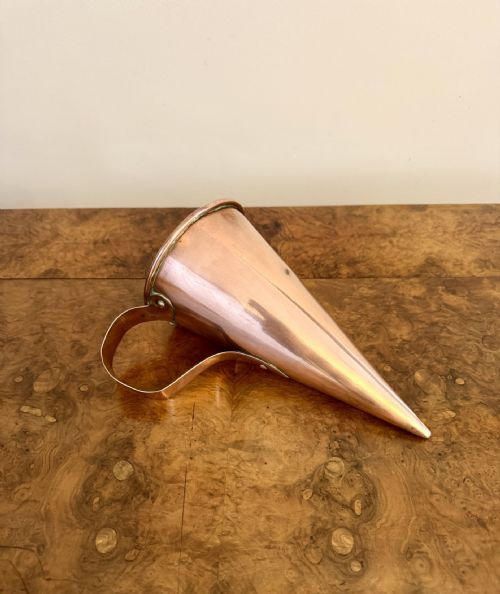
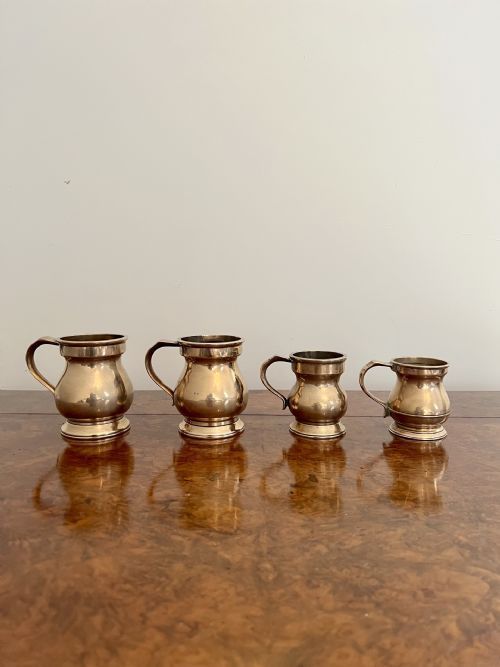
A copper pub measure is a sturdy liquid vessel designed for serving and measuring drinks in traditional British taverns. When you examine this selection, you encounter classic forms that include one gallon measures, harvest jugs, flagon shapes, and bell shaped tankards.
The objects appearing here date across the Georgian and Victorian eras, spanning the nineteenth century from around eighteen hundred to eighteen eighty. They range from single large flagons down to graduated sets of three, four, or seven pieces.
Originating largely from English workshops, these items reflect the practical requirements of historic hospitality. You are most likely to meet Victorian provincial examples alongside earlier Georgian creations.
How they were made
These metalware items rely heavily on hammered and joined sheet copper, shaped into distinctive cylindrical, bell, or haystack profiles. Makers fashioned handles securely to the bodies to withstand daily tavern use.
Brass fittings and lead components frequently appear alongside the primary copper structure, particularly on rims and bases for added weight and reinforcement. Skilled metalworkers utilised traditional riveting and seaming techniques to ensure liquid tightness.
Current listings demonstrate a strong presence of nineteenth century Victorian pieces alongside Georgian examples, utilising copper, brass, and lead materials.
What varies in quality
Quality in these vessels rests upon the crispness of the forming and the integrity of the original construction. Finer examples display balanced proportions, neat seaming, and well-preserved maker or capacity stamps.
Graduated sets that remain complete show a higher degree of original assemblage than pieced-together groups. The thickness of the metal and the subtlety of the shaping separate standard utilitarian items from superior workshop output.
J. Bower
The Copper Pub Measure Glossary
- Haystack measure
- A distinctively shaped British liquid measure featuring a bulbous body tapering towards the top, resembling a traditional stack of hay. This form is particularly associated with nineteenth century provincial metalware.
- Harvest jug
- A large vessel utilised for carrying and pouring cider or ale during agricultural seasonal labour. These pieces often hold substantial volumes such as one or two gallons.
- Graduated set
- A series of vessels scaled proportionately in size so that smaller measures nest within or display alongside larger counterparts. Such sets typically share matching stylistic details and construction methods.
- Flagon
- A large drinking vessel with a handle and often a lid, used historically for serving beverages in domestic and public settings. In copper metalware, these stand out for their substantial capacity and robust walls.
Copper Pub Measure: Frequently Asked Questions
What were copper pub measures used for?
These vessels served as standard containers for measuring, storing, and pouring ale, cider, and other beverages in historical public houses. Taverns relied on them for accurate dispensing before the introduction of modern glass and metric systems.
Their robust construction allowed staff to handle hot liquids and heavy use day after day without structural failure. Today, they function primarily as decorative antiques that celebrate historical tavern culture.
How do I date a copper measure?
Dating relies on examining the manufacturing techniques, handle attachments, and any stamped capacity marks or maker names on the body. Georgian examples often display different weight distribution and profiles compared to later Victorian items.
Graduated sets and specific forms like haystack measures also point towards particular decades within the nineteenth century. Comparing the style of the rim and base provides further clues to the period of origin.
How should I clean antique copper?
Most collectors prefer to leave a warm, aged patina on antique copper rather than polishing it to a bright shine. Gentle dusting and occasional cleaning with appropriate non-abrasive metal care products will preserve the surface.
Avoid harsh chemical dips that strip away the historical character and subtle colour variations built up over generations. Preserving the natural oxidation ensures the piece maintains its authentic appearance.
Can these measures still hold liquids?
While many of these vessels were watertight originally, older seams and joints can weaken or develop microscopic gaps over long periods. It is generally advisable to treat them as decorative display items rather than functional kitchenware.
If you do use them for holding flowers or liquids, inspect the interior and base carefully first to ensure stability. Most buyers choose to display them on shelves, dressers, or mantelpieces to showcase their form.