


Copper Tavern Measure
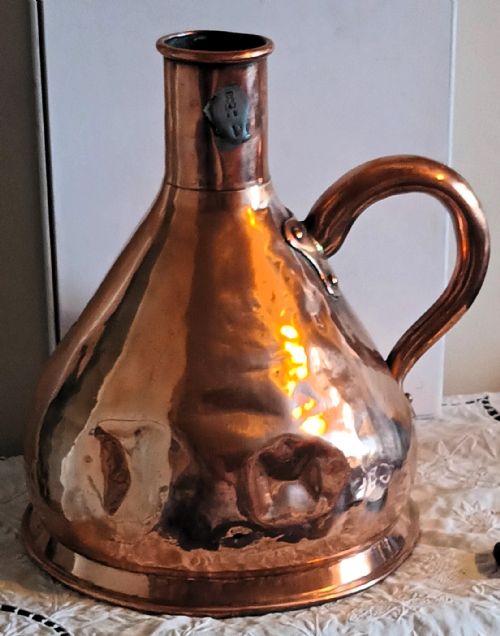
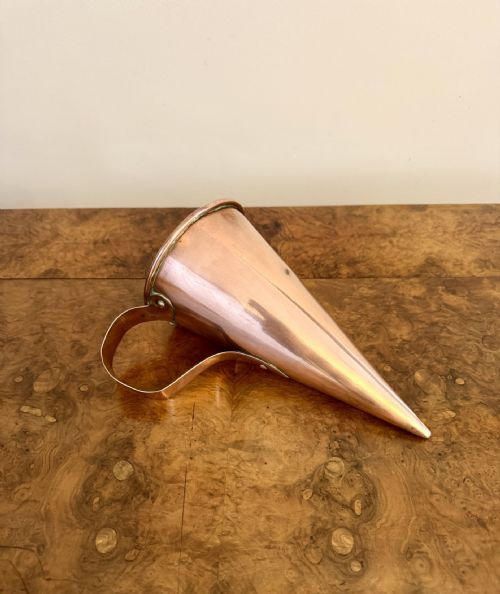
These copper tavern measures are stout vessels that served daily life in British hostelries, prized for their rich warm metal and honest utility.
Copper Tavern Measure
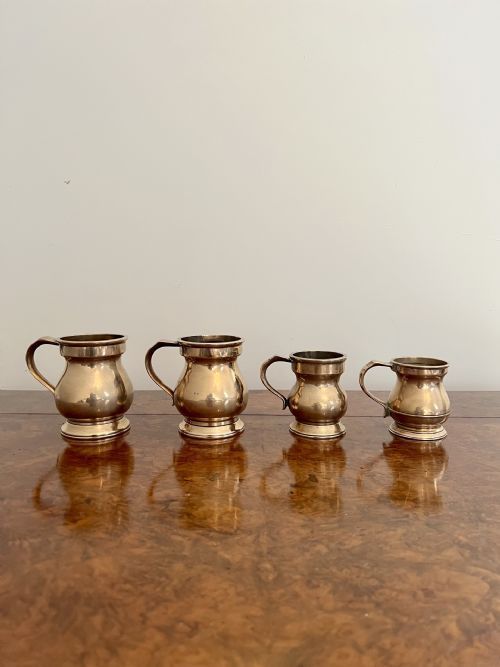
A copper tavern measure is a traditional vessel designed for dispensing liquids in historic pubs and inns. Collectors encounter these pieces in forms ranging from single jugs to graduated sets and bell-shaped tankards.
The selections span the Georgian and Victorian eras, taking shapes such as Liverpool gallon measures, Haystack measures and flagons. Origin points include English and Scottish workshops, reflecting the practical needs of past hospitality.
How they were made
These measures are constructed primarily from sheet copper, often shaped by hand with soldered seams and reinforced rims. Brass components appear on handles and mounts, providing structural strength and tonal contrast against the warm copper body.
Makers occasionally incorporated lead seals or verification stamps to comply with official capacity standards of the period. The surfaces show the marks of hammering and seaming inherent in nineteenth-century metalworking.
Some measures carry old tavern inspection stamps, proving they poured drinks honestly before the invention of the modern pint glass.
What varies in quality
Quality rests upon the crispness of the form, the integrity of the soldered joints and the presence of maker marks or verification stamps. Measures with uniform wall thickness and balanced proportions represent the higher end of workshop output.
Graduated sets that remain complete and retain their matching graduation display greater harmony than assembled groups. The depth of the metal patina and the survival of original brass fittings also influence the character of each piece.
J Bower·Loftus of Oxford Street London·S Hancock
The Copper Tavern Measure Glossary
- Haystack measure
- A distinctively shaped British liquid measure featuring a tapered body resembling a stacked haystack. These pieces often originate from nineteenth-century provincial workshops.
- Liverpool measure
- A regional style of large copper vessel characterised by specific proportion and capacity standards associated with the port of Liverpool. Such pieces frequently hold a gallon or more.
- Flagon
- A large metal drinking vessel with a handle and spout, used for serving ale or wine in taverns. These containers often possess substantial capacity.
- Graduated set
- A group of measures made in proportional sizes that nest or line up together in a sequence. Complete sets demonstrate the standard measurements used in trade.
Copper Tavern Measure: Frequently Asked Questions
What were copper tavern measures used for?
These vessels measured and served ale, cider and spirits in public houses and inns before the standardisation of glass service. Tavern staff relied on them for rapid, accurate dispensing during busy hours.
Over time, many of these measures became decorative objects or reminders of traditional hospitality while retaining their historic metalwork forms.
How do I date a copper tavern measure?
Dating relies on stylistic clues, workshop stamps, and the evolution of capacity marks across the Georgian and Victorian periods. Earlier Georgian examples often display simpler hand-formed lines, while Victorian pieces may show more complex graduated shapes.
Verification stamps and maker inscriptions provide additional chronological markers to narrow down the decade of production.
How do I clean an antique copper measure?
Most collectors prefer to leave a warm, aged patina on copper metalware rather than polishing it to a bright shine. Gentle dusting and occasional wiping with a soft cloth maintain the surface without removing historical character.
Harsh chemical cleaners strip away the natural oxidation that develops over generations of use in tavern environments.
Where were these measures manufactured?
British metalworkers and specialist coppersmiths produced these vessels in workshops across England and Scotland. Urban centres like London as well as provincial towns supplied local hostelries with their daily equipment.
Maker names stamped onto the metal often point directly to the specific street address or town of origin.