


Georgian Copper Kitchenware
Georgian copper kitchenware brings heavy, hand-beaten warmth into a modern home, offering utilitarian vessels that served grand Georgian kitchens.

Georgian Copper Kitchenware
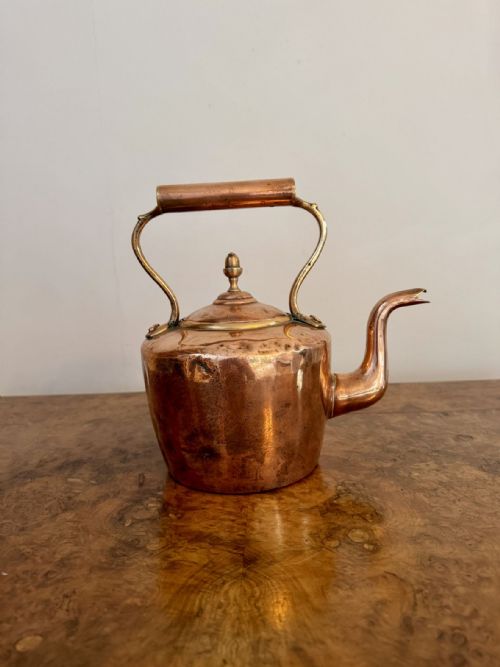
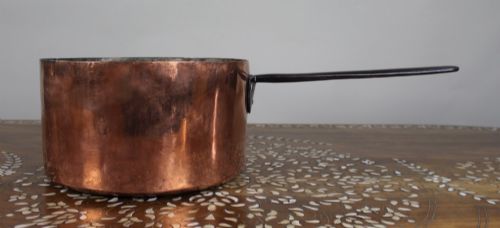
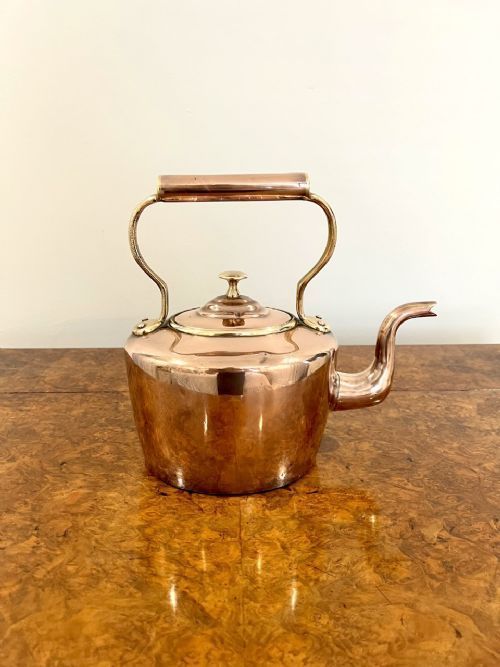
You are most likely to meet small and large copper kettles bearing George III characteristics, alongside graduated sets of measuring jugs and sturdy saucepans. These items originated as practical kitchen implements designed to stand over open hearths or kitchen ranges rather than sit as decorative objects.
The materials recorded in these listings extend beyond pure copper to include brass, iron, wrought iron, bronze, bell metal, and wood fittings. Together, these substances define the heavy, utilitarian nature of kitchenware produced across the eighteenth and nineteenth centuries.
How they were made
Coppersmiths hammered sheets of copper into shape over anvils, joining seams with dovetailing or brazing to withstand intense hearth heat. Handles and spouts incorporated brass, iron, or wrought iron, secured firmly to the main copper body with sturdy rivets.
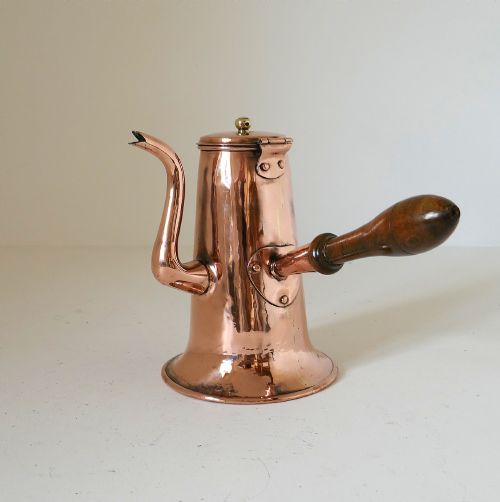
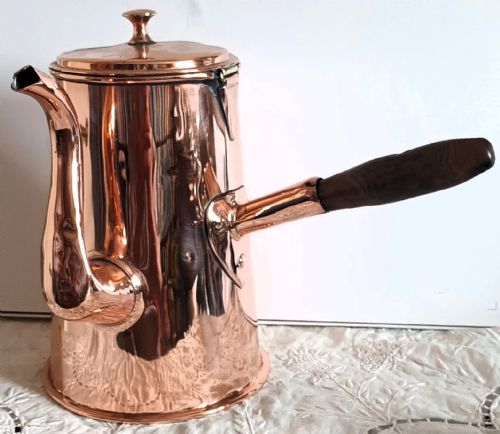
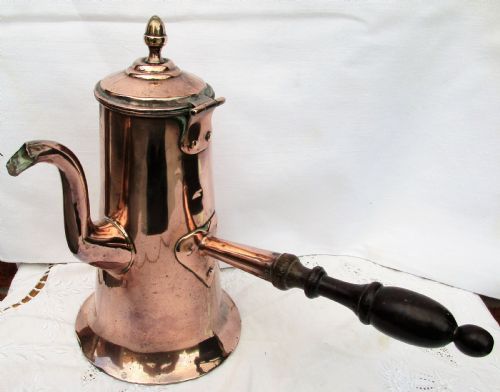
Internal surfaces typically received a protective lining of tin to prevent copper toxicity during food preparation. Wooden elements occasionally formed handle grips or insulators on coffee pots and kettles to protect the user's hand from heat.
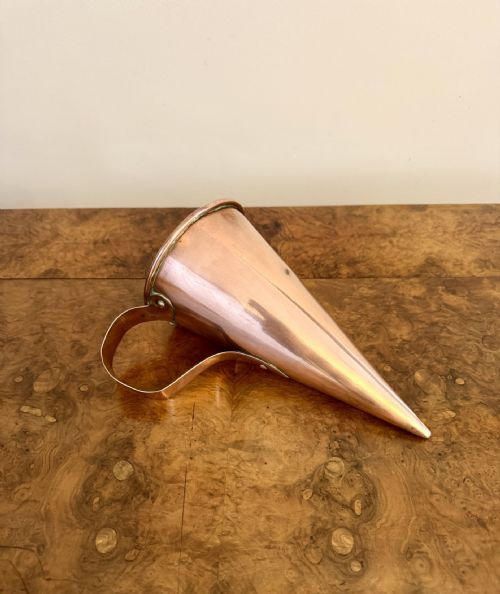
A sturdy ale muller stands ready to plunge straight into glowing coals, proving Georgian households took their warm spiced drinks very seriously.
What varies in quality
The thickness and weight of the metal plate dictate the structural integrity and longevity of each vessel. Heavier gauge copper indicates a piece intended for serious culinary output rather than lighter domestic service.
The skill of the smith shows in the neatness of the hand-beaten finish, the uniform thickness of the walls, and the secure attachment of handles and spouts. Vessels retaining harmonious proportions and clean lines represent the finer end of domestic metalware production.
The Georgian Copper Kitchenware Glossary
- Brazing
- Joining metals together using a melted filler metal at high temperature. This technique ensured strong, watertight seams on heavy saucepans and kettles.
- Bell metal
- An alloy of copper and tin traditionally used for casting mortars and heavy vessels. It provides a resonant, hard material suited to grinding and pounding ingredients.
- Ale muller
- A specialised metal vessel with a long handle designed to be heated in hot coals. Cooks used it to warm and mull spiced ale or wine.
- Dovetailing
- An interlocking joint method used by coppersmiths to secure sheet metal edges before hammering them flat and watertight.
Georgian Copper Kitchenware: Frequently Asked Questions
Are these copper pots safe for cooking?
Many antique copper vessels require a fresh tin lining before they can be used safely for modern food preparation. Historic cooking pots often lost their protective interior coating through centuries of scrubbing and use.
Consult a professional tinner to evaluate the interior condition if you intend to cook with your Georgian kitchenware rather than display it.
How do I clean antique copper?
Gentle washing with warm soapy water and a soft cloth removes everyday dust without harming the metal. Avoid harsh abrasive compounds that strip away the aged patina built up over generations.
Many collectors prefer to leave oxidation and mellow toning intact as evidence of the piece's age and authentic history.
How can I tell a George III kettle?
George III kettles typically display hand-beaten copper construction with dovetailed seams and heavy brass or iron swing handles. Their proportions tend to be stout and functional, reflecting eighteenth-century hearth designs.
Examining the rivet placement and the method of spout attachment helps distinguish pieces from this specific period.
What is an ale muller used for?
An ale muller was thrust directly into fireplace embers to warm spiced drinks quickly. The long handle kept the user's hand safely away from the fire.
These distinctive pots feature a broad base to rest steadily among hot coals while heating liquids.