
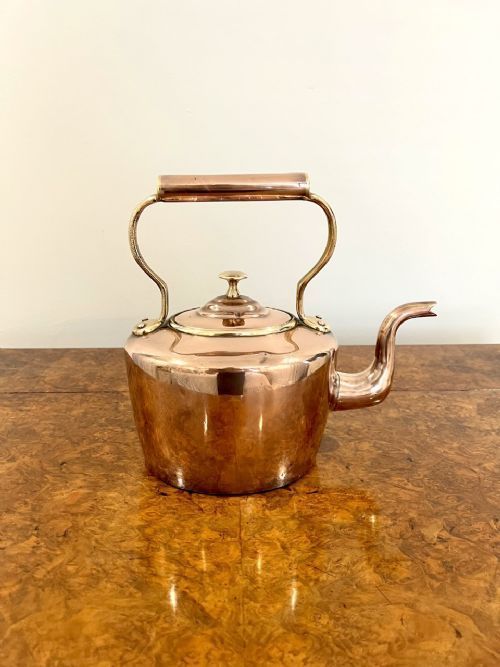


Copper Water Kettle
These copper water kettle pieces are sturdy everyday vessels crafted to boil water efficiently, offering both practical utility and warm metallic character for the kitchen.

What copper water kettle examples exist here
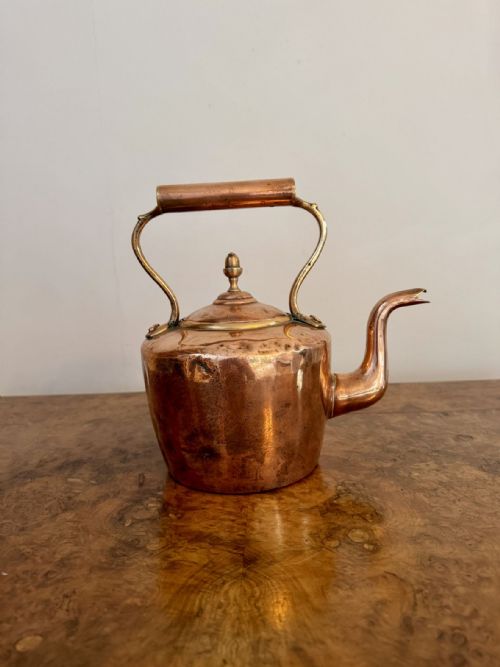
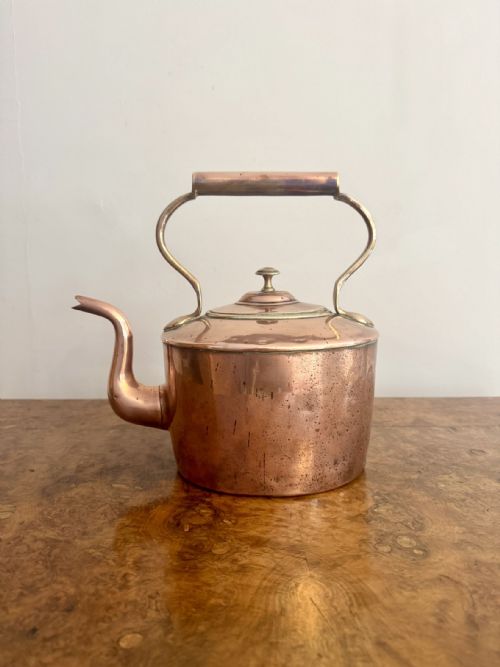
Buyers seeking a copper water kettle encounter sturdy heating vessels originating from the Georgian and Victorian eras. These items span smaller desk-sized pieces up to large heavy-gauge containers suited for hearth use.
The inventory on this page highlights pieces produced around eighteen hundred and throughout the nineteenth century. Surviving examples demonstrate the utilitarian domestic forms valued in British households of those periods.
How these vessels were constructed
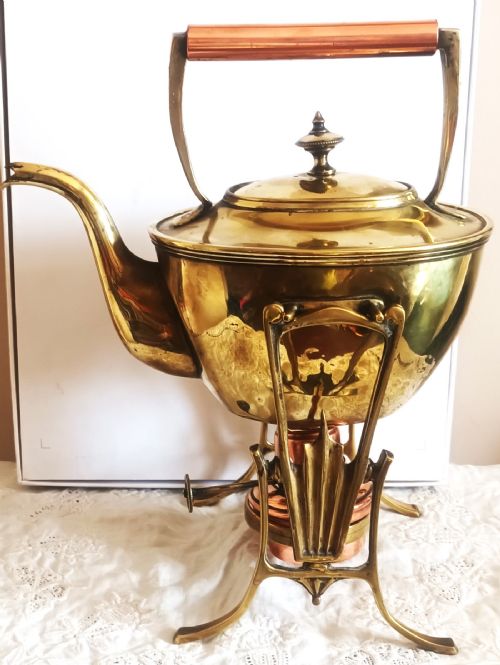
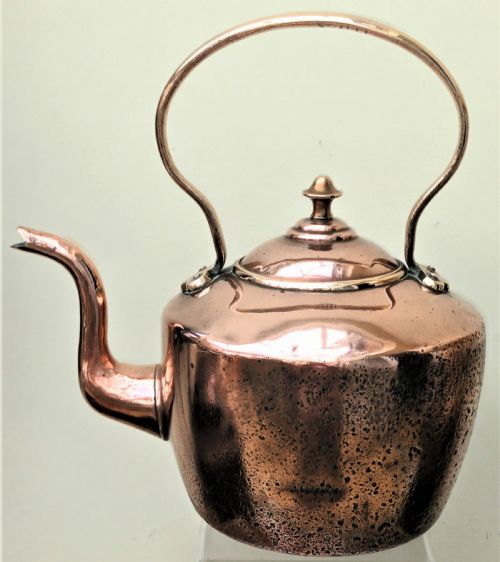
Metalworkers fabricated each copper water kettle from heavy sheet copper, hammering and shaping the body to withstand daily boiling. Structural joints often incorporated brass fittings, handles, and spouts for added durability.
Many specimens exhibit polished exterior surfaces that highlight the warm metallic sheen of the underlying copper. Hand-formed handles and sturdy mounting brackets reveal traditional workshop methods of the period.
Retail Price Guide 2026
Typical UK retail prices for copper water kettle, calculated from the Sellingantiques database of over a million retail prices indexed since 2003. This retail price guide relies exclusively on Sellingantiques data; no external sources or auction records are used, so the figures do not describe the wider market.
A heavy-gauge copper kettle makes a remarkably loud whistle when the water finally reaches a rolling boil.
What distinguishes the finer examples
The division between standard domestic vessels and superior specimens rests on the weight of the metal and the crispness of the hand-formed joints. Heavier gauge copper and well-proportioned brass mounts indicate a higher grade of workshop production.
Proportion and surface finish dictate the standing of a piece within its period. Refined examples display careful hammering and balanced silhouettes rather than purely utilitarian mass manufacturing.
The Copper Water Kettle Glossary
- George III
- The period spanning seventeen sixty to eighteen twenty, associated with traditional craftsmanship and restrained domestic design. Pieces from this era often display classic proportions.
- Victorian
- The era spanning eighteen thirty-seven to nineteen oh one, characterised by varied industrial methods and robust utilitarian household goods. Items from this time reflect shifting domestic tastes.
- Copper
- A durable reddish-brown metallic element prized for thermal conductivity and malleability. It forms the primary body material for these historic heating vessels.
- Brass
- A yellow alloy of copper and zinc utilised for structural mountings, handles, and spouts. It provides both contrasting colour and mechanical strength.
Frequently Asked Questions
How old are these kettles?
The available selection dates from around eighteen hundred through the nineteenth century, encompassing both the Georgian and Victorian periods.
Specific dating relies on stylistic traits and construction methods typical of these eras.
Are they safe for boiling water?
While these items were originally made for heating water on a hearth or stove, historic interiors often require professional assessment before modern use.
Many collectors prefer to display them as decorative objects rather than active kitchen utensils.
What metals are used?
The primary body is constructed from heavy-gauge copper, chosen for its durability and heat retention properties.
Brass components frequently appear on handles, spouts, and fittings to provide structural reinforcement.
How do I clean copper?
Maintenance typically involves proprietary metal cleaners formulated to remove tarnish without scratching the soft surface.
Some owners choose to preserve the darker oxidation accumulated over centuries rather than polishing to a bright finish.