
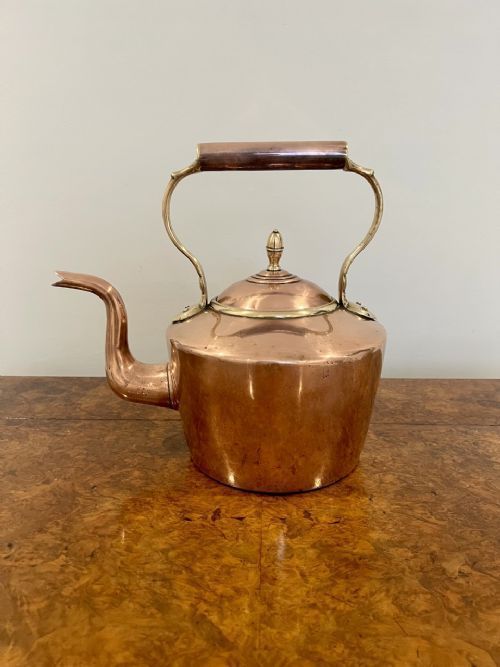
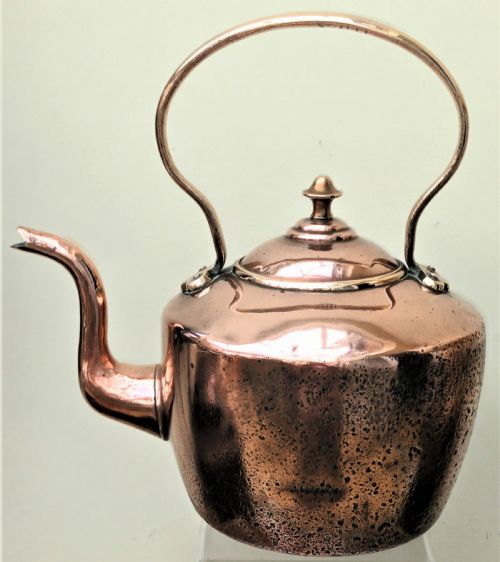
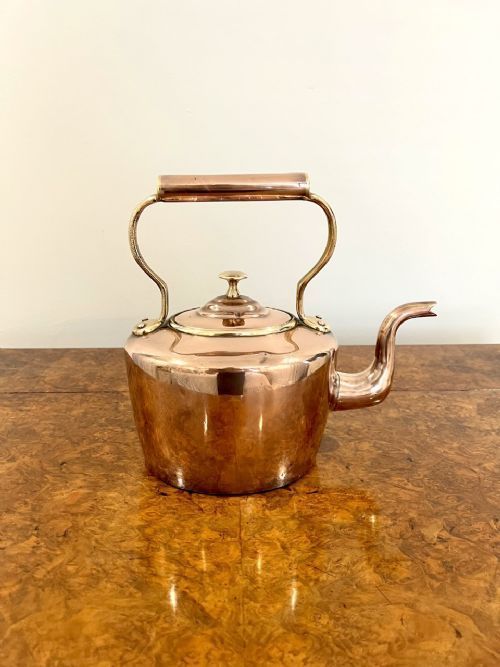


Traditional Copper Teapot
These traditional copper teapot listings offer dependable metal vessels from the Georgian and Victorian periods, prized for warming water with authentic period character.

Traditional Copper Teapot
A traditional copper teapot search reveals sturdy metal vessels designed primarily as kettles across the Georgian and Victorian eras. The listings on this page consist largely of George III and nineteenth-century examples.
Buyers will encounter various forms ranging from standard shapes to oval designs and collections of multiple pieces. These water vessels originate from English makers working in copper and brass.
The selection focuses heavily on utilitarian kitchen and hearth items from the eighteen hundreds, spanning precise dates such as eighteen hundred and eighteen eighty.
How they were made
Maker construction relies on heavy gauge copper formed into practical bodies for daily use. Metalworking techniques of the period involve joined seams and polished surfaces.
Design details incorporate contrasting materials such as brass fittings and wood components. These additions serve functional purposes for handling hot vessels safely.
Current listings span the Georgian and Victorian periods, focusing entirely on copper and brass vessels from the nineteenth century.
What varies in quality
Quality differences depend on the gauge of the metal and the precision of the shaping. Substantial weight and careful finishing separate standard examples from superior vessels.
Proportion and form dictate the desirability of individual items, particularly in oval shapes or larger sizes. The integrity of the original construction maintains the value of each piece.
The Traditional Copper Teapot Glossary
- George III
- The period spanning seventeen sixty to eighteen twenty, associated with traditional craftsmanship in these listings. Pieces from this era often feature classic proportions.
- Victorian
- The nineteenth-century era defining many of the metal vessels found here. This style period reflects utilitarian domestic production.
- Brass
- An alloy used for handles, spouts, or fittings on these copper vessels. It provides a durable contrast to the softer main body.
- Oval
- A specific curved shape utilised for certain uncommon kettle bodies. This form alters the standard round silhouette of the vessel.
Traditional Copper Teapot: Frequently Asked Questions
What are traditional copper teapots made of?
These vessels are constructed primarily from copper, often complemented by brass fittings and wood elements for handling. The combination of metals provides both thermal conductivity and durable structural support.
Craftsmen shaped the heavy gauge metal to withstand daily use over a hearth or stove during the Georgian and Victorian periods.
How do I date a copper kettle?
Dating relies on stylistic clues, construction methods, and period markers recorded in the titles such as George III or nineteenth century. Examining the joining techniques and material combinations helps place the vessel in its era.
Earlier examples from around eighteen hundred often display different proportions compared to later Victorian pieces.
Were these kettles used for daily tea?
These metal vessels served as functional water heaters for domestic tea preparation and general household use. They sat near the hearth to boil water efficiently.
Their sturdy construction ensured they could handle regular heating and pouring in a busy kitchen.
How should I clean polished copper?
Maintaining polished surfaces requires gentle metal cleaners formulated specifically for copper and brass. Avoid abrasive pads that can scratch the historic metal.
Regular upkeep preserves the bright finish seen on original nineteenth-century examples.