



George III Copper Teapot
George iii copper teapot pieces are solid Georgian metalwares offering practical utility and period character for daily use.

George III Copper Teapot
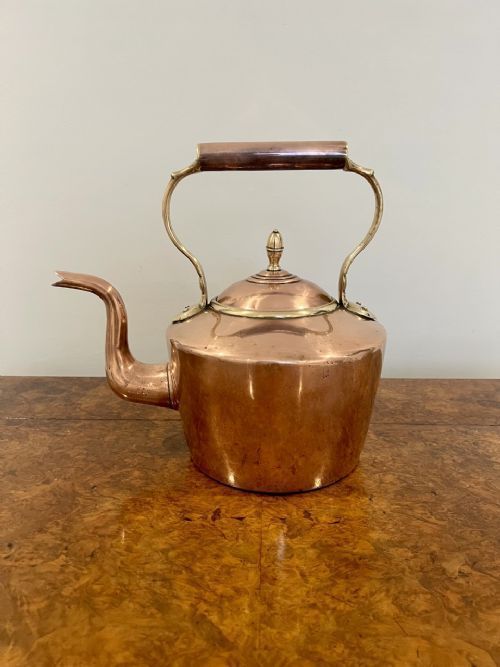
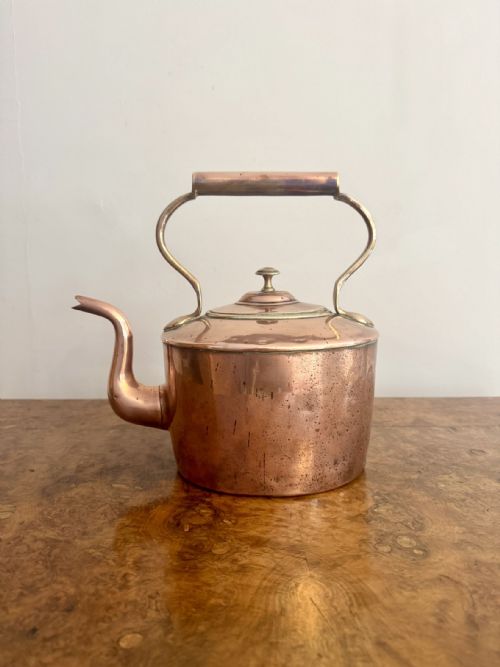
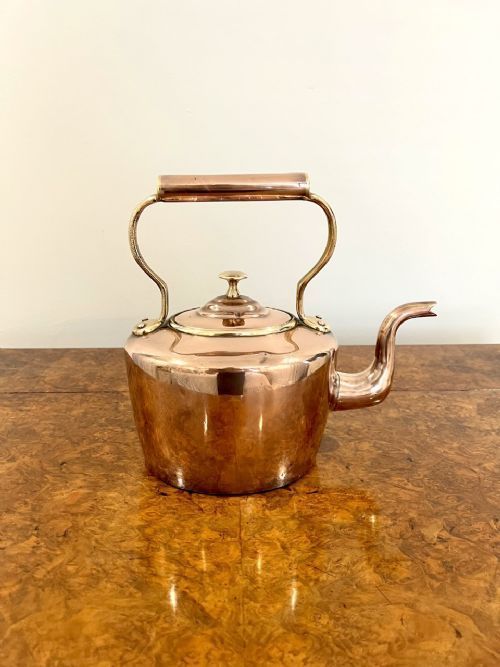
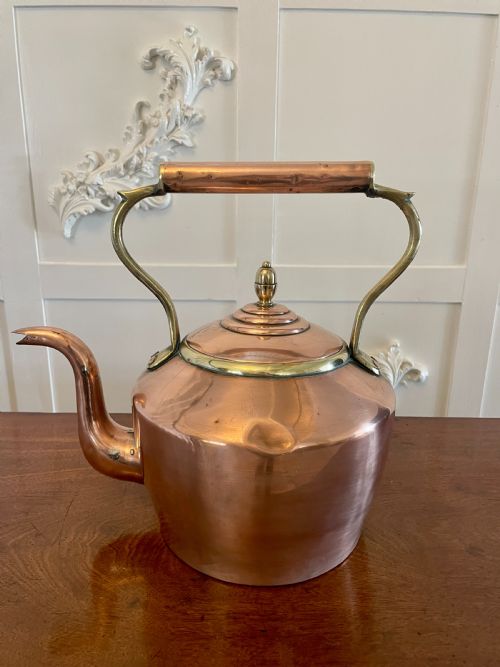
A george iii copper teapot or kettle represents a functional vessel from the Georgian period, typically dated around eighteen hundred. These pieces span large and small proportions, often featuring oval shapes designed for heating water over a hearth.
Buyers meet variations in scale, from small domestic vessels to large examples. The origin remains rooted in the Georgian era, utilising durable metals suited for daily service in period interiors.
Materials and construction
Makers shaped these vessels primarily from sheet copper, hammering the metal to achieve the required body form. Brass components often appear alongside the copper work, providing contrast and structural reinforcement for handles or spouts.
Selected examples incorporate wood details, adding tactile elements to handles for heat insulation during use. The combination of polished copper and brass defines the visual character of these Georgian metalwares.
Current listings span the Georgian period and eighteen hundred, utilising copper, brass, and wood.
Factors of quality
Quality separates through the crispness of the oval shape and the integrity of the metal panels. Superior examples show careful forming of the copper body without heavy distortion.
The integration of brass and wood elements influences the overall finish. Well-preserved surfaces retain a polished appearance that highlights the construction details of the period.
The George III Copper Teapot Glossary
- Copper
- A malleable reddish-brown metal used as the primary material for the body of these vessels. It conducts heat efficiently for boiling water.
- Brass
- An alloy of copper and zinc utilised for decorative trim, mounts, or structural components. It provides a brighter metallic contrast against the darker copper surface.
- Georgian
- The historical period spanning the reigns of the four Georges, noted for distinct design characteristics in metalwork. Pieces from this era display traditional hand-forming techniques.
- Oval
- A curved geometric form describing the plan view of specific kettle bodies. This shape distinguishes certain variations from standard circular vessels.
George III Copper Teapot: Frequently Asked Questions
How were these kettles used?
These vessels served to heat water over an open fire or hearth in period domestic settings. The metal construction allowed rapid boiling for tea preparation.
Daily handling required robust materials like copper and brass to withstand frequent exposure to heat and moisture.
How do I date a Georgian kettle?
Dating relies on stylistic markers and construction methods typical of the Georgian era around eighteen hundred. Hand-hammered joints and specific handle attachments provide chronological clues.
Comparing the proportions and material combinations helps place the object within its historical manufacturing period.
Where should I display my copper kettle?
These pieces suit traditional kitchen displays, hearth settings, or open shelving in period interiors. Their polished metal surfaces reflect light effectively.
Placement should avoid damp environments to preserve the polished copper and brass finishes over time.
What maintenance does polished copper need?
Polished copper surfaces require occasional gentle cleaning to maintain their reflective shine and prevent tarnishing. Using appropriate metal care products keeps the exterior bright.
Keeping the metal dry after cleaning prevents oxidation and protects the underlying material.