





Traditional Caucasian Flatweave
Traditional caucasian flatweave rugs and kilims bring geometric tribal artistry into a room through rich wool and natural dyes.
Traditional Caucasian Flatweave
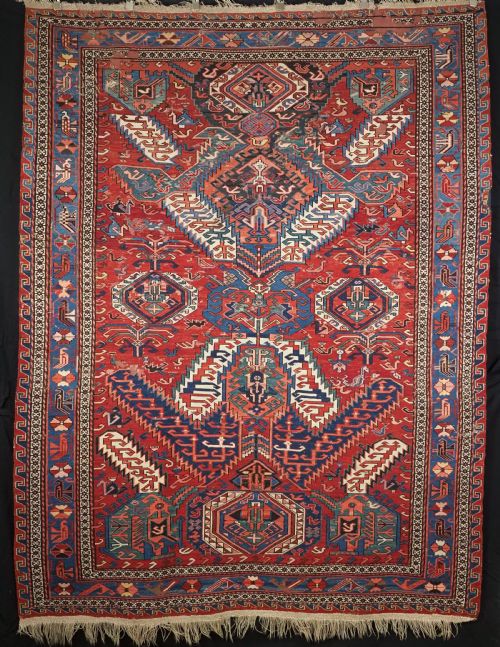
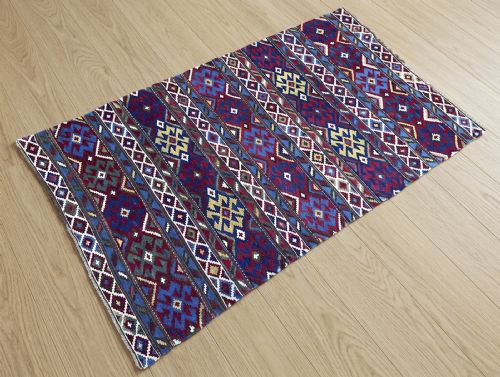
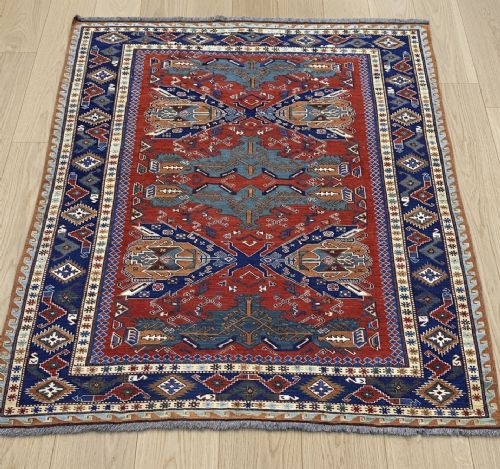
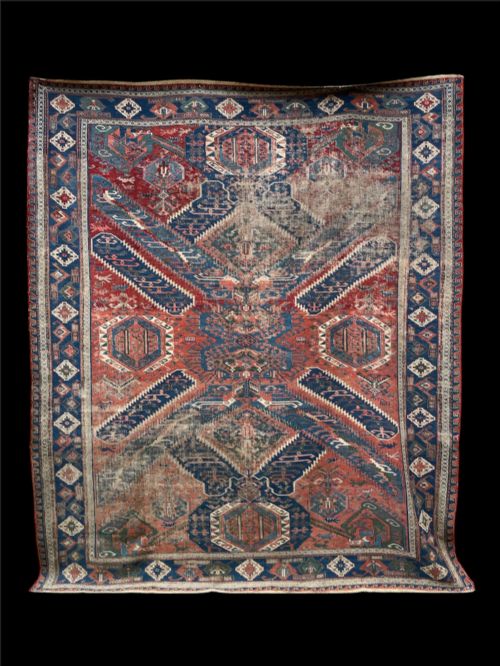
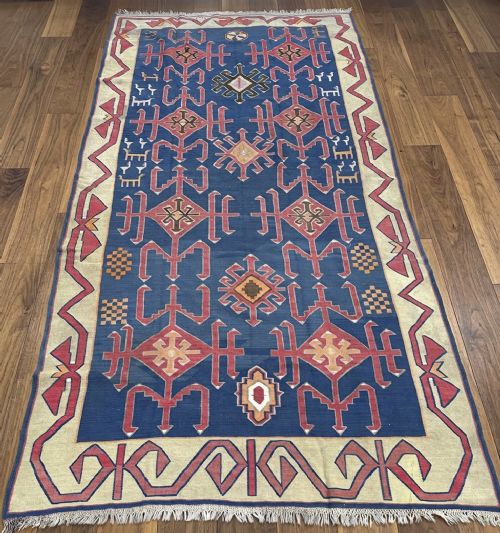
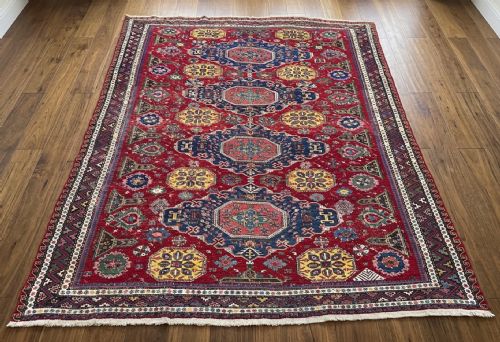
Traditional caucasian flatweave textiles comprise rugs, kilims, carpets, runners and saddle bag panels originating from regions such as Shirvan, Daghestan, Karabagh and Kuba. Buyers searching for traditional caucasian flatweave pieces encounter geometric designs, medallions and tribal motifs produced during the nineteenth and early twentieth centuries.
The selection includes specific regional work from weaving groups including the Shahsevan, Avar, Lesghi and Armenian makers. These textiles serve as floor coverings, wall hangings and decorative furnishings featuring distinctive patterns like the dragon, bee or shield design.
Materials and construction methods
Weavers constructed these flatweave pieces primarily using wool and cotton foundations and surfaces without a piled nap. The creation relies on interlocking weft techniques characteristic of traditional kilims and Soumak wrapping methods.
Makers utilised natural dyes to colour the wool, resulting in soft, varied palettes developed across regions like Shirvan and South Daghestan. The structural tightness ranges from fine weaves to robust tribal formats built for utility.
Traditional Caucasian Flatweave Retail Price Guide 2026
Typical asking prices for traditional caucasian flatweave among the pieces listed under this phrase on Sellingantiques today, from the lower quarter to the upper quarter. They describe what is for sale here now, not the wider market.
Materials documented across the inventory consist strictly of wool, cotton, and natural dyes applied in Caucasian and Persian tribal styles.
Judging the quality
Quality in these flatweaves rests on the precision of the geometric design, the complexity of motifs such as medallions or dragon patterns, and the condition of the weave. Finer structures and well-preserved structural integrity distinguish the upper tier of pieces.
The handling of natural dyes and the consistency of the wool contribute significantly to the visual depth of a piece. Regional attribution clarity and specific stylistic markers from centres like Kuba or Shirvan also influence the standing of an individual textile.
The Traditional Caucasian Flatweave Glossary
- Kilim
- An unpiled flat-woven carpet or rug produced in regions including the Caucasus and Persia. These textiles are made by tightly interweaving warp and weft strands to form flat geometric patterns.
- Soumak
- A brocading technique where coloured weft threads are wrapped around the warp threads to create a textured surface. This method produces a sturdier structure than standard flat-weaving.
- Mafrash
- A storage bag or panel woven by nomadic groups, often utilised for bedding or household goods. These panels frequently display banded designs and geometric motifs.
- Warp
- The vertical threads stretched on a loom prior to weaving. These stationary foundation threads support the entire structure of the flatweave.
- Weft
- The horizontal threads passed through the warp to build the pattern and fabric. Natural dyed wool is commonly employed for this purpose in traditional pieces.
Traditional Caucasian Flatweave: Frequently Asked Questions
How do I clean a flatweave rug?
Maintenance for these historical textiles requires gentle surface care rather than heavy saturation. Professional cleaning suited for antique wool is recommended to preserve the natural dyes.
Regular light vacuuming without a beater bar helps remove dust trapped within the flat weave structure. Keeping the textile away from direct sunlight prevents fading of the wool.
Where were these rugs made?
Production centred in the Caucasus region, encompassing areas such as Daghestan, Shirvan, Karabagh and Kuba. Different tribal groups including the Shahsevan, Avar and Kurdish weavers developed distinct regional patterns.
Local workshops and nomadic communities utilised regional wool and dye traditions to craft these specific geometric textiles.
What is the difference between a kilim and a Soumak?
A kilim is constructed using a flat slit-weave technique that leaves no piled surface. This method produces a lightweight and reversible textile with sharp geometric transitions.
A Soumak employs a wrapping technique where decorative threads are wound around the warp strands. This creates a textured face and a more rigid, heavier fabric.
How do I date a traditional flatweave?
Dating relies on stylistic analysis, material composition, and structural characteristics typical of nineteenth and early twentieth-century weaving. Evidence such as the use of specific natural dye palettes and traditional tribal motifs helps place pieces within periods like the late nineteenth century or circa nineteen hundred.
Regional structural habits and specific structural layouts recorded in comparable pieces provide further chronological markers for collectors.