


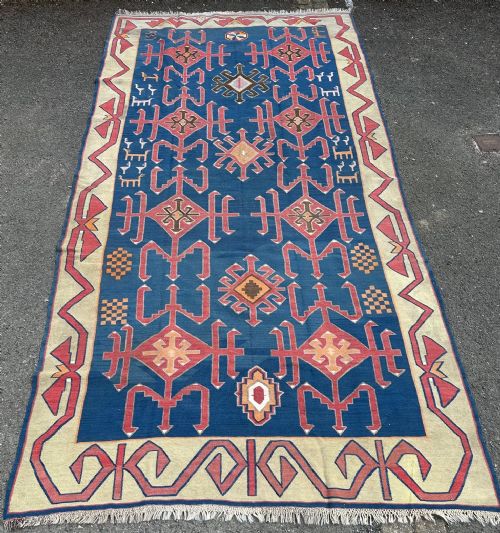


Red Blue Kilim
A red blue kilim brings flat-woven tribal textiles into a modern interior, offering geometric patterns and rich wool texture rooted in nomadic weaving traditions.
Red Blue Kilim
When searching for a red blue kilim, a buyer encounters flat-woven rugs, storage bags, and eating cloths produced by nomadic and village tribes across Persia, the Caucasus, Anatolia, and Central Asia. These textiles were made primarily for domestic utility, serving as floor coverings, wall hangings, or storage containers within tribal households.
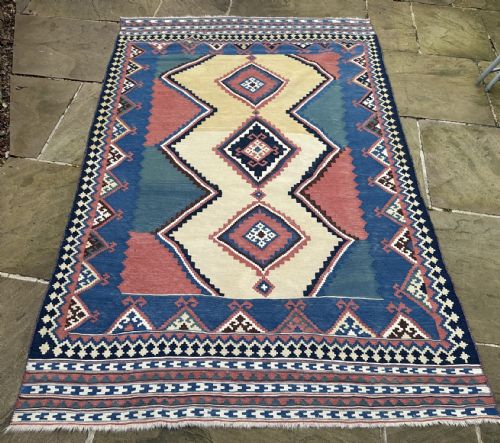
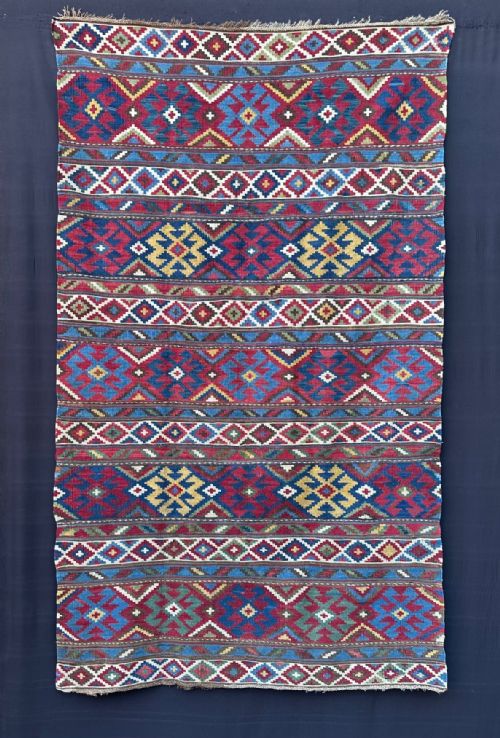
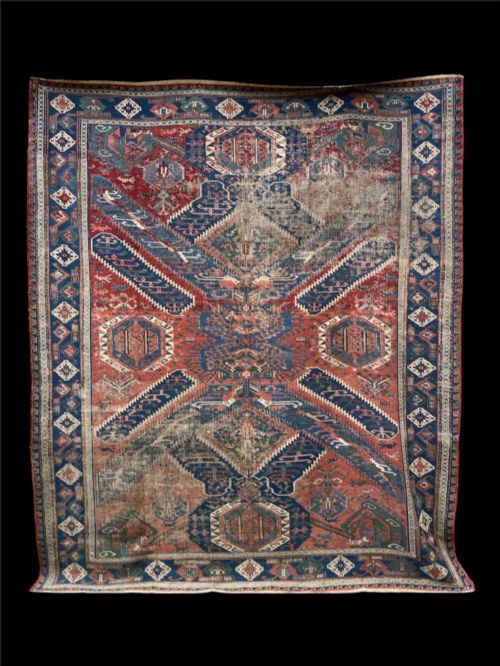
The pieces available on this page span the late nineteenth century through to the mid-twentieth century, showcasing regional variations in geometric design. Examples include Caucasian pieces from Shirvan and Kuba, Persian pieces by Qashqai and Bakhtiari nomads, and striking banded designs from Uzbek weavers.
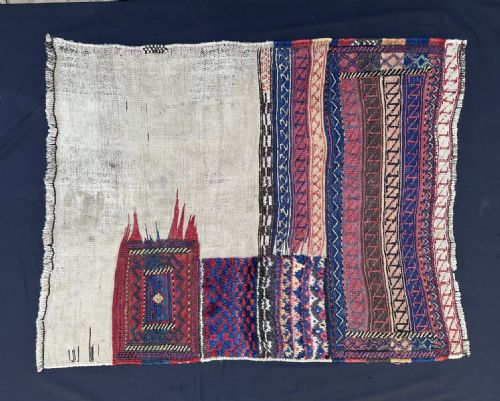
Forms range from long runners and area rugs to specialised tribal items like sofreh dining cloths and mafrash storage bag panels. Each piece reflects the specific weaving vocabulary of the group that made it, utilising traditional slit-tapestry and brocade techniques.
Materials and construction
These textiles rely on hand-spun wool and cotton, often supplemented by goat hair for structural durability along the edges and warps. Natural dyes derived from plants and minerals provide the characteristic palette, yielding deep reds and blues that age gracefully over decades.
The primary technique is flat-weaving, which dispenses with a pile entirely and creates a smooth, tapestry-like fabric by tightly interlocking the weft threads over the vertical warps. Certain regions also incorporate soumak wrapping and banded weft-float patterns to add textural relief and structural complexity.
Many bread cloths still bear the faint, honourable dusting of centuries-old village flour within their tight wool weaves.
Assessing quality and execution
Quality in these flat-weaves rests on the tightness of the weave and the precision of the geometric layout. A finer density of warps and wefts produces a crisper pattern edge and a textile that lies flat and stable.
The complexity and nuance of the natural dye palette also determine distinction, with subtle shifts in tone showing skilled dye work. Additionally, the integrity of the original edges and the complexity of tribal motifs separate standard utility pieces from exceptional examples.
The Red Blue Kilim Glossary
- Kilim
- A flat-woven carpet or rug made without a pile by tightly packing the weft threads over the warp. This technique creates a lightweight textile that is reversible and historically versatile.
- Sofreh
- A flat-woven cloth traditionally used for eating, kneading dough, or serving bread within nomadic households. These often feature distinctive central fields and border arrangements.
- Mafrash
- A large rectangular storage bag used by nomadic tribes for bedding and household goods during migration. Surviving panels display intricate end and side designs.
- Sumak
- A supplementary weft wrapping technique that creates a braided texture on the face of the textile and adds structural heft. It sits between a simple flat-weave and a knotted pile rug.
- Warp
- The stationary vertical threads stretched across a loom that serve as the foundation for the weaving. The visibility of warp ends often helps identify regional construction methods.
Red Blue Kilim: Frequently Asked Questions
How were kilims used daily?
Nomadic families utilised these flat-woven textiles as floor spreads, blankets, and dining surfaces inside tents and dwellings. They also formed durable containers for transporting household goods during seasonal migrations.
Over time, many of these utilitarian cloths transitioned into decorative wall hangings and floor coverings for stationary homes, prized for their graphic geometry and flat profile.
How do I care for a textile?
Protect the wool fibres by placing a breathable, non-slip underlay beneath the textile on hard floors to prevent sliding and excessive wear. Regular gentle vacuuming without a rotating brush roll keeps dust from settling into the flat weave.
Avoid prolonged exposure to direct sunlight to preserve the natural dyes. Professional cleaning tailored for antique rugs should be employed when deep maintenance is required.
How are tribal regions told apart?
Regional attribution relies on specific combinations of geometric motifs, border structures, and colour palettes unique to particular tribal confederations. For instance, Caucasian pieces often favor sharp, angular medallions, while Persian Qashqai works frequently display diamond patterns and rich red tones.
Structural details such as goat hair selvages and the number of woven strips also provide clues to the specific origin and workshop practices of the makers.
What makes a piece antique?
Age is determined by material analysis, dye characteristics, and traditional construction methods that predate modern synthetic materials. Textiles produced in the nineteenth and early twentieth centuries show hand-spun wool and natural colour variations indicative of pre-industrial village production.
Wear patterns and structural repairs often accompany genuine age, reflecting decades of active use before entering a collection.