
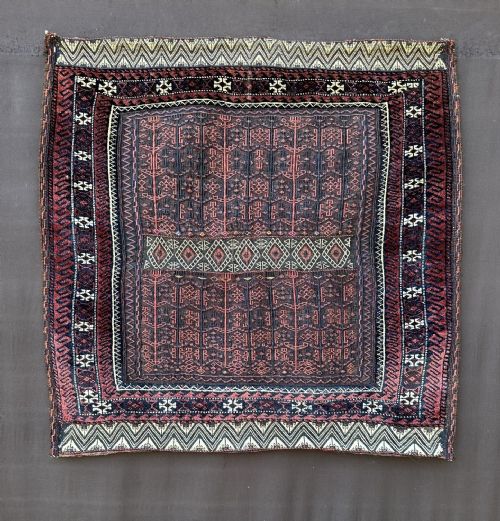
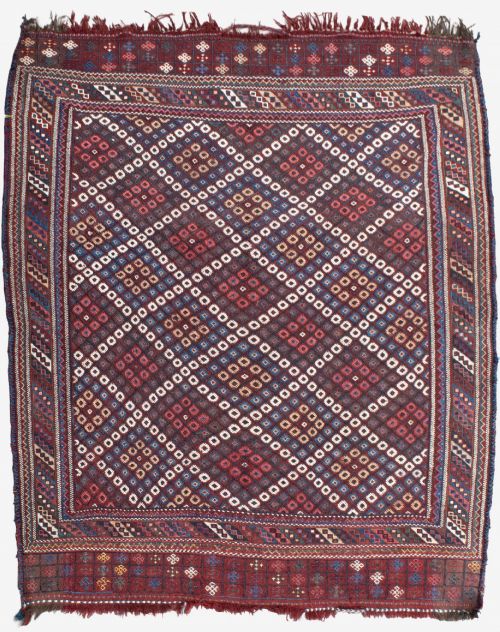


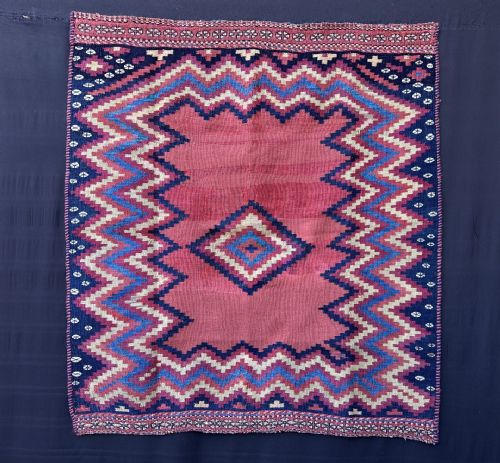


Woven Wool Sofreh
These woven wool sofreh are tribal flatweaves used for dining and bread preparation, carrying the authentic hand of nomadic makers.
Woven Wool Sofreh
A woven wool sofreh is a flatweave textile originating from tribal groups in Persia and Afghanistan. These utilitarian cloths served as dining spreads and bread-making mats within nomadic households.
Most pieces seen here hail from the late nineteenth and early twentieth centuries, produced by regional tribes such as the Afshar, Baluch, Timuri, and Luri-Bakhtiari. Their forms range from square dining cloths to narrow rectangular formats designed for specific domestic rituals.
How they were made
Weavers utilised wool, camel hair, and cotton spun by hand to construct these flatweaves on portable ground looms. Natural dyes provided the palette, creating deep earthy tones across the tribal designs.
The construction relies on flatweave and kilim techniques rather than piled knots, yielding a durable, supple fabric intended for daily floor use.
The inventory spans the late nineteenth and early twentieth centuries, featuring wool, cotton, and camel hair across Persian and Afghan tribal groups.
What varies in quality
The standard of a woven wool sofreh depends upon the tightness of the weave and the crispness of the tribal motifs. Finer examples display meticulous geometric control and deeply saturated natural dyes that hold their vibrancy.
Early pieces show greater variation in wool quality and dye depth, distinguishing standard domestic textiles from those of exceptional communal importance.
The Woven Wool Sofreh Glossary
- Sofreh
- A spread or cloth used for eating meals or kneading bread upon. These textiles lie at the heart of nomadic hospitality and domestic life.
- Flatweave
- A textile produced without pile by interweaving warp and weft threads. This technique creates a lightweight cloth without a plush surface.
- Natural Dyes
- Colourants derived from plants, roots, and insects before the advent of synthetic alternatives. They impart a rich, nuanced patina over decades.
- Tribal
- Pertaining to nomadic or village groups working within traditional design vocabularies rather than urban workshops. Each region maintains distinct visual markers.
Woven Wool Sofreh: Frequently Asked Questions
What is a sofreh used for?
These cloths served as clean surfaces for rolling dough, baking bread, and gathering families together for communal meals.
Nomads laid them directly upon the ground inside tents or dwellings before folding them away after use.
How do I live with a sofreh?
Many collectors display these flatweaves as wall hangings or place them on low-traffic floors to preserve their historic wool.
Keep them away from direct sunlight and use a breathable underlay if placed on hard flooring.
How are tribal regions told apart?
Specific wool types, structural layouts, and geometric motifs point directly to the producing tribe, such as the Afshar or Baluch.
Local dye palettes further anchor a textile to a precise province like Kerman or Khorassan.
Are these pieces made from wool?
The primary material is hand-spun wool, occasionally supplemented with camel hair and cotton foundations.
Natural dyes lend the wool its characteristic varied tone across the surface of the weave.