
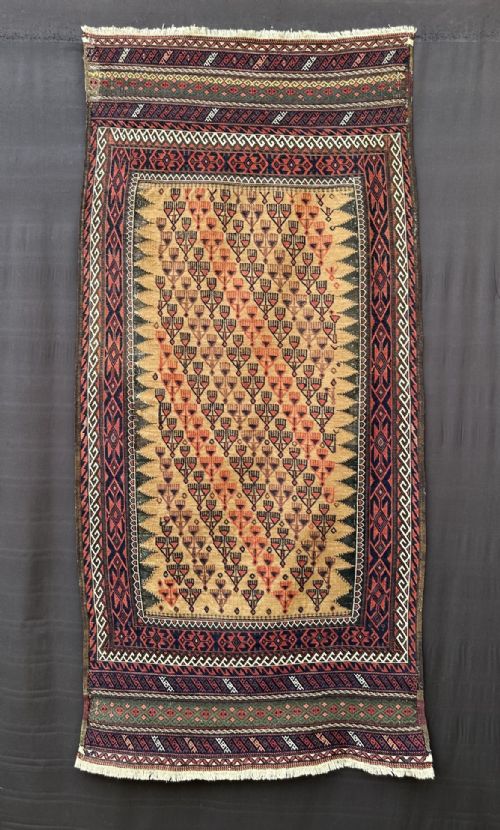
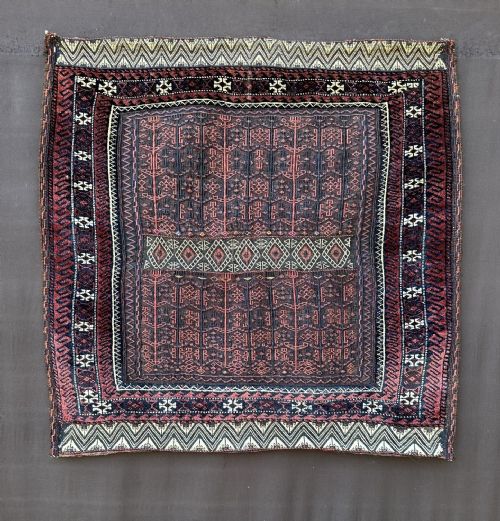
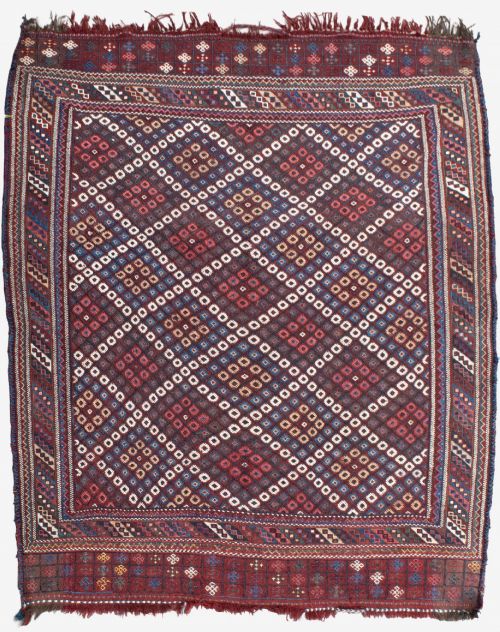


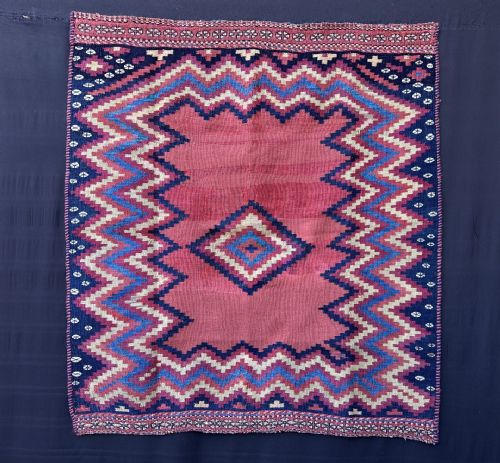


Antique Bread Sofreh
An antique bread sofreh is a tribal woven cloth used for preparing and eating meals, prized for its honest village utility and striking geometric patterns.
Antique Bread Sofreh
An antique bread sofreh is a specialised tribal textile traditionally woven for domestic food preparation, specifically the kneading and resting of dough. These flatweaves served practical daily functions within nomadic and village households across Persia and Afghanistan before entering the collector market.
Most pieces seen here originate from specific tribal groups such as the Afshar, Luri-Bakhtiari, and regional weavers in Kamo. They appear predominantly as flatweave rugs, kilims, and textiles dating from the late nineteenth century through to the early decades of the twentieth century.
How they were made
Weavers constructed these utilitarian cloths using natural materials including wool, cotton, and occasional camel hair, spun by hand for local household use. These fibres provided the necessary durability for daily domestic duties involving food preparation and floor seating.
Makers employed traditional flatweave and kilim techniques, imparting structure and pattern without pile. Natural dyes supplied the colour palette, yielding organic tones that developed distinct character over years of handling and use.
Dough residues occasionally linger within the weave, whispering of long-forgotten tribal kitchens.
What varies in quality
The quality of an antique bread sofreh depends on the tightness of the weave and the precision of the flatweave construction. Tighter structural density reflects greater time and skill invested by the tribal weaver.
Visual appeal relies on the depth and condition of the natural dyes, alongside the clarity of the tribal patterns. Pieces with well-preserved wool and intact edges demonstrate superior survival through generations of domestic application.
Timuri Sangtshuli Tribe·Djhan Beghi Tribe·Luri-Bakhtiari Tribes·Afshar Nomads
The Antique Bread Sofreh Glossary
- Sofreh
- A spread or cloth used primarily for dining, kneading bread, or sitting upon during meals. These flatweaves form a distinct category of nomadic textiles.
- Kilim
- A tapestry-woven flatweave rug lacking a pile. This technique creates a smooth surface on both sides of the textile.
- Flatweave
- A textile produced by warping and wefting threads together on a loom without creating a raised pile. This method is standard for utilitarian tribal cloths.
- Natural Dyes
- Colourants derived from plants, insects, and minerals rather than synthetic compounds. They produce organic hues that mature gracefully over time.
Antique Bread Sofreh: Frequently Asked Questions
What is an antique bread sofreh?
An antique bread sofreh is a traditional woven cloth used by tribal and nomadic communities for making and serving bread.
These flatweaves functioned as practical household items rather than decorative wall hangings, though their designs reflect distinct regional tribal aesthetics.
How were these cloths used?
Families spread them on the ground for communal meals or utilised them specifically for wrapping and resting dough.
Their sturdy weave protected food from the earth and provided a clean surface for daily domestic routines.
How do I live with one?
These textiles adapt well to low-traffic floor areas, flat surfaces, or display as wall hangings in domestic interiors.
Their wool and cotton construction requires standard textile care, avoiding harsh sunlight and excessive moisture to preserve the natural fibres.
How can I tell regions apart?
Regional attribution relies on the specific wool characteristics, dye palettes, and structural traits associated with tribal groups.
For example, pieces from Kamo exhibit different stylistic markers compared to those woven by Afshar nomads in Kerman province.