

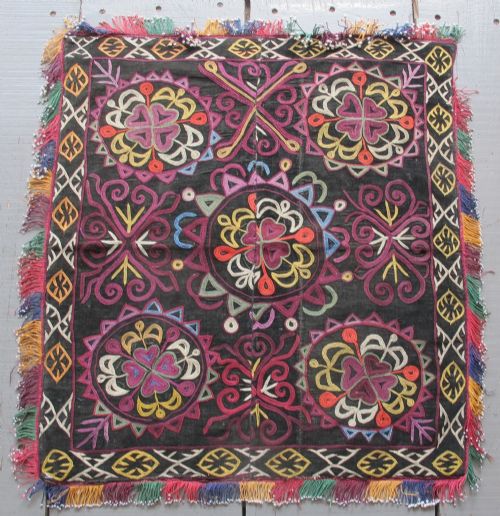
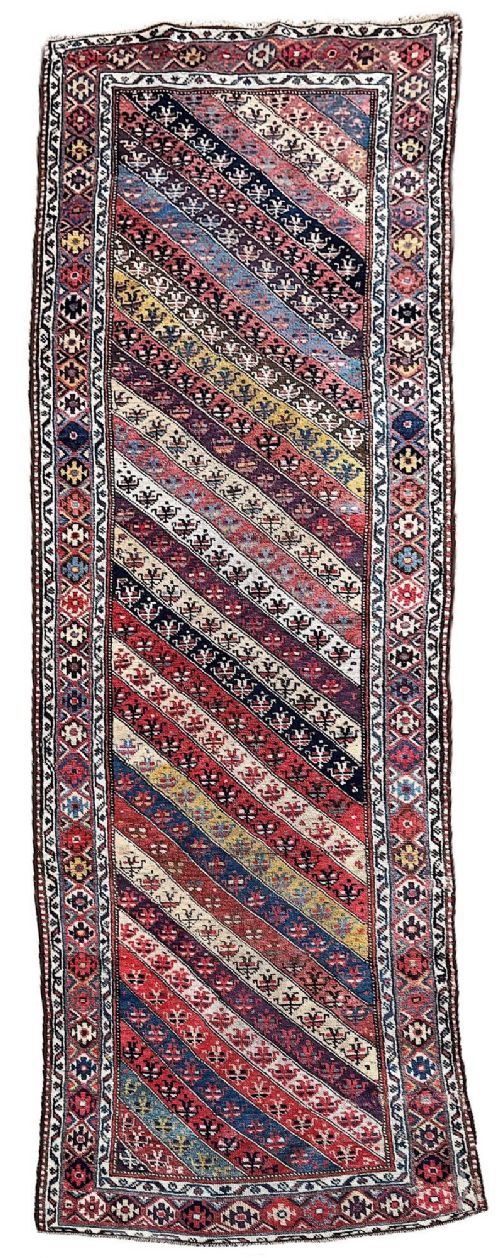
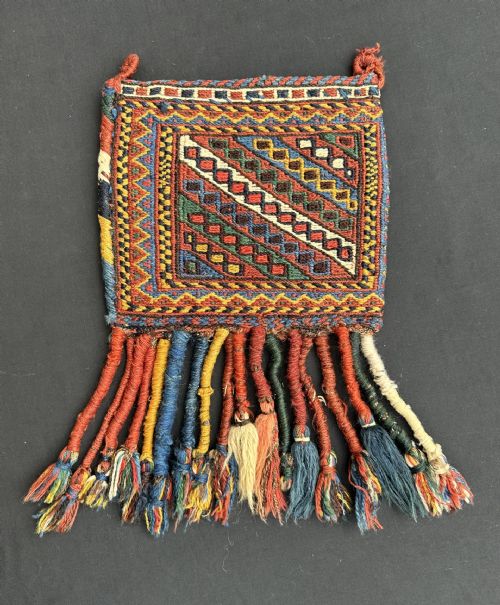


Multicoloured Tribal Rug
When you search for a multicoloured tribal rug, you are looking for hand-woven village and nomadic textiles from Persia, the Caucasus, Anatolia, Central Asia, and North Africa.
Multicoloured Tribal Rug
A multicoloured tribal rug encompasses a wide variety of domestic and utilitarian forms, including runner rugs, large room-size carpets, corridor pieces, and smaller wall hangings. Buyers will also encounter specialised nomadic containers and furnishings such as storage bags, salt bags, vanity bags, saddle-bags, and cushions created by weaving communities.
The pieces originating from these traditions span multiple decades from the mid-nineteenth century through to the early twentieth century. Common regional attributions include Caucasian designs like Kazak, Shirvan, Karabagh, and Talysh, alongside Persian nomadic groups such as the Qashqai, Afshar, and Shahsavan.
Anatolian and Central Asian examples also appear frequently, featuring Turkish kilims and Uzbek embroideries alongside Moroccan Berber rugs. These varied formats reflect the distinct functional needs and regional aesthetics of the weavers who produced them.
Materials and construction methods
The foundational materials rely predominantly on wool, hand-spun wool, and cotton, supplemented occasionally by silk fibres in specific decorative pieces. Weavers utilised natural dyes to achieve their varied palettes across piled surfaces and flat-woven kilim structures.
Surface ornamentation incorporates diverse embellishments such as glass beads, cowrie shells, and detailed embroidery work. Many functional items integrate complex techniques like plain weave backs, slit-weave construction, and supplementary wool or silk stitching.
The listings on this site include Caucasian runner rugs, Anatolian village kilims, and Central Asian embroidered hanging bags spanning the late nineteenth and early twentieth centuries.
Determining quality in nomadic textiles
Quality rests upon the fineness of the spin and the purity of the wool used in the foundation and pile. Finer examples display greater density in the weave and precision in the execution of geometric or figurative motifs.
The depth and chemistry of the natural dyes significantly influence the visual success of a piece, separating harmonious palettes from discordant ones. Structural integrity, the completeness of original borders, and the condition of the flat-weave or piled surfaces further define the standard of survival.
The Multicoloured Tribal Rug Glossary
- Kilim
- A flat-woven carpet or rug produced without a pile by tightly interweaving warp and weft threads. This technique results in a lightweight, reversible textile with sharp geometric patterns.
- Mafrash
- A large rectangular storage bag or chest panel used by nomadic tribes for bedding and household goods. These containers were often woven in panels and later separated.
- Torba
- A small wall-hanging storage bag traditionally used in Central Asian tents for holding small possessions. They frequently feature elaborate embroidery or supplementary weft work.
- Sofreh
- A flat-woven spread or cloth used for dining, dough preparation, or ritual meals. They typically display stark, functional central fields surrounded by protective borders.
- Boteh
- A stylised almond, pear, or floral motif of ancient Persian origin representing life and eternity. It appears repeatedly across runner rugs and village carpets.
Multicoloured Tribal Rug: Frequently Asked Questions
What is a tribal rug?
A tribal rug is a hand-woven textile created by nomadic or village weavers for daily domestic use, ceremonial purposes, or personal storage rather than commercial export.
These pieces typically feature geometric motifs, symbolic tribal markers, and bold colour palettes derived from local natural dye sources.
How were antique bags used?
Nomadic groups utilised specialised bags such as salt bags, vanity bags, and saddle-bags to transport and store belongings during seasonal migrations.
Larger containers like mafrash units held bedding inside tents, while smaller torba hangings kept personal items organised and off the ground.
How do I identify Caucasian rugs?
Caucasian rugs originate from the Caucasus region and are generally characterised by crisp, highly geometric designs, hooked polygons, and strong primary colours.
Types such as Kazak, Shirvan, and Talysh often display saturated palettes, distinct border arrangements, and sturdy wool foundations.
Are these rugs suitable for modern floors?
These historical textiles adapt well to contemporary interior spaces when paired with a quality rug underlay to prevent sliding and reduce wear.
Placing them in low-to-medium traffic areas helps preserve the natural wool pile and structural integrity of older flat-weaves.