




Persian Sofreh Rug
A Persian sofreh rug is a woven tribal cloth made for spreading meals or handling bread, prized by collectors for authentic nomadic utility.
Persian Sofreh Rug
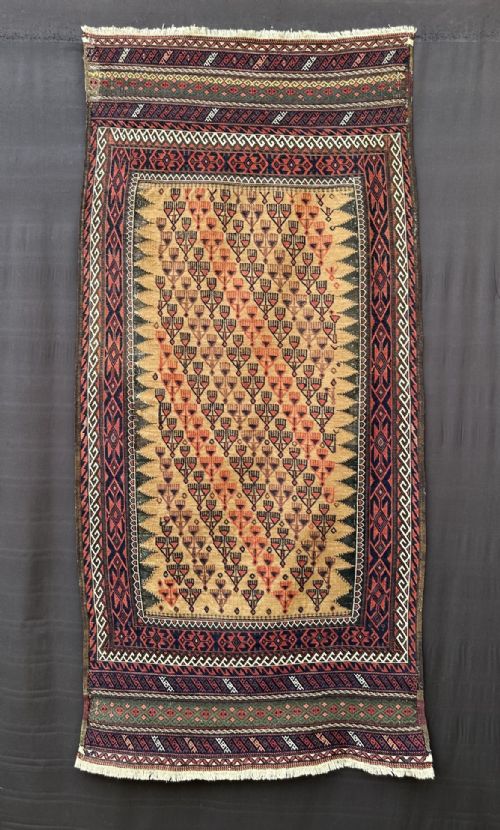
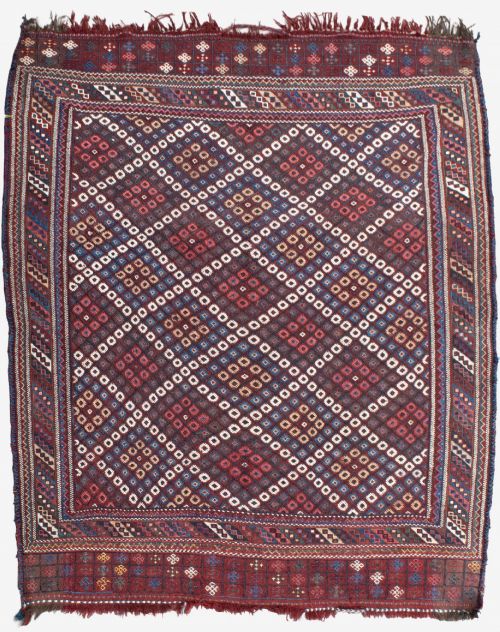
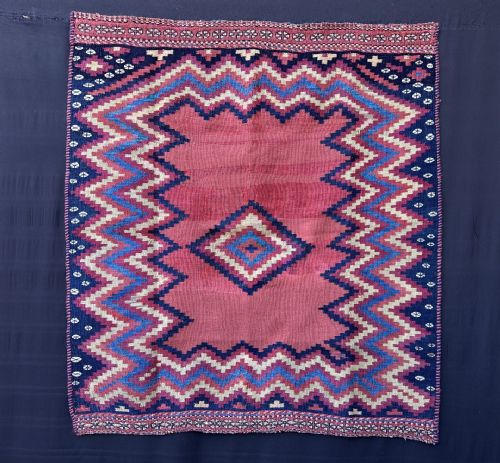
A persian sofreh rug serves as a traditional tribal textile woven for communal dining or bread making by nomadic groups across Persia. These utilitarian cloths appear in forms such as flatweave rugs, kilims, and specialised rugs and textiles produced in various regional provinces.
Buyers encounter examples originating from distinct tribal groups including the Afshar, Luri-Bakhtiari, Timuri Sangtshuli, and Baluch Salar Khani. Production spans the late nineteenth century and the early decades of the twentieth century, reflecting authentic regional weaving traditions.
The format typically divides into dining sofreh designed for communal meals and bread sofreh utilised for food preparation. These textiles capture the domestic life and tribal identity of weavers from regions such as Kerman, Luristan, and Khorassan.
Materials and construction
The construction relies primarily on wool and cotton foundations, often incorporating camel hair for natural tonal variation. Weavers utilise natural dyes to achieve the distinctive palettes seen across tribal flatweaves and pile rugs.
Techniques encompass flatweave rug construction and kilim weaving methods, producing durable surfaces suited to daily domestic handling. Tribal workshops across western, central, and southern Persia maintained these specific material choices through successive generations.
Current listings span production dates from eighteen seventy to nineteen twenty, featuring wool, cotton, camel hair, and natural dyes.
Elements of quality
Quality rests in the fineness of the flatweave structure and the integrity of the natural dyes utilised across the surface. Early pieces from the nineteenth century demonstrate tighter construction and deeper regional character.
The precision of tribal motifs and the condition of the wool or camel hair foundation distinguish superior examples. Pieces retaining their original tribal context and clear attribution to specific groups carry greater ethnographic weight.
The Persian Sofreh Rug Glossary
- Sofreh
- A spread or cloth used for eating meals or kneading bread within Persian nomadic households. These textiles function primarily as floor coverings for food preparation.
- Flatweave
- A rug woven without pile by interlocking warp and weft threads together. This technique produces a thin, durable textile common in tribal utility cloths.
- Kilim
- A tapestry-woven carpet or flatweave lacking a pile surface. These pieces feature geometric designs formed during the weaving process.
- Tribal
- Pertaining to nomadic or semi-nomadic groups operating outside urban centres. Tribal weaving traditions preserve distinct regional patterns and material uses.
Persian Sofreh Rug: Frequently Asked Questions
What is a sofreh used for?
A sofreh functions as a woven cloth laid upon the ground for family dining or food preparation. Nomadic groups utilised these textiles specifically for spreading meals and handling bread.
Over time, collectors have reinterpreted these functional domestic cloths as decorative flatweave rugs or wall hangings. Their original purpose dictates the distinctive square or rectangular formats.
How do I identify an Afshar sofreh?
Afshar examples originate from the Kerman province in southern Persia and often feature characteristic tribal motifs. The weaving style reflects the heritage of nomads inhabiting that specific territory.
Inspect the structural materials, such as wool and natural dyes, alongside regional design markers. Attribution relies on recorded tribal patterns associated with southern Persian production.
Are these rugs flatweaves?
Many examples on this page are constructed as flatweaves or kilims rather than knotted pile carpets. This technique reflects their original domestic function as practical cloths rather than decorative floor coverings.
The absence of pile creates a flat, durable surface suited to folding and domestic utility. Weavers utilised wool and cotton to achieve this specific structural format.
How old are these textiles?
The available pieces date from the late nineteenth century through to the early decades of the twentieth century. Specific production periods span from eighteen seventy up to nineteen twenty.
Age is determined through stylistic analysis, material composition, and recorded tribal attributions. Pieces from the nineteenth century represent the earlier end of this dating spectrum.