




Persian Kilim Tapestry
These persian kilim tapestry pieces are flat-woven textiles offering striking geometric designs and rich regional character for any interior.
Persian Kilim Tapestry
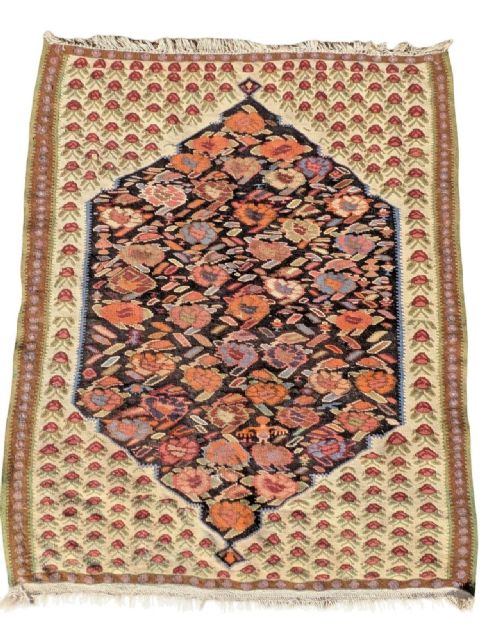
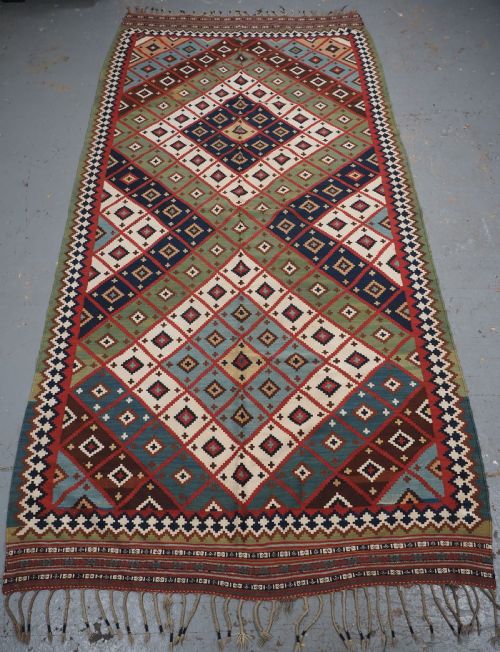
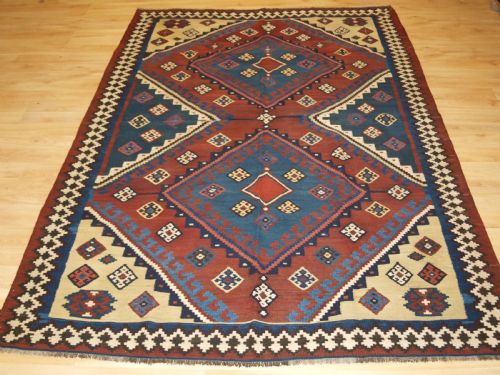
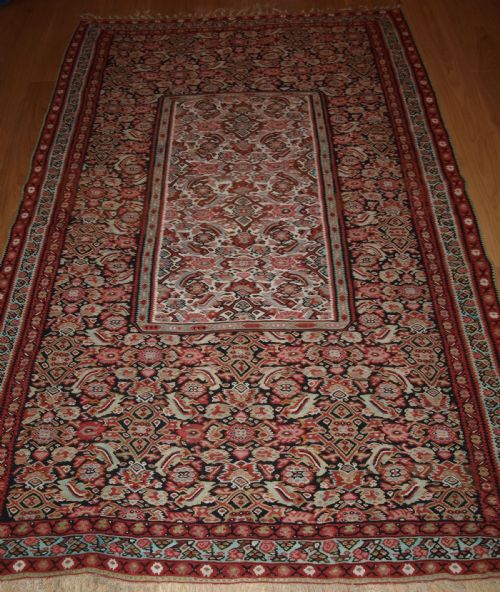
The objects stem from the late nineteenth and early twentieth centuries, spanning periods from eighteen fifty to nineteen thirty. Pieces originate from distinct tribal and regional traditions such as Qashqai, Bidjar, Senneh, Afshar, and Shahsavan.
How They Were Made
These flat-weaves are constructed primarily using wool for the structural warps and the patterned wefts, sometimes supplemented by cotton foundation threads. The slit-weave technique creates the characteristic clean vertical boundaries between differing colour blocks in the geometric motifs.
Selected pieces incorporate additional textile elements such as velvet integrated alongside timber in chair construction or backing materials. Natural dyes provide the palette seen across the tribal and regional examples from the nineteenth and early twentieth centuries.
The documented periods span from eighteen fifty through nineteen thirty, encompassing nineteenth-century nomadic weaving traditions.
What Varies in Quality
Quality rests upon the tightness of the weave, the precision of the geometric or medallion drafting, and the depth of the dye palette. Finer examples display meticulous control over intricate motifs like eye dazzlers and diamond medallions.
The integrity of the flat-woven structure and the survival of original wool edges and ends dictate the standing of an individual piece. Tribal provenance and uncommon design variations distinguish the more accomplished works from standard regional production.
The Persian Kilim Tapestry Glossary
- Kilim
- A flat-woven carpet or rug produced without a pile. This technique creates a lightweight textile with identical patterns visible on both sides.
- Sofreh
- A spread or cloth used historically for handling bread or meals among nomadic tribes. These textiles feature distinct regional weaving patterns.
- Saddle Bag
- A dual-pouch textile woven for transport use on animals. Surviving examples are often separated into long decorative panels.
- Warp
- The stationary lengthwise threads stretched on a loom. They form the structural foundation upon which the coloured weft yarns are woven.
- Weft
- The transverse threads passed through the warp yarns to create the visible pattern. In these pieces, the weft entirely covers the warp structure.
Persian Kilim Tapestry: Frequently Asked Questions
How do I clean a kilim?
Gentle surface brushing and careful vacuuming without a rotating head help remove dust and debris. Professional textile cleaning is recommended for deeper maintenance.
Water exposure should be managed carefully to protect natural wool fibres and historic dyes from running or shrinking.
Can I use these on floors?
Many of these flat-weaves function well as floor coverings in areas with moderate foot traffic. Using a proper underlay helps prevent slipping and reduces friction against hard surfaces.
lighter pieces, cushions, or fragments are often better suited for wall display or decorative placement on furniture.
What is a tribal flat-weave?
These are textiles produced by nomadic or village groups rather than urban workshops. The designs reflect the specific cultural heritage and local weaving traditions of groups such as the Qashqai or Afshar.
Each group utilised characteristic motifs, such as diamond medallions or geometric repeating patterns, passed down through generations.
How old are these textiles?
The pieces seen here date from the mid-nineteenth century through the early twentieth century, specifically spanning eighteen fifty to nineteen thirty. Dating is determined by material analysis, dye characteristics, and traditional tribal design markers.
Earlier pieces often exhibit specific regional structures and organic dye palettes that evolved over subsequent decades.