


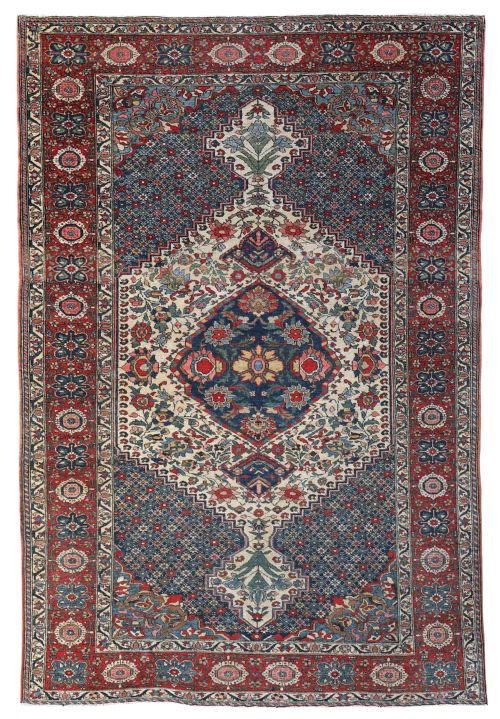

Bakhtiari Tribal Rug
When you handle a bakhtiari tribal rug, you hold a piece of Western Persian nomadic weaving tradition formed in the Chahar Mahal region.
Bakhtiari Tribal Rug
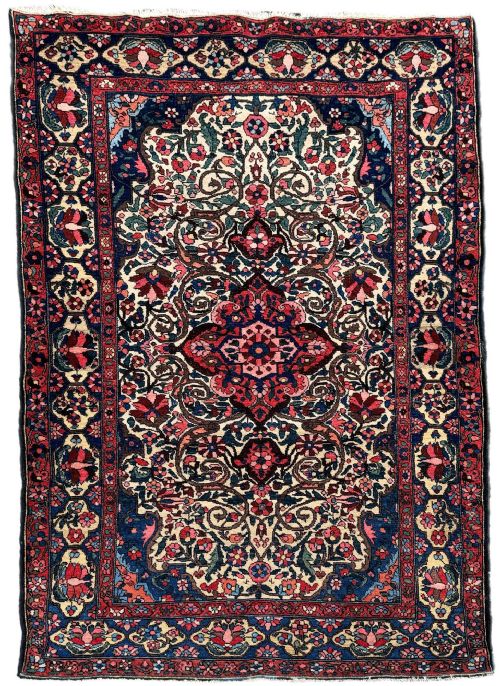
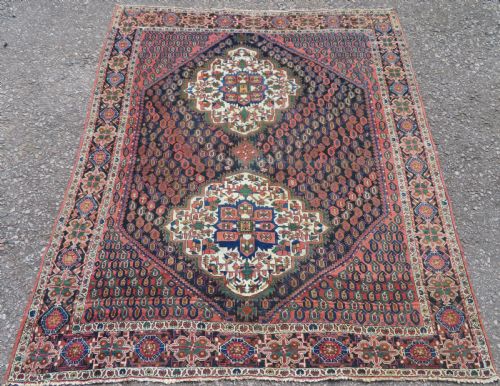
A bakhtiari tribal rug is a woven textile originating from the Chahar Mahal valley in Western Persia, produced by various tribes including Lori-Bakhtiari and Kurdish groups. These pieces take several forms, ranging from standard area rugs and large carpets to specialised items like wheat-sacks, flat weaves, and saddlebags.
The version you are most likely to meet on this page is an antique village rug or runner dating from the late nineteenth century to the early twentieth century. These floor coverings and utility textiles represent the domestic output of regional weavers working in traditional Persian styles.
How They Were Made
These textiles were constructed using wool, hand-spun wool, and cotton foundations, often utilising goat hair for durable selvedges and structural support. Weavers employed natural dyes to colour the wool, producing deep, stable hues that define the visual character of the region.
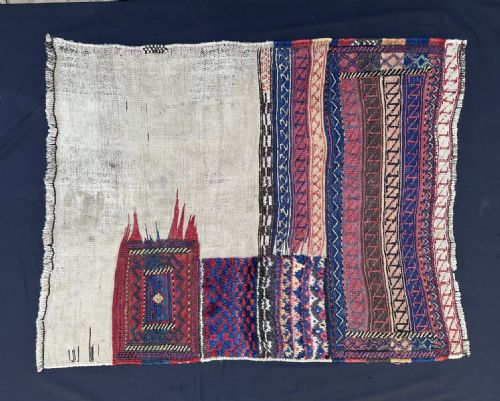
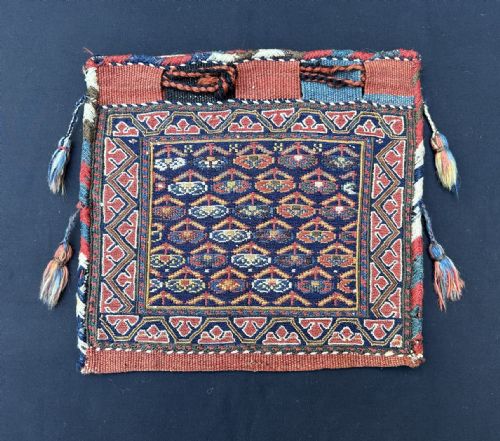
The production encompasses both pile-woven carpets and flat-woven structures such as kilim rugs and jajim wall hangings. Specialised utilitarian pieces like tacheh wheat-sacks and half-khorjin saddlebags were constructed with dense weaves to withstand heavy nomadic use.
The listings on this site feature natural dyes, hand-spun wool, and cotton across various formats including runner rugs, kilims, and textile wheat-sacks.
What Varies in Quality
The grade of wool and the consistency of the hand-spinning process set individual pieces apart, influencing the tactile handle and resilience of the pile. Finer knot density allows for crisper execution of geometric or floral medallion designs.
The depth and harmony of the natural dye palette contribute significantly to the standing of a textile. Examples displaying skilled colour sorting and balanced distribution across the field command greater appreciation among collectors.
The Bakhtiari Tribal Rug Glossary
- Chahar Mahal
- The mountainous valley region in Western Persia where many Bakhtiari and associated tribal textiles were produced. This area serves as the primary geographical attribution for these rugs.
- Tacheh
- A traditional woven wheat-sack or storage bag made by nomadic groups for domestic utility. These square textiles often display striking geometric compositions.
- Khorjin
- A traditional double-sided saddlebag utilised for transport during tribal migrations. Surviving examples frequently appear as half-faces after being separated for domestic use.
- Jajim
- A flat-weave textile produced by nomadic weavers, often used as a floor spread, wall hanging, or heavy cover. These items are constructed from stitched panel strips.
- Kelleh
- A traditional long, narrow format rug suited for corridors and extended interior spaces. This format provides an elongated field for repeated tribal motifs.
Bakhtiari Tribal Rug: Frequently Asked Questions
How old are these tribal rugs?
The pieces available span from the late nineteenth century through to the early decades of the twentieth century. Most examples originate from the period between eighteen eighty and nineteen thirty.
Dating relies on stylistic indicators, structural analysis, and the specific characteristics of the natural dyes used during manufacture.
Where were these textiles made?
The majority originate from the Chahar Mahal valley in Western Persia, a region historically inhabited by Bakhtiari, Lori, and Kurdish nomadic and village groups.
Local tribes produced these items for personal domestic use, trade, and transport within their nomadic communities.
What are tacheh wheat-sacks used for?
A tacheh was originally constructed as a functional storage sack for grain, flour, or wheat within nomadic households. These square textiles were woven with durable materials to withstand daily loads.
Today, collectors appreciate them as decorative flat-weave textiles or small wall hangings that display traditional tribal iconography.
How do garden design rugs differ?
Garden design rugs feature a compartmentalized layout representing traditional Persian gardens divided by water channels and paths. Each compartment typically contains floral or cypress tree motifs.
This architectural format distinguishes them from standard medallion or all-over tribal field patterns found in other village rugs.