


Geometric Caucasian Kilim
These geometric caucasian kilim examples bring flat-woven tribal textiles into modern interiors through bold regional patterns and rich historical character.
Geometric Caucasian Kilim
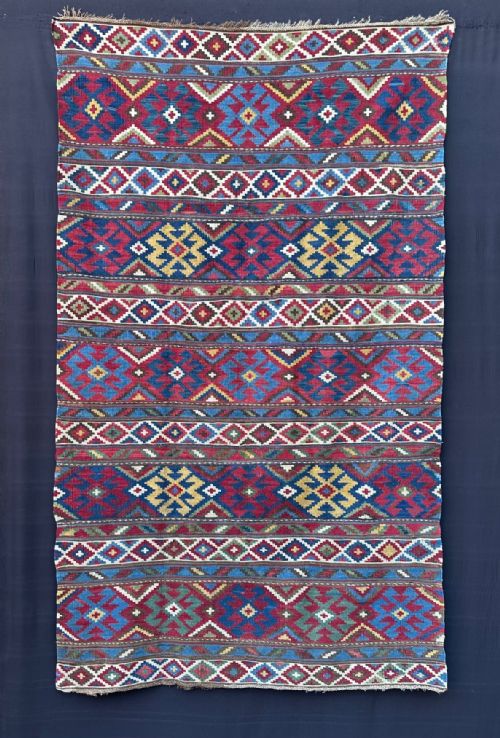
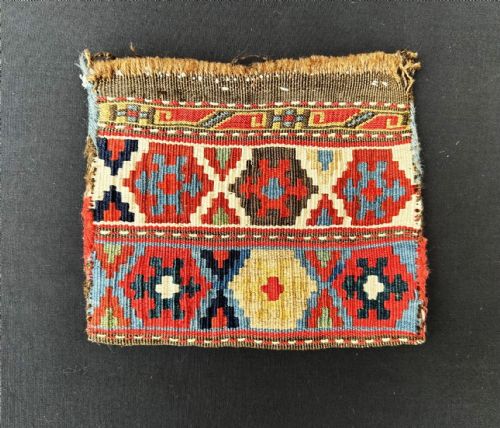
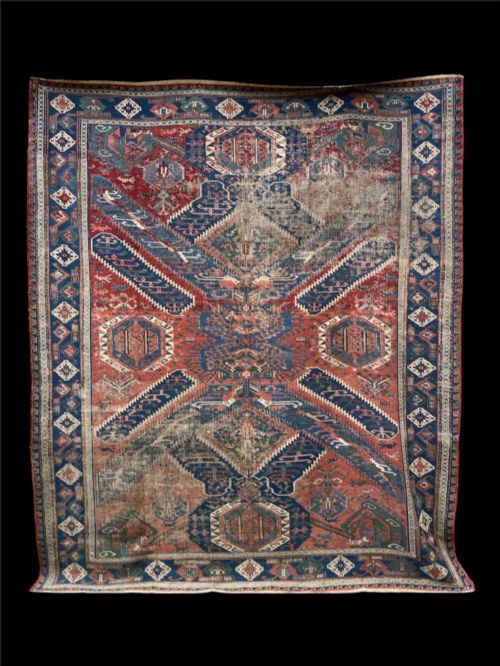
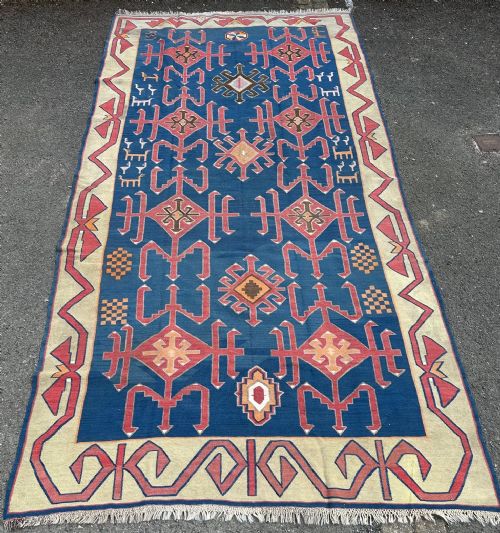
A geometric caucasian kilim groups together flat-woven tribal textiles originating from mountain regions, valleys and nomadic groups across the Caucasus. Buyers encounter forms ranging from large kilim rugs and runner rugs to storage bags, vanity bags and cushions made from repurposed panels.
The selection centres on pieces woven during the nineteenth century and the early decades of the twentieth century. Regional attributions connect these works to specific weaving communities such as the Shirvan region, Shahsevan nomads, Avar tribes and Karabagh.
Materials and Construction
Weavers constructed these textiles using wool and hand-spun wool combined with cotton foundations, dyed primarily with natural colourants. This combination produces the distinctive flat-weave structure characteristic of kilims, soumaks and verneh pieces.
The technique relies on interweaving warp and weft threads without a pile surface, resulting in crisp linear edges and sharp geometric motifs. Artisans also employed brocading and supplementary weft-wrapping methods to build complex panels and storage bags.
The inventory spans weaving traditions from 1870 to 1940, incorporating cotton, wool, and natural-dyed hand-spun yarns across multiple regional styles.
Assessing Quality
Quality rests on the precision of the flat-weave structure and the density of the hand-spun wool. Finer examples display tight tension, well-defined geometric alignments and balanced proportions across the field.
The depth and harmony of natural dyes further distinguish superior pieces. Examples featuring soft, complex palettes and intact regional designs demonstrate the technical skill of the original nomadic weavers.
The Geometric Caucasian Kilim Glossary
- Kilim
- A flat-woven textile produced without a pile by tightly interweaving warp and weft threads. These pieces function primarily as rugs, runners and decorative covers.
- Soumak
- A brocaded flat-weave technique involving wrapping weft threads over and under warp threads to create a textured, durable surface. This method appears on carpets and bag faces from Eastern Caucasus regions.
- Mafrash
- A large rectangular storage bag or chest panel produced by nomadic groups to hold household belongings. Pieces often arrive separated and converted into small kilims or cushions.
- Verneh
- A specific type of brocaded flat-weave rug featuring distinct diagonal or patterned structures. These textiles originate from the south-west regions of the Caucasus.
- Natural Dyes
- Colourants derived from plant and mineral sources used by tribal weavers before synthetic alternatives became widespread. They yield nuanced tones that age with visible character.
Geometric Caucasian Kilim: Frequently Asked Questions
How do I clean a fragile antique kilim?
Surface dust removes easily through gentle, low-suction vacuuming without a rotating brush head.
Professional textile conservators handle deeper cleaning to protect natural dyes and historical wool fibres from damage.
Can these flat-weave rugs go on floors?
Floor placement works well in low-traffic areas when paired with a quality rug underlay to prevent slipping and friction.
Many collectors also mount panels and bag faces directly onto walls to protect the flat-weave structure from foot traffic.
What makes a piece Caucasian rather than Persian?
Caucasian pieces tend to feature sharper, more austere geometric medallions and stricter tribal layouts compared to curved Persian floral designs.
Specific regional markers like Shirvan bands or Shahsevan panels help identify the exact mountainous origin.
Why are some pieces listed as bag faces?
Nomadic tribes wove sturdy containers like saddle bags and storage chests for practical daily transport.
When the surrounding leather or structural sides degraded over time, the decorative front panels survived as independent textile art.