
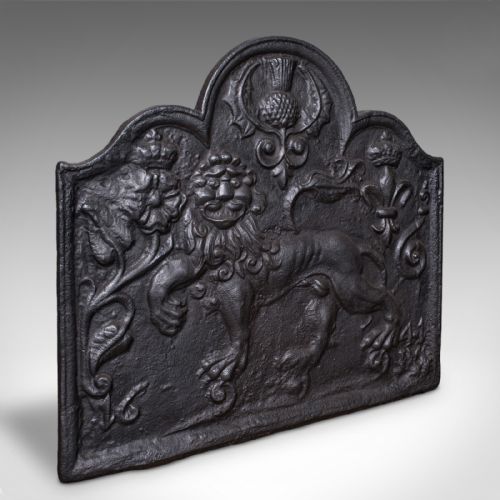
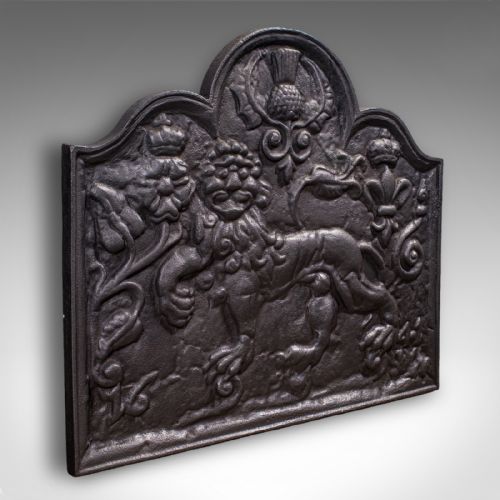


Traditional Cast Iron Fireback
A traditional cast iron fireback protects the masonry behind an open hearth while radiating heat back into the room, combining practical utility with centuries of decorative design.
Traditional Cast Iron Fireback
A traditional cast iron fireback sits vertically against the rear wall of an open fireplace, acting as a heavy shield for the brickwork. Buyers searching this phrase encounter robust iron slabs designed to absorb and slowly redistribute the warmth of a wood fire.
The pieces available span several distinct historical periods, running from seventeenth-century examples through Georgian models and numerous Victorian interpretations. Many items on this page function as fireplace reflectors, directing heat forward into the living space.
Associated hearth furniture frequently accompanies these plates, including matching andirons, fire baskets, grates, and fenders. Most listings showcase English origin, with decorative reliefs that draw heavily upon revivalist aesthetics.
Materials and construction methods
Foundries manufactured these heavy plates by pouring molten metal into sand or open-face moulds pressed with wooden or carved patterns. Cast iron provided the primary medium due to its capacity to withstand extreme temperatures without cracking.
Some configurations incorporate supplementary wrought iron elements or brass details, particularly within fire baskets and grates designed to hold the fuel. The resulting panels possess considerable weight and rigid structural integrity.
Listings feature cast iron alongside wrought iron and brass components, spanning periods from the seventeenth century through to nineteen hundred.
Distinctions in quality and execution
Quality rests upon the crispness of the moulded relief work and the thickness of the metal plate. Finer examples display deep, sharply defined heraldic or neoclassical motifs rather than shallow or blurred casting.
Proportion and scale also dictate value, with unusually large or exceptionally heavy panels demonstrating greater foundry ambition. The integration of complementary functional hardware, such as integrated grates and andirons, elevates the cohesion of the assembly.
The Traditional Cast Iron Fireback Glossary
- Fireback
- A heavy cast iron plate placed at the back of an open hearth. It protects the wall and radiates heat.
- Neoclassical Revival
- A decorative movement drawing inspiration from classical Greek and Roman antiquity. Pieces in this style display symmetrical urns, swags, and geometric borders.
- Register Grate
- A metal fireplace insert featuring an adjustable flap to control the draught. These units regulate smoke flow up the chimney.
- Andirons
- Horizontal metal bars supported on legs, used to log wood fires. They frequently accompany hearth backs and grates.
Traditional Cast Iron Fireback: Frequently Asked Questions
What is the purpose of a traditional cast iron fireback?
These plates serve a dual purpose in an open hearth by protecting the rear masonry from intense heat and thermal shock. Additionally, the dense metal absorbs the warmth of the fire and radiates it steadily into the room long after the flames subside.
Historically, they also prevented dampness from reaching the chimney breast during the summer months. Today, they remain functional heat reflectors as well as decorative focal points for period interiors.
How do I know if a fireback is Victorian or earlier?
Distinguishing periods relies heavily on the style of the relief decoration and the manufacturing marks on the iron. Victorian foundries frequently produced revival pieces mimicking seventeenth-century or Georgian designs, but the sharpness of the casting and the composition of the iron often reveal the later date.
True seventeenth-century pieces tend to feature simpler, deeply hand-carved wooden pattern impressions in sand. Examining the reverse side for foundry tool marks and consistency of thickness helps clarify the manufacturing era.
Can I use an antique fireback in a modern fireplace?
Most cast iron firebacks are structurally suited for active wood-burning hearths provided they are installed securely against a stable brick backing. The heavy iron is specifically designed to endure high temperatures without degradation.
Buyers should ensure the dimensions match the clearance of their specific fireplace opening. Using adequate supports or feet helps keep the heavy plate stable during regular use.
What styles of decoration are common on these plates?
Common decorative motifs include heraldic crests, botanical patterns such as the tree of life, and classical architectural elements. Revival styles dominate the later nineteenth-century output, drawing on Carolean, Tudor, and Neoclassical traditions.
These designs were pressed into the moulding sand from master patterns before casting. The resulting surface texture ranges from austere plain panels to highly ornate sculptural reliefs.