


Cast Iron Fire Reflector
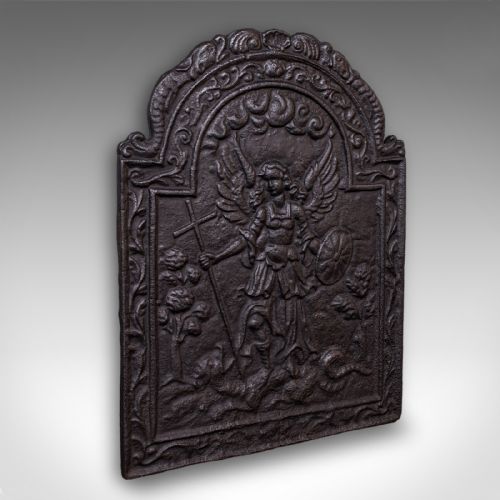
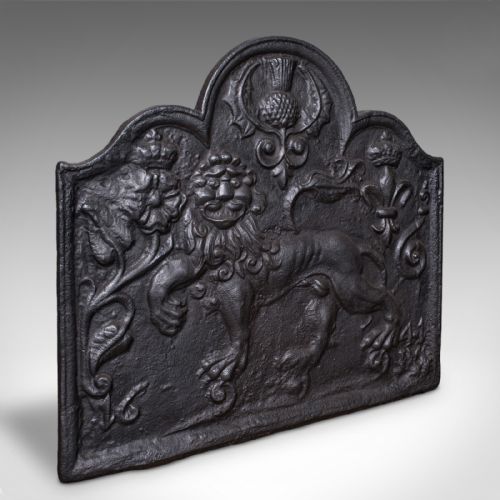
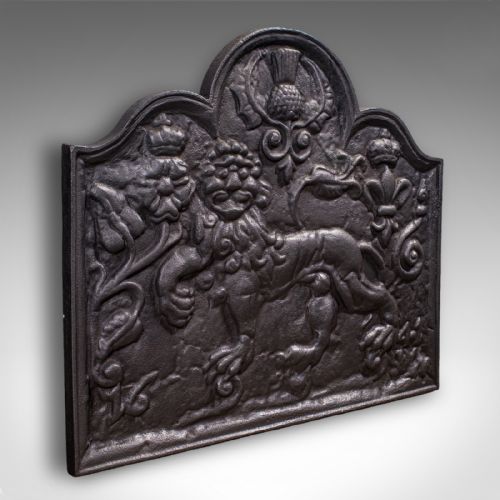
A cast iron fire reflector radiates heat back into a room while protecting the masonry behind an open fire.
Cast Iron Fire Reflector
A cast iron fire reflector sits at the back of a hearth to absorb warmth from the flames and cast it outward into the room. These heavy iron plates protect the brickwork of the chimney breast from direct heat and sustained damage.
The pieces on this page are predominantly Victorian examples alongside Georgian antecedents. English workshops produced these sturdy iron plates in various sizes to fit standard domestic hearths and larger church or refectory fireplaces.
Buyers mostly encounter rectangular plates featuring decorative relief casting, architectural motifs, or heraldic designs. The forms range from simple utilitarian reflectors to heavily ornamented architectural statements.
How they were made
Foundries cast these heavy plates using molten iron poured into sand moulds or open beds. This technique allowed makers to create deep, durable relief patterns directly into the metal surface.
Makers utilised cast iron for its exceptional heat retention and structural resilience under high temperatures. The resulting plates withstand decades of continuous exposure to open flames and glowing embers.
Tree of life motifs on Victorian firebacks offered households a comforting symbol of enduring growth right beside the hearth.
What varies in quality
The distinction between standard utility plates and finer examples lies in the crispness of the cast relief work and the thickness of the iron. Superior plates display sharply defined motifs and complex stylistic details rather than soft, muddy casting.
Proportion and scale also separate the ordinary from the remarkable. Heavier plates with sophisticated Neoclassical Revival, Carolean Revival, or Gothic detailing command greater visual presence on the hearth.
The Cast Iron Fire Reflector Glossary
- Cast iron
- An iron-carbon alloy poured into moulds to create solid, heat-resistant objects. It forms the heavy, durable core of every reflector on this page.
- Fireback
- A heavy metal plate placed at the rear of a fireplace. It serves the dual purpose of protecting the chimney wall and reflecting heat.
- Relief
- A sculptural technique where figures or patterns project from a flat background. Victorian foundries used this method to render tree of life and heraldic scenes.
- Neoclassical Revival
- A style drawing inspiration from classical antiquity. Pieces in this manner feature restrained symmetry and classical architectural elements.
- Carolean Revival
- A decorative style recalling the reign of Charles II. These pieces incorporate exuberant scrollwork and rich ornamentation.
Cast Iron Fire Reflector: Frequently Asked Questions
What does a fire reflector do?
A cast iron fire reflector absorbs thermal energy from the burning fuel and projects that heat forward into the living space. By sitting at the rear of the hearth, it also shields the masonry from the direct impact of the fire.
These plates improve the overall efficiency of an open fireplace. They ensure the hearth retains warmth long after the flames begin to die down.
How do I install a fireback?
Fire reflectors stand upright against the back wall of the fireplace recess. Their substantial weight usually keeps them stable without the need for complex fixings.
Installers often tilt the plate slightly backward to lean securely against the brickwork. It is essential to ensure the hearth floor is level before placing the heavy iron.
How do I date a cast iron reflector?
Dating relies on stylistic clues, such as whether a piece exhibits Georgian restraint or late Victorian Gothic revival motifs. The depth and clarity of the casting also provide hints regarding the manufacturing period.
Most surviving examples date from the nineteenth century through the turn of the twentieth. Foundries often incorporated stylistic revivals that point toward specific decades.