


Victorian Fire Plate
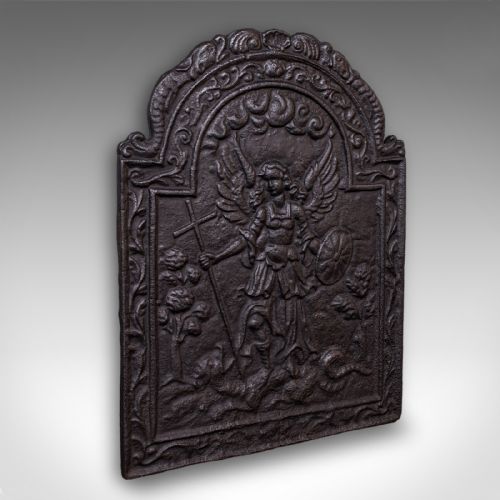
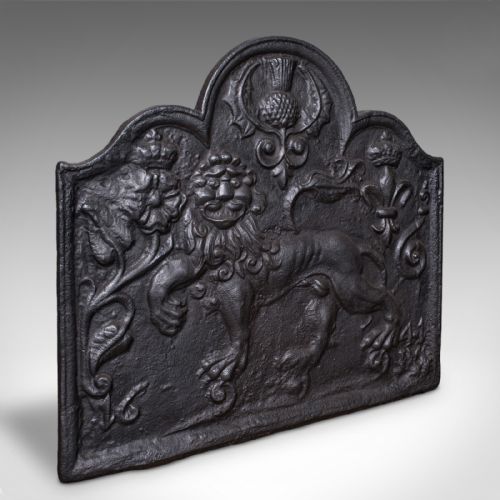
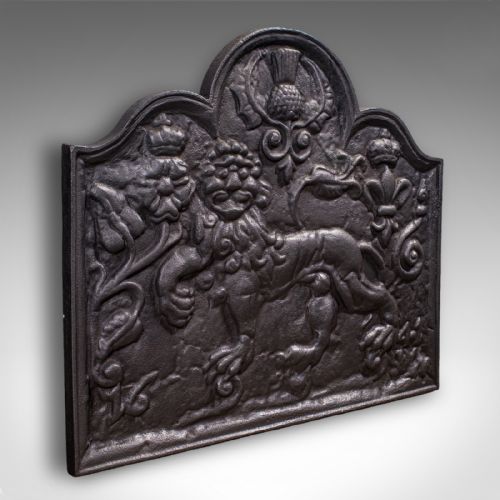
These Victorian fire plate pieces are heavy iron hearth reflectors designed to project heat into the room and protect the masonry behind.
Victorian Fire Plate
A victorian fire plate, most commonly encountered here as a cast iron fire back or fireplace reflector, stands at the back of a hearth to absorb and radiate warmth. The selection centres on English ironwork from the nineteenth century, spanning from early periods to late Victorian examples.
Beyond standard iron plates, related hearth furniture appears occasionally in the listings, including smoking compendiums and companion sets. These objects share the domestic hearth setting of the Victorian era, though cast iron fire backs remain the primary form you will encounter.
Stylistic variation across these plates draws on several revivalist traditions rather than a single aesthetic. You will find pieces finished in Neoclassical Revival, Carolean Revival, and Victorian Heraldic designs, alongside church refectory examples and tree of life motifs.
Materials and construction
Cast iron serves as the primary material for nearly all victorian fire plate pieces in the collection. Molten iron was poured into sand moulds to create heavy plates with deep relief decoration that could withstand intense hearth temperatures.
Moulds incorporated intricate details ranging from heraldic crests to botanical motifs like the tree of life. The resulting iron castings were left heavy and robust to serve both a decorative and a thermal function in the chimney.
For the truly dedicated hearth enthusiast, one can even find a silver smoking compendium shaped explicitly like a tiny fire carriage.
Assessing quality in ironwork
Quality in a victorian fire plate rests primarily on the crispness of the casting and the depth of the relief work. Finer examples show sharp detailing in the motifs and lettering, whereas lower grade castings appear muddy or flattened from worn moulds.
Weight and thickness also distinguish the better items from standard production pieces. A heavier iron plate indicates substantial material usage designed to endure decades of coal and wood fires.
The Victorian Fire Plate Glossary
- Fire back
- A heavy metal plate placed at the back of an open hearth. It protects the wall and reflects heat forward into the room.
- Cast iron
- An iron-carbon alloy poured into a mould in liquid form. It is the defining material for heavy Victorian hearth accessories.
- Neoclassical Revival
- A nineteenth-century design style drawing inspiration from classical Greek and Roman architecture. It appears frequently on decorative hearth plates.
- Carolean Revival
- A stylistic movement referencing seventeenth-century Baroque design under Charles II. Pieces of this type often feature ornate scrolls and elaborate framing.
- Relief
- Sculptural projection from a flat background. Victorian iron plates rely on high and low relief to create pictorial scenes on the hearth.
Victorian Fire Plate: Frequently Asked Questions
What is a victorian fire plate used for?
These cast iron plates sit against the rear wall of an open fireplace. They absorb heat from the fire and radiate it back into the living space.
Beyond heating, they protect the masonry brickwork behind the hearth from intense direct flames and soot damage.
How do I install a heavy fire back?
The plate stands upright against the back wall of the fire chamber, usually supported by the hearth floor and angled slightly. Smaller examples can rest on small feet or directly on the bricks.
Ensure the fireplace opening can accommodate the weight and dimensions of the iron plate before placing it in position.
Are these plates suitable for burning wood?
Cast iron handles wood and coal fires effectively because the material withstands high thermal loads. Using a heavy plate actually prolongs the life of the surrounding fireplace masonry.
Allow the metal to heat gradually to prevent thermal shock, particularly with older ironwork.
How do I distinguish revival styles on fire backs?
Neoclassical Revival pieces display formal classical symmetry, urns, and architectural framing. Carolean Revival examples lean towards more exuberant scrolls and naturalistic flourishes.
Other plates feature heraldic shields or religious motifs borrowed from earlier church architecture.