


Tin Glazed Pottery Charger
A tin glazed pottery charger is a broad earthenware dish finished with an opaque white glaze and painted decoration, prized for wall display or grand table service.
Tin Glazed Pottery Charger
When you search for tin glazed pottery charger, you encounter large decorative plates and dishes spanning the seventeenth, eighteenth, and nineteenth centuries. The majority of pieces on this page are Dutch delftware chargers, alongside English delft, French faience, and Spanish examples.
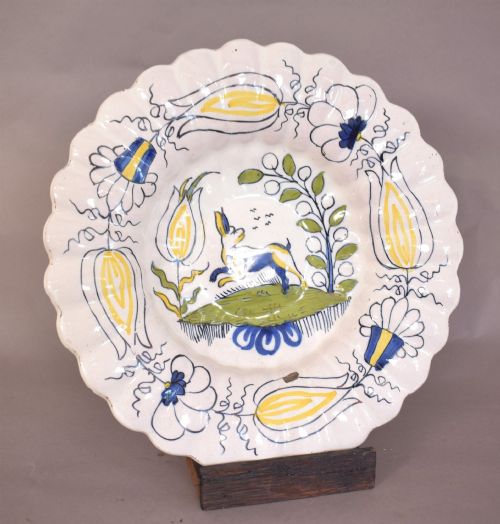
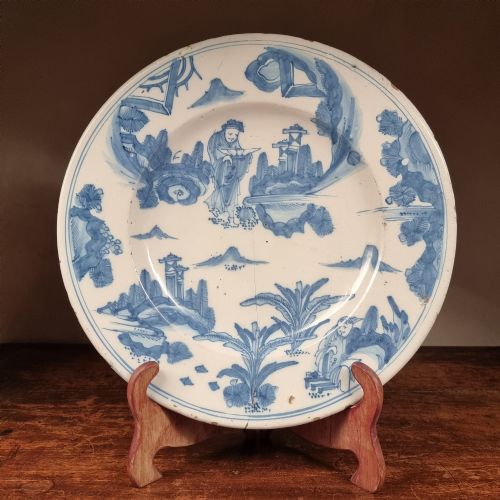
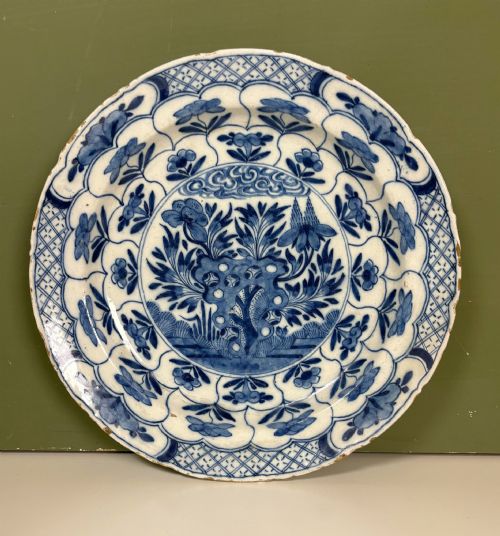
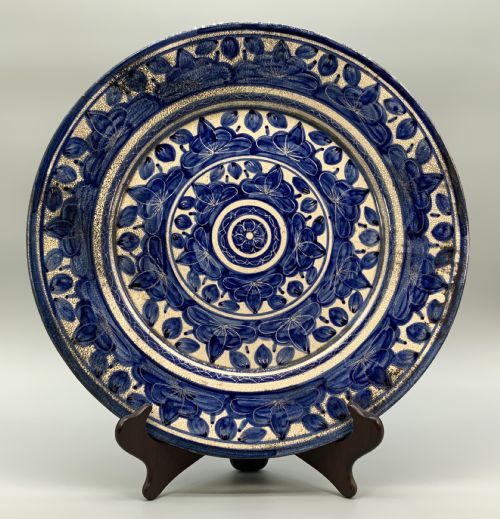
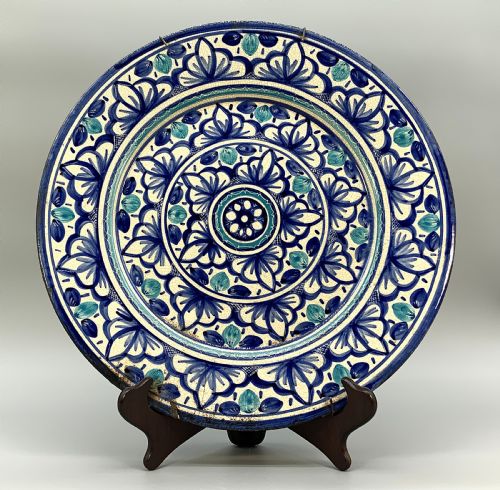
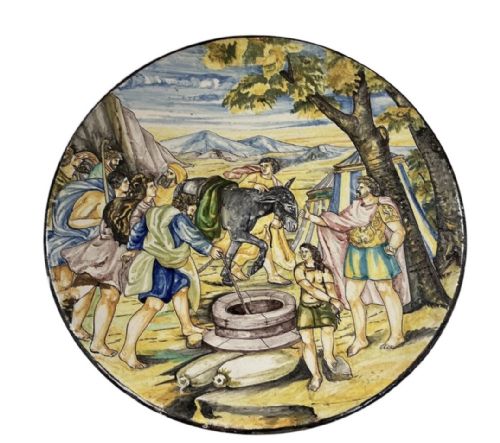
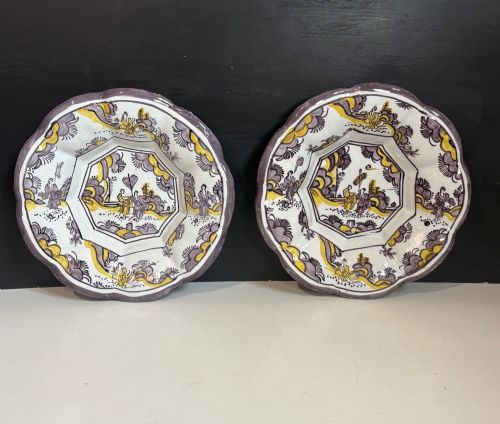
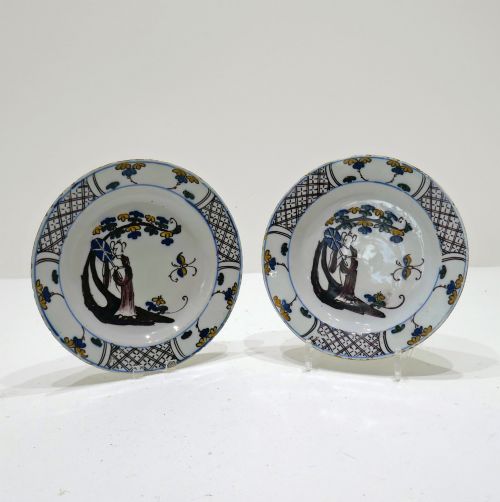
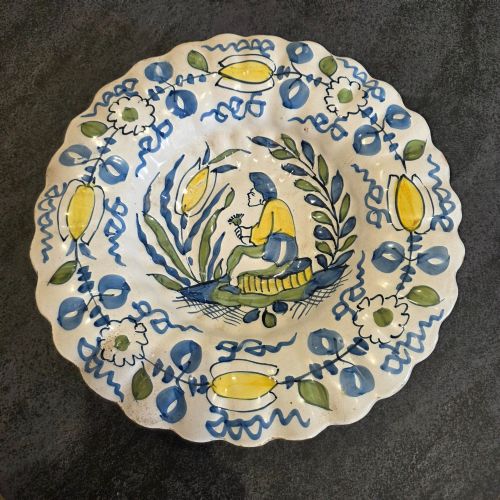
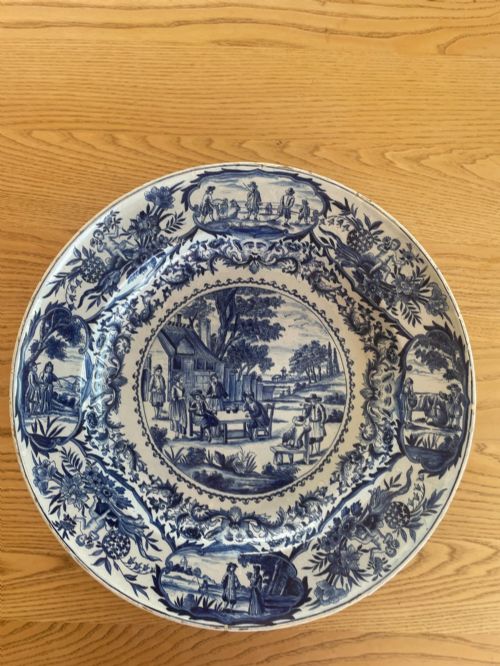
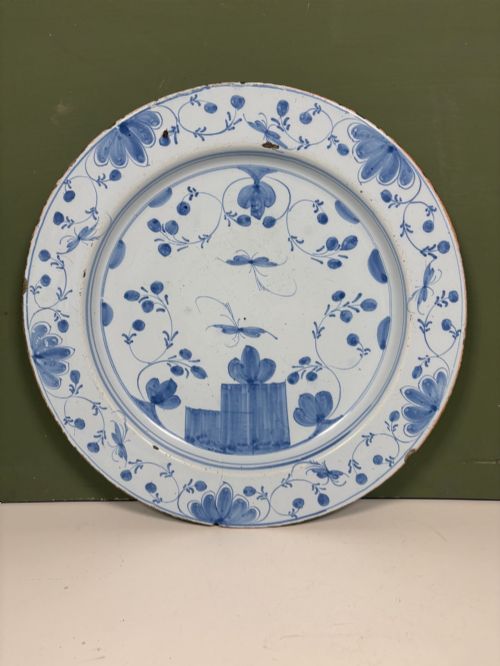
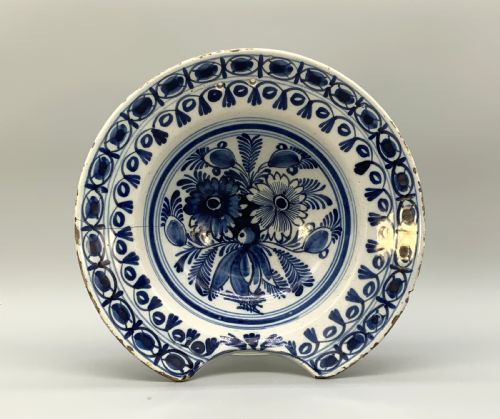
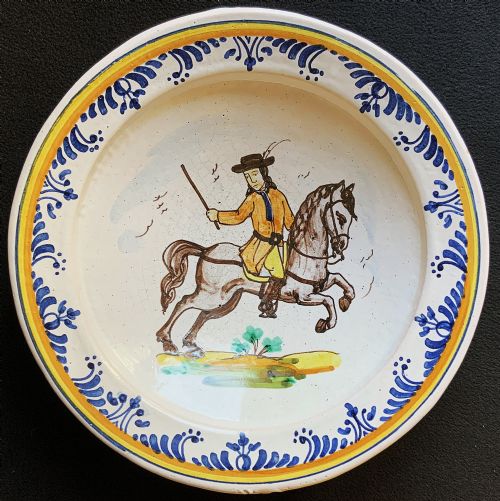
Forms range from deep wall chargers and shallow bowls to barber's bowls and lobed dishes. Makers decorated these earthen surfaces with blue and white pigment, manganese, or polychrome palettes depicting floral, architectural, or figurative scenes.
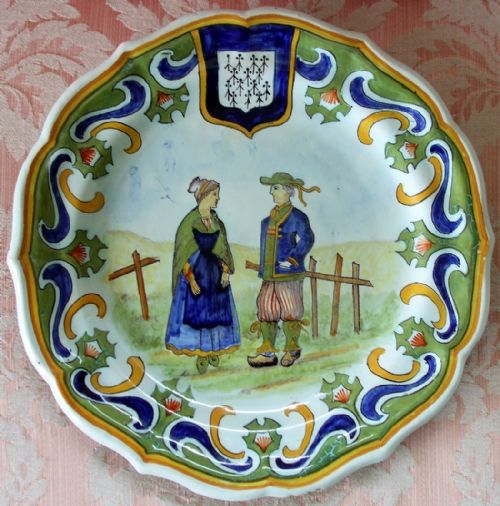
Origins stretch across European workshops, including English centres like Bristol and Lambeth, French potteries such as Desvres and Lille, and continental Dutch kilns. These substantial plates served both decorative display and practical household use in earlier centuries.
Materials and production methods
Potters shaped local earthenware clay into wide plates and chargers before firing the body to create a porous bisque base. This earthenware body received an opaque tin-glaze coating, which provided a smooth white background for subsequent painting.
Painters applied cobalt pigment, cobalt oxide, or polychrome colours directly onto the unfired tin glaze, allowing the metallic oxides to absorb into the liquid surface during the high-temperature kiln firing.
One French faience plaque on display illustrates the cautionary tale of A Rake's Progress in tin-glazed ceramic form.
Judging quality in tin-glazed earthenware
Quality rests upon the crispness of the hand-painted brushwork and the stability of the tin glaze over the earthenware body. Pieces with fluid, confident cobalt pigment or rich polychrome detail show superior artisan control during decoration.
The smoothness of the white glaze surface and the proportion of the heavy earthenware dish dictate the visual balance of the charger. Well-preserved glaze surfaces maintain their brightness and show minimal disruption from historic kiln faults or heavy wear.
The Tin Glazed Pottery Charger Glossary
- Tin-Glazed Earthenware
- Earthenware pottery coated with a white glaze containing tin oxide to create an opaque surface for painting. This technique forms the foundation of delftware and faience production.
- Delftware
- Tin-glazed earthenware originating from the Netherlands and England, commonly painted in blue and white or polychrome colours. English production flourished in centres such as Bristol and Lambeth.
- Faience
- European tin-glazed pottery produced in France, Spain, and Italy. French examples from towns like Lille and Desvres frequently depict detailed narrative scenes.
- Polychrome
- Decoration employing multiple colours rather than a single pigment. On these plates, colours typically include iron red, green, yellow, and manganese alongside blue.
- Barber's Bowl
- A specialised shallow dish featuring a semi-circular cutout for the neck. These tin-glazed vessels were used during shaving and bleeding procedures in past centuries.
Tin Glazed Pottery Charger: Frequently Asked Questions
What is a tin glazed pottery charger?
A tin glazed pottery charger is a large earthenware plate covered in a white tin-oxide glaze and painted with decorative pigments. These pieces were produced across European workshops during the seventeenth, eighteenth, and nineteenth centuries.
Potters designed these wide dishes primarily for decorative wall display or formal table service rather than everyday dining.
How do you hang an antique charger safely?
Hanging a heavy earthenware charger requires a properly fitted wire spring hanger that distributes weight evenly across the rim. Ensure the wall fixing secures firmly into masonry or studwork.
Avoid clips with excessive tension that might chip the fragile tin-glazed edges over time.
How do I distinguish Dutch delft from English delft?
Dutch delftware often exhibits a finer, lighter earthenware body with distinct blue and white tin-glaze painting styles derived from imported porcelain. English delft pieces from centres like Bristol or Lambeth tend to feature slightly heavier bodies and warmer glaze tones.
Examining the glaze composition and the specific pigment hues helps clarify the likely workshop origin.
What does polychrome mean on these plates?
Polychrome decoration means the painter utilised multiple coloured pigments, such as yellow, green, red, and manganese, rather than restricting the design to blue and white. These multi-coloured palettes appeared frequently on eighteenth-century English and continental wares.
Such painted designs often incorporated vibrant floral motifs, chinoiserie patterns, or figurative scenes.
Were these large plates used for dining?
Chargers of this size served mainly as ornamental pieces for sideboards and walls during the seventeenth and eighteenth centuries. Their expansive tin-glazed surfaces made them ideal for displaying intricate painted artwork rather than holding food.
Smaller plates in the same styles handled daily dining, while these grand chargers demonstrated household status.