


Dutch Faience Charger
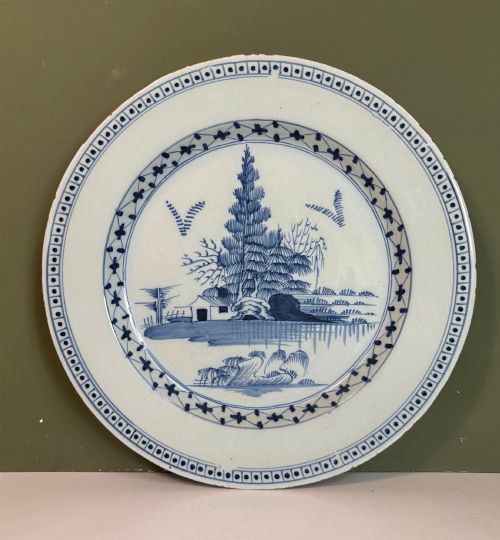
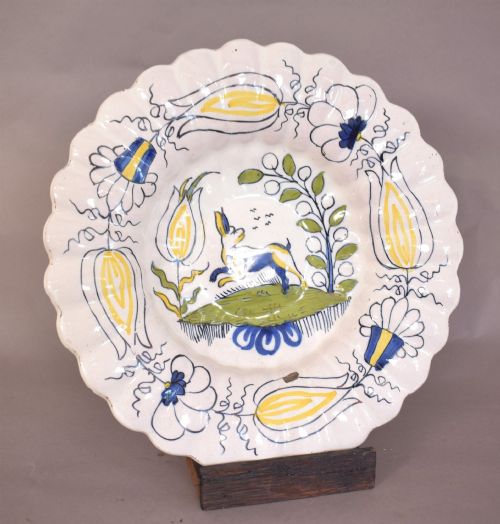
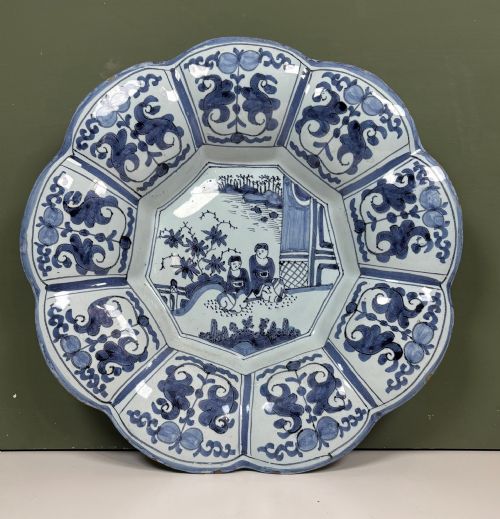
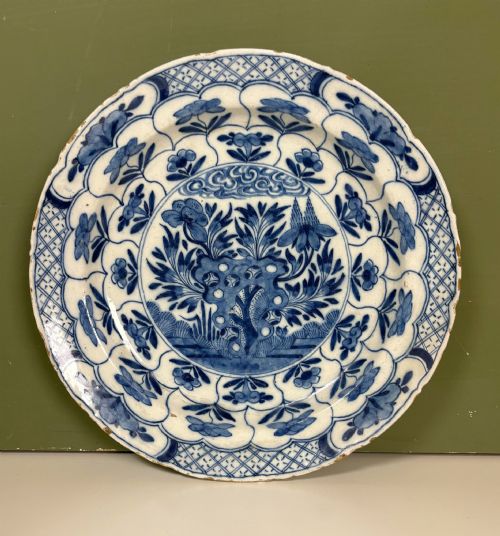
These large earthenware plates are a dutch faience charger, offering collectors brilliant cobalt pigment and tin glazes.
Dutch Faience Charger
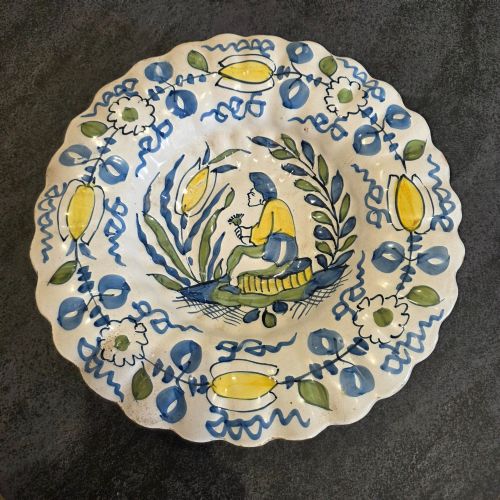
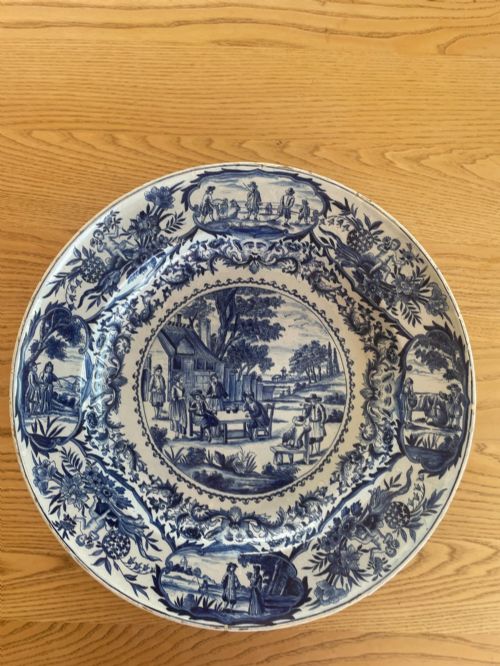
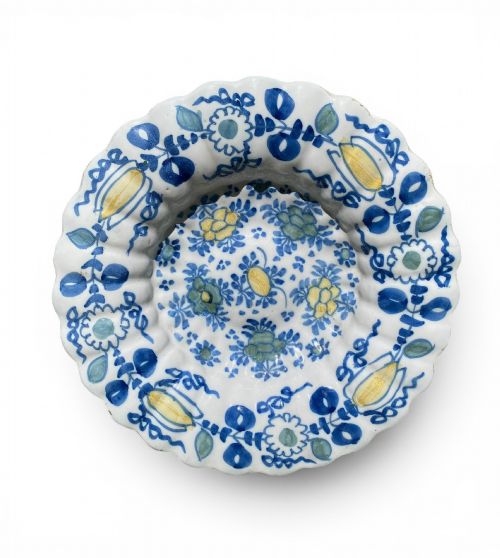
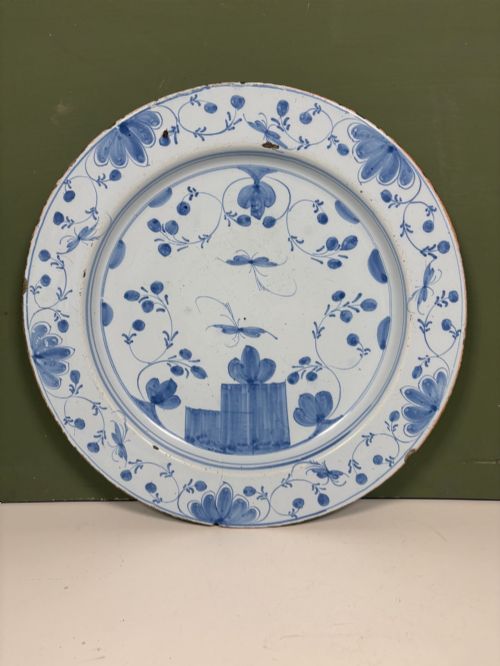
A dutch faience charger is a broad decorative plate intended for display rather than table service, appearing in seventeenth and eighteenth century styles. The pieces on this page span the seventeenth, eighteenth, and nineteenth centuries, taking the form of chargers, dishes, and plates.
Most examples originate from Dutch workshops, spanning seventeenth century Dutch baroque to eighteenth century European designs. Collectors encounter both large wall chargers and smaller pairs of plates featuring geometric, floral, and Kraak patterns.
What Varies in Quality
Quality rests in the crispness of the cobalt pigment painting and the complexity of the design, such as elaborate floral or Kraak arrangements. Superior examples show confident brushwork and well-balanced compositions across the wide surface of the charger.
The smoothness and opacity of the tin glaze also differentiate pieces, alongside the symmetry of the earthenware body and the preservation of the painted surface over the centuries.
Some chargers feature geometric floral patterns so enthusiastic they look like botanical fireworks frozen mid-air.
The Dutch Faience Charger Glossary
- Tin-Glazed Earthenware
- Earthenware pottery covered with a white tin oxide glaze that becomes opaque during firing. This technique forms the white surface required for painting blue and polychrome designs.
- Cobalt Pigment
- A metallic blue colourant used under the glaze to paint intricate motifs onto ceramic vessels. It withstands high kiln temperatures without losing its deep blue tone.
- Charger
- A large decorative plate traditionally used for display on walls or sideboards rather than dining. These wide vessels provide a broad canvas for painted Dutch ceramic designs.
- Kraak
- A style of imported porcelain decoration adopted by European potters featuring panelled borders and central motifs. Dutch makers imitated these designs on local earthenware plates.
- Polychrome
- Decoration employing multiple colours rather than a single pigment like cobalt blue. These pieces integrate various mineral oxides to produce multicoloured floral or geometric schemes.
Dutch Faience Charger: Frequently Asked Questions
What is a dutch faience charger?
A dutch faience charger is a large tin-glazed earthenware plate made in the Netherlands during the seventeenth and eighteenth centuries. These vessels were primarily intended for display on walls or sideboards.
They combine earthenware bodies with white tin glazes and painted cobalt pigment or polychrome designs. The forms range from simple blue painted plates to large geometric floral chargers.
How were these chargers used historically?
These large dishes served as decorative wall plates or centrepieces in affluent households rather than everyday tableware. Their broad surfaces displayed intricate painted scenes, floral arrangements, and Kraak patterns.
Owners mounted them on walls or placed them on sideboards to showcase wealth and taste. The tin glaze provided a bright white canvas that emulated expensive imported porcelain.
How do I date a delft charger?
Dating relies on stylistic shifts in painting, rim shape, and glaze composition from the seventeenth to the eighteenth century. Early pieces often reflect Dutch Baroque or Kraak influences, whilst later items show evolving floral and geometric layouts.
Examination of the earthenware body and tin glaze thickness also helps establish the period. Changes in cobalt pigment shades provide further clues regarding the manufacturing era.
How do I care for tin glazed earthenware?
Tin-glazed earthenware requires gentle handling because the ceramic body and glaze can chip or flake along the edges. Keep pieces away from moisture and direct heat sources to protect the historic surface.
Display chargers securely using appropriate wall hangers designed for heavy plates. Dust them gently with a soft dry cloth rather than using liquid cleaners.