



18th Century Blue Platter
An 18th century blue platter brings hand-painted cobalt patterns and centuries of kiln history straight to the table.
18th Century Blue Platter
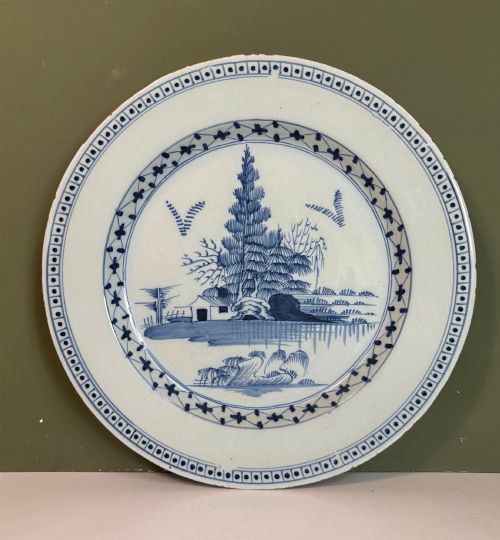
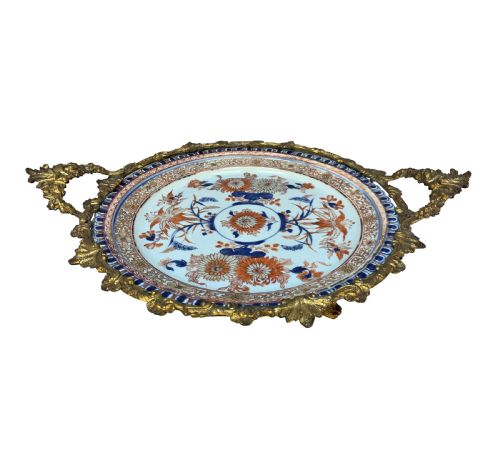
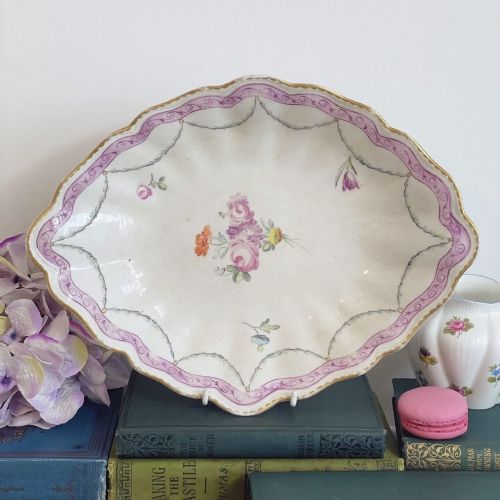
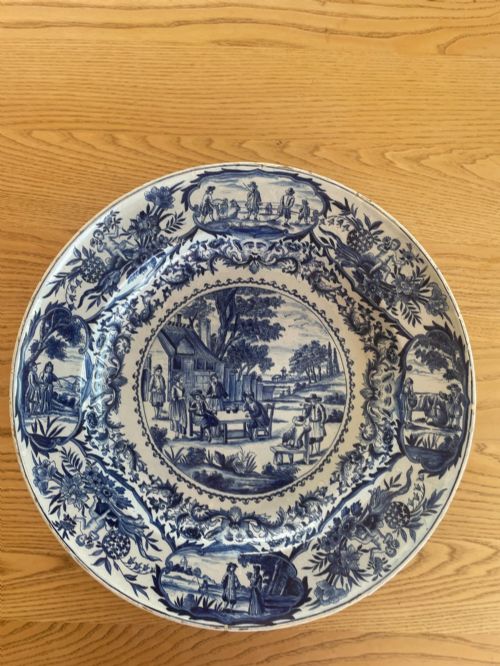
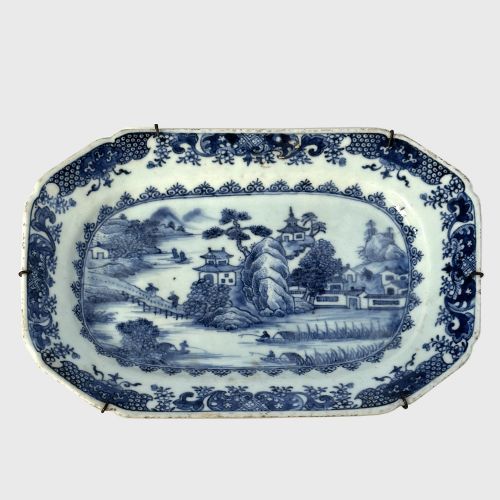
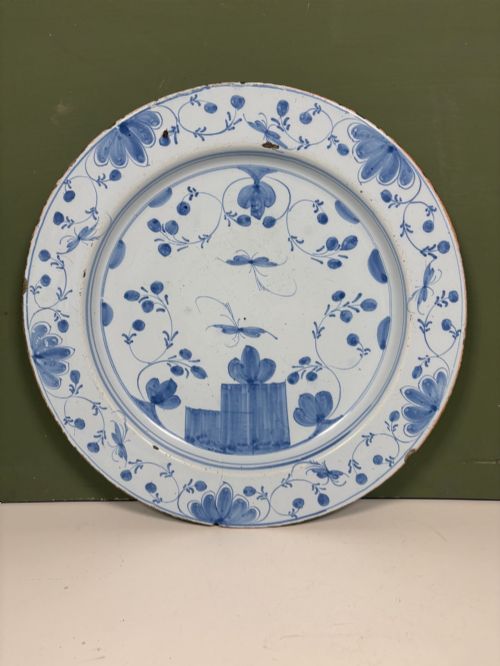
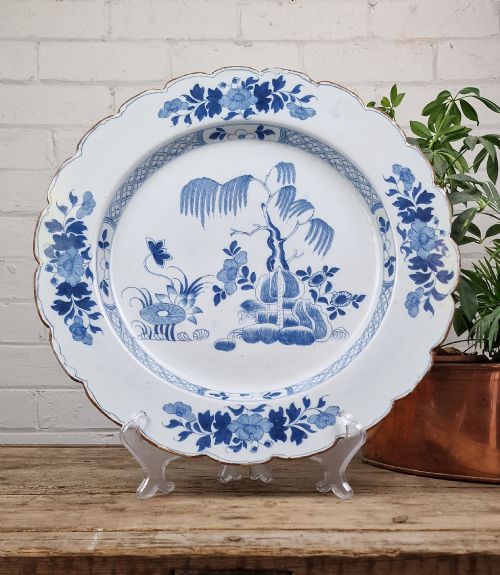
An 18th century blue platter encompasses large serving dishes, chargers, and decorative plates produced across European and Asian kilns. The selection here leans heavily towards English, Dutch, and continental delftware alongside Chinese export porcelain.
Makers shaped these utilitarian and display vessels in tin-glazed earthenware, pearlware, and hard-paste porcelain. Buyers encounter broad circular chargers and oval serving platters adorned in cobalt pigment and enamels.
The objects stem from the 18th century, incorporating Georgian designs, Dutch baroque influence, and Chinese export traditions. These domestic items served dining tables or decorated panelled walls.
How they were made
Potters shaped tin-glazed earthenware and ceramic bodies before applying an opaque white glaze containing tin oxide. Artisans then painted directly onto this porous surface using cobalt pigment before a high-temperature firing fused the colours into the glaze.
Porcelain pieces from Chinese export and Japanese kilns utilised fine kaolin clay bodies painted underglaze in deep blue. European porcelain factories such as Worcester, Bow, and Caughley adapted these oriental motifs while developing soft-paste and pearlware recipes.
Several platters include meat drainers designed to keep Sunday joints safely clear of escaping juices.
What varies in quality
Quality rests upon the crispness of the cobalt painting and the stability of the glaze during firing. Well-controlled kilns produced vibrant blues with minimal running, whereas lesser pieces show blurred pigments or extensive firing cracks.
The sophistication of the hand-painted brushwork distinguishes standard domestic ware from masterwork chargers. Fine examples display confident, fluent botanical or figural scenes executed by skilled hands.
The 18th Century Blue Platter Glossary
- Charger
- A large ornamental or serving plate, typically measuring over thirty centimetres across. These items were hung on walls or used centrally on dining tables.
- Delftware
- Tin-glazed earthenware produced in the Netherlands and England during the seventeenth and eighteenth centuries. It imitates Chinese blue and white porcelain.
- Cobalt Pigment
- A mineral colourant utilised under glaze to achieve deep blue tones on ceramics. It withstands high kiln temperatures without burning away.
- Chinese Export
- Porcelain manufactured in China specifically for Western markets and trade companies. The decorative schemes frequently combined Eastern motifs with European heraldry or shapes.
- Pearlware
- A refined earthenware developed in England featuring a slightly bluish glaze. It bridged the technical gap between creamware and later white ironstone.
18th Century Blue Platter: Frequently Asked Questions
How were these platters used?
These large dishes served joints of meat, bread, or fruit at substantial dining tables. Many large chargers were also pierced at the foot ring to allow suspension on dining room walls for display.
Over generations, their function shifted from active dining service to decorative cabinet and wall pieces appreciated for their historical pigments.
How do I care for an antique platter?
Wash tin-glazed earthenware and soft-paste porcelain gently by hand in warm water using mild soap. Avoid soaking porous bodies with historical hairline cracks to protect the underlying ceramic fabric.
Keep these ceramic items away from modern dishwashers and direct sunlight to preserve the stability of the ancient glazes and pigments.
What is the difference between delft and porcelain?
Delft utilises a porous earthenware body covered in an opaque tin-glaze that takes brushwork with a soft, absorbent edge. Porcelain relies on a dense, vitrified clay body fired at higher temperatures to become completely non-porous.
Porcelain rings when struck and transmits light through thin sections, whereas earthenware remains opaque and softer in substance.
How do I identify eighteenth-century English delft?
English delftware typically shows a buff or pinkish earthenware body beneath a white tin glaze that often exhibits slight fritting around the rim edges. The painting styles reflect contemporary English interpretations of Chinese and Dutch models.
Production centres such as Bristol, London, and Liverpool each developed distinct palette preferences and glaze thicknesses during this period.