


Tilt Top Loo Table
A tilt top loo table brings generous nineteenth-century hospitality into modern rooms through ingenious pivoting tops and rich cabinet woods.
Tilt Top Loo Table
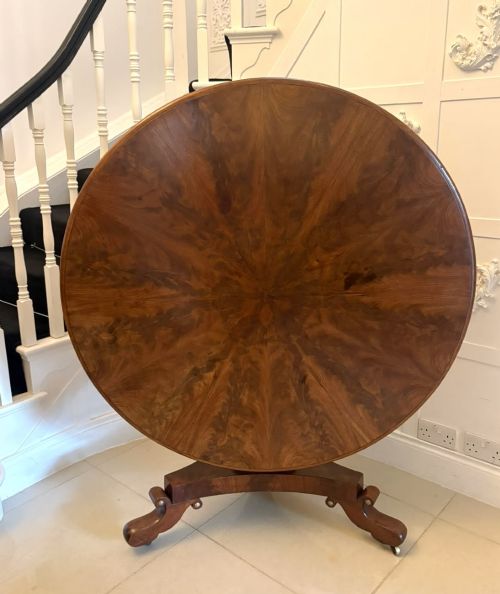
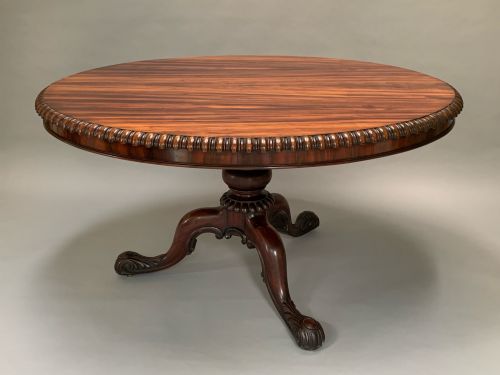
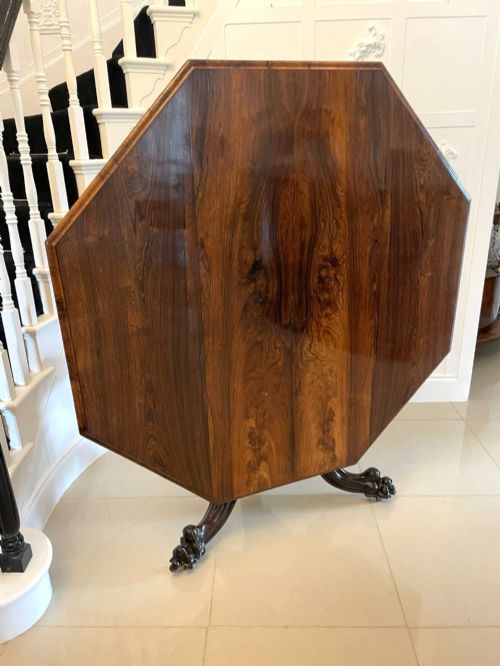
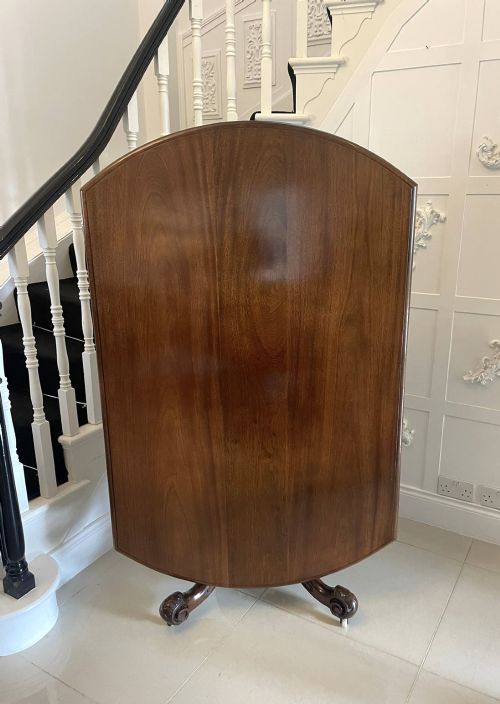
A tilt top loo table serves as a versatile nineteenth-century centrepiece, designed to pivot vertically against a wall when not in use for evening card games or morning dining. These pieces emerge predominantly from Victorian and Regency periods, spanning George III origins through to the later decades of the nineteenth century.
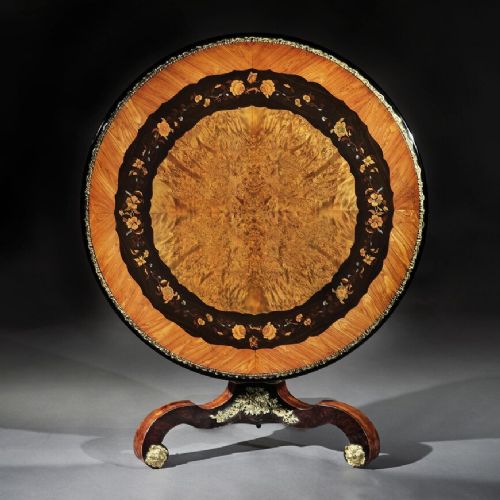
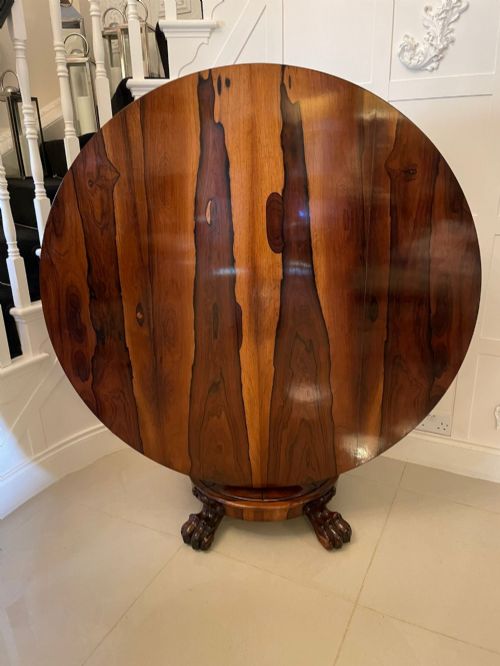
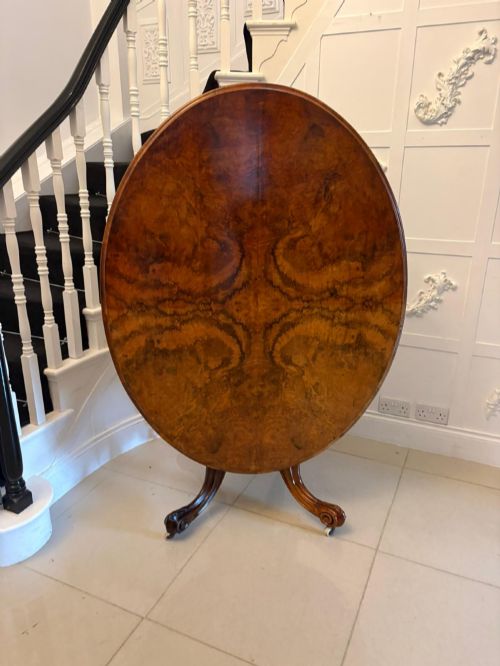
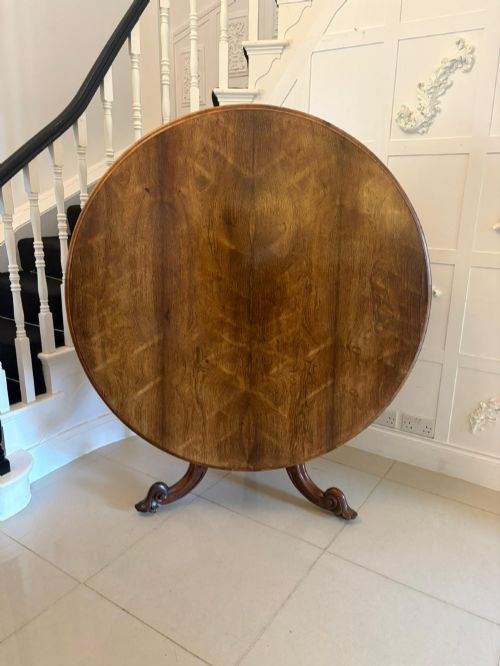
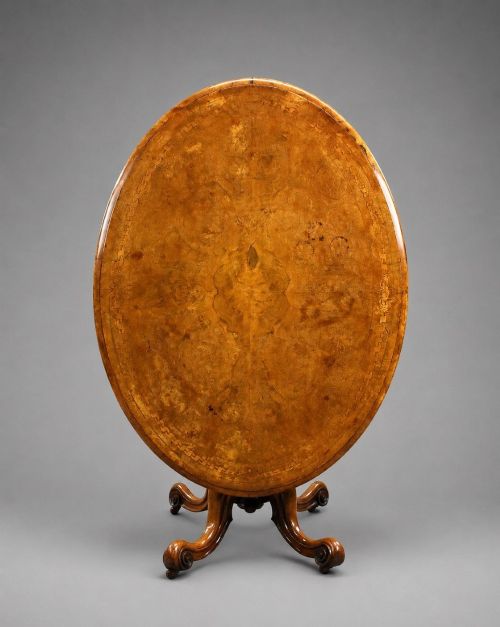
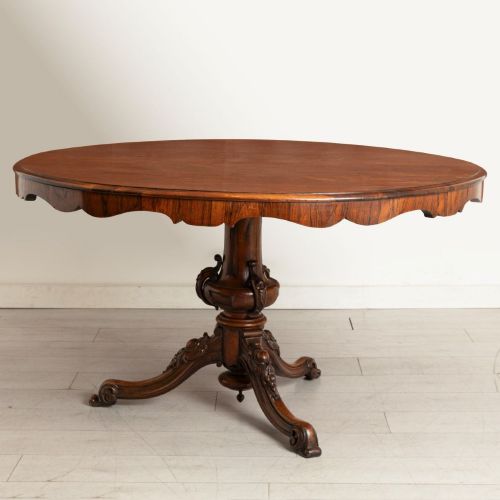
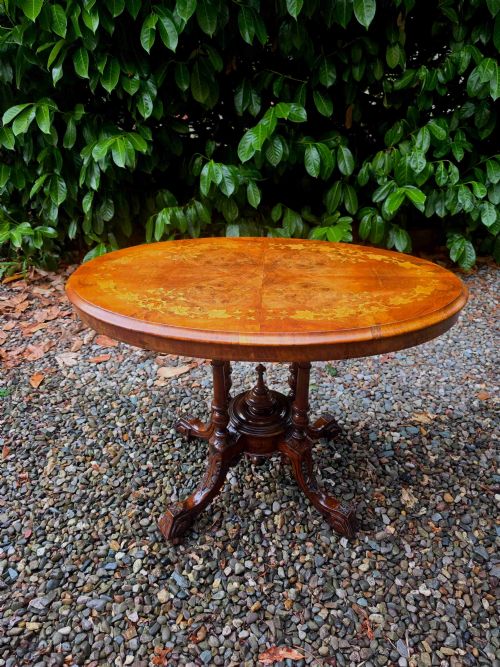
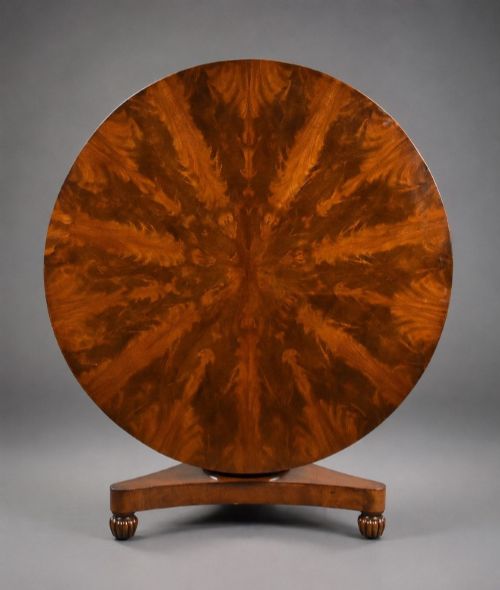
The oval burr walnut loo table represents the most frequent form encountered on this page, often featuring elaborate marquetry or crossbanding across the top. Alongside these walnut examples, makers fashioned substantial circular pieces in figured mahogany, rosewood, and occasional amboyna.
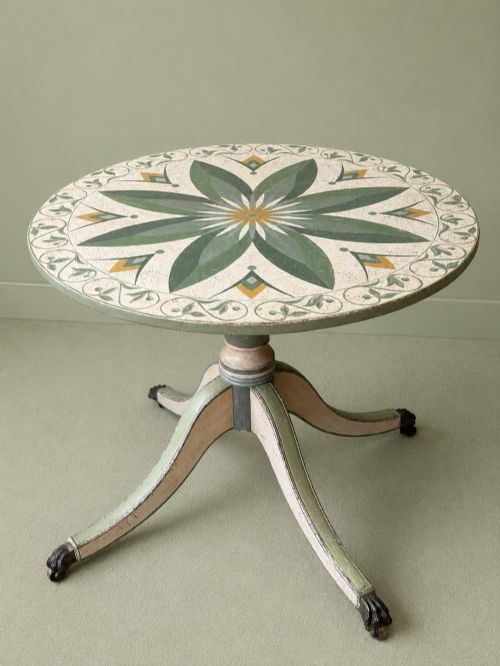
Support structures vary from single turned pedestals with tripod legs to heavy quadrapod bases resting upon brass castors. Whether configured as a six-seater dining surface or a smaller occasional table, each specimen combines domestic utility with decorative cabinet-making.
Materials and Construction
Cabinet-makers relied on dense structural timbers such as mahogany and oak for frames and pedestals, applying decorative veneers like burr walnut, flame mahogany, and satinwood to the primary surfaces. These veneers were sliced thinly and laid over solid cores to create rich patterns that caught the candlelight.
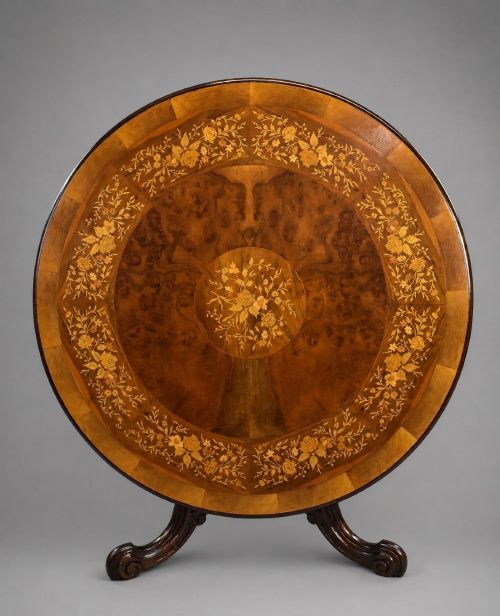
Inlay work incorporated contrasting elements including boxwood, ebony, and specialised brass stringing, particularly within Regency and Victorian workshops. Turning and carving formed the substantial central pillars and scrolling feet, joined to the tilting mechanism with robust iron and brass catches.
Listings feature woods spanning mahogany, rosewood, burr walnut, and oak across Georgian, Regency, and Victorian periods.
Assessing Quality and Execution
Quality rests upon the selection of the timber and the precision of the veneer matching, where superior tables display continuous, symmetrical grain patterns across the entire oval top. Finer examples integrate intricate marquetry or delicate boxwood inlay rather than relying solely on plain polished timber.
The engineering of the tilting mechanism and the stability of the central pedestal dictate the mechanical success of the piece. Master workshops ensured the pivot mechanism locked securely without play, and that the carved quadrapod or tripod base remained entirely rigid under load.
Edward Holmes Baldock·Gillows·Peters of Genoa
The Tilt Top Loo Table Glossary
- Loo table
- A nineteenth-century round or oval table designed for the popular card game loo, which doubled as a breakfast or centre table.
- Tilt-top
- A hinged table construction allowing the horizontal surface to rotate into a vertical plane for compact storage against a wall.
- Burr walnut
- A highly figured wood veneer harvested from walnut tree growths, prized for its swirling, mottled grain patterns.
- Marquetry
- The art of applying decorative pieces of wood veneer to a structure to form intricate pictorial or geometric designs.
- Quadrapod base
- A heavy central pedestal supported by four spreading feet, frequently terminating in brass castors.
Tilt Top Loo Table: Frequently Asked Questions
What was a loo table used for?
These tables served as domestic hubs for nineteenth-century households, initially designed for the eighteenth and nineteenth-century card game known as loo. Between games, the pivoting surface allowed the table to function for breakfast or formal dining.
During the day, tilting the top vertical permitted the large surface to sit neatly against the perimeter of a drawing room or parlour to save floor space.
How do I identify a Victorian loo table?
Victorian examples frequently display rich burr walnut veneers, elaborate oval tops, and heavily carved central pedestals resting on four scrolled feet with castors. Many incorporate marquetry or boxwood stringing along the outer edges.
Earlier Regency iterations tend to favour flame mahogany or rosewood with brass inlay, while Georgian precursors present simpler geometric lines and lighter proportions.
How does the tilt mechanism work?
A robust iron or brass catch beneath the table top releases to allow the surface to pivot ninety degrees on a fixed pivot block. A corresponding thumb screw or sliding bolt secures the top firmly in the horizontal position when in use.
This clever engineering allowed large dining surfaces to be moved easily through narrow doorways and stored against walls when rooms required open floor space.
Can these tables be used for everyday dining?
Most surviving examples easily seat between four and six diners, offering sturdy construction designed for daily nineteenth-century family life. Their pedestal design allows chairs to tuck underneath without interference from corner legs.
Care should be taken to protect the polished wood surfaces with appropriate mats and to avoid placing them near direct heat sources that might affect the historic veneers.