

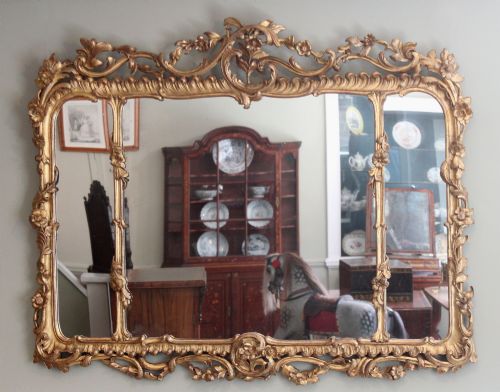


Three Plate Wall Mirror
A three plate wall mirror brings architectural scale and divided glass into a room, reflecting light across multiple angled planes.
Three Plate Wall Mirror
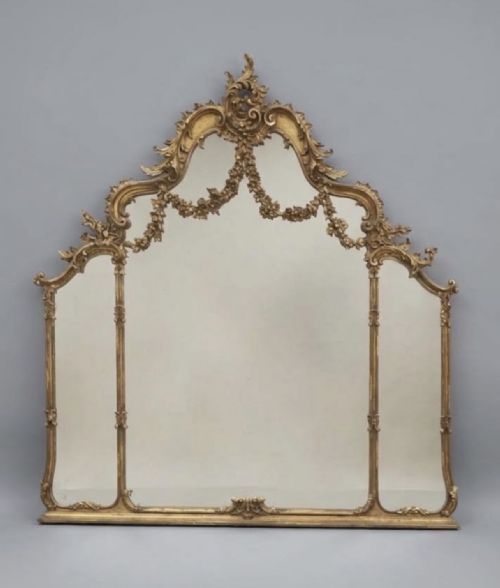
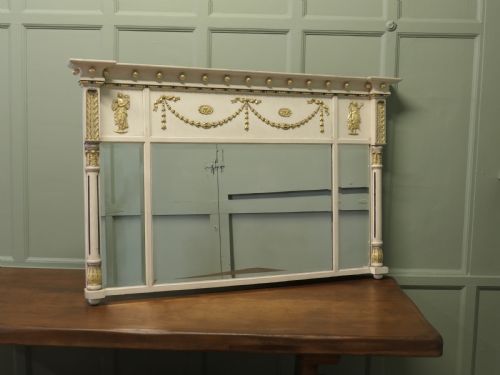
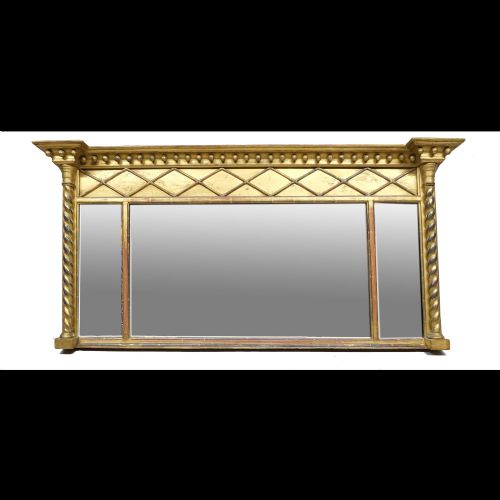
A three plate wall mirror is most commonly encountered as a horizontal overmantel mirror designed to hang above a fireplace or along a principal wall. The form divides the reflective surface into three distinct sections, often flanked by pilasters, columns, or elaborate crestings.
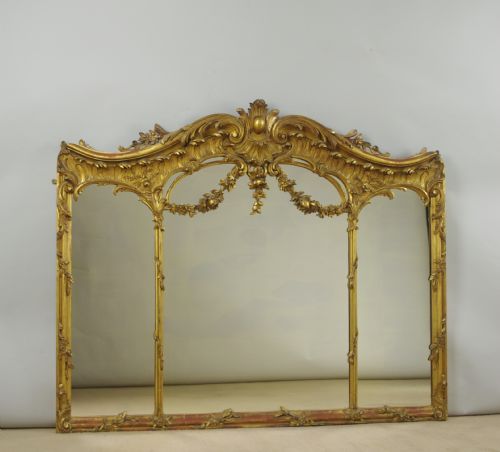
Examples span from the 18th century through the Victorian era and into the early 20th century, drawing on Georgian, Regency, and Rococo design vocabularies. The overmantel format dominates the selection, though pier mirrors and smaller triptych formats also appear.
Makers utilised various timbers and decorative compositions to frame the glass, ranging from grand scale giltwood trumeau pieces to smaller satinwood, mahogany, and walnut wall mirrors.
Materials and construction
Frames are constructed from woods such as mahogany, walnut, satinwood, and pine, which are then finished with gesso, paint, or parcel gilding. Gilding is applied over a prepared gesso ground, creating a bright reflective surface that catches natural light.
Mirror glass is set into multiple plates within a single frame, sometimes separated by moulded wooden muntins or classical friezes. Composition ornament is frequently moulded and applied to wooden backings to create relief details like laurel wreaths and griffins.
Three Plate Wall Mirror Retail Price Guide 2026
Typical asking prices for three plate wall mirror among the pieces listed under this phrase on Sellingantiques today, from the lower quarter to the upper quarter. They describe what is for sale here now, not the wider market.
Listings feature giltwood, gesso, mahogany, and walnut materials across 18th century, Regency, and Victorian periods.
Judging quality and craftsmanship
Quality rests on the depth of the carving and the crispness of the gesso mouldings applied to the wooden frame. Hand-carved wooden details exhibit sharper definition and greater articulation than standard moulded composition work.
The integration of the three plates within the architectural framework determines the visual success of the piece. Proportion between the central plate and the flanking sections dictates the balance of the overall design.
Ciceri and Co
The Three Plate Wall Mirror Glossary
- Overmantel mirror
- A large horizontal mirror designed specifically to be hung on the wall directly above a fireplace mantelpiece. These pieces often feature grand architectural framing to anchor the hearth space.
- Giltwood
- Timber that has been coated with a thin layer of gold leaf over a prepared gesso base. This finish provides a warm, reflective metallic sheen to the frame.
- Gesso
- A plaster-like mixture applied to wood frames to create a smooth surface for gilding or to be moulded into intricate decorative reliefs. It allows for crisp ornamental detail.
- Trumeau mirror
- A decorative mirror that incorporates a painted panel, carved relief, or artwork above the glass plate. These tall formats often integrate directly into wall panelling.
- Tryptic mirror
- A mirror divided into three separate vertical or horizontal panels within a shared frame. The tripartite division creates a structured visual rhythm across the glass.
Three Plate Wall Mirror: Frequently Asked Questions
Where should a three plate wall mirror hang?
These mirrors are traditionally positioned above a fireplace mantelpiece where their horizontal proportions balance the width of the hearth. They also function effectively along a long drawing room wall to reflect light and expand the visual space.
Because of their substantial weight, secure wall fixings into masonry or wall studs are essential for safe installation.
How do I identify a Regency period mirror?
Regency pieces often display classical motifs such as laurel wreaths, reeded columns, and ball-decorated cornices. The frames frequently combine giltwood with painted or parcel-gilt elements.
Construction methods from this era involve timber framing with applied gesso ornaments rather than solid carved decoration throughout.
What is a triptych mirror format?
A triptych mirror divides the reflective surface into three distinct vertical sections within a single overarching frame. This layout derives from historical altarpiece formats adapted for domestic interior decoration.
The division helps break up large expanses of glass while maintaining an orderly architectural symmetry.
Are the mirror plates original?
Older mirrors frequently retain their original glass, which can exhibit light foxing, minor silvering loss, or subtle distortions. These surface characteristics indicate age and authenticity.
Replacement glass may appear exceptionally clear and uniform compared to historical mirror plates produced by older manufacturing methods.