
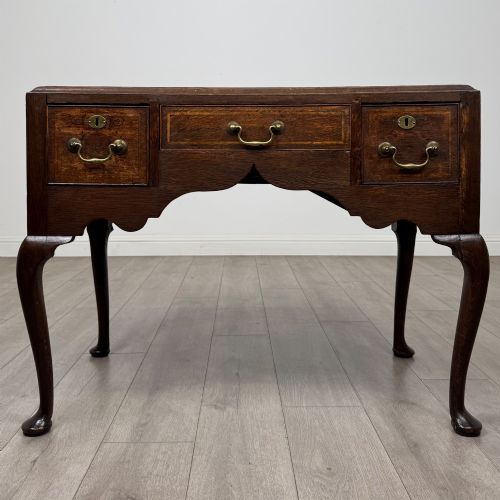
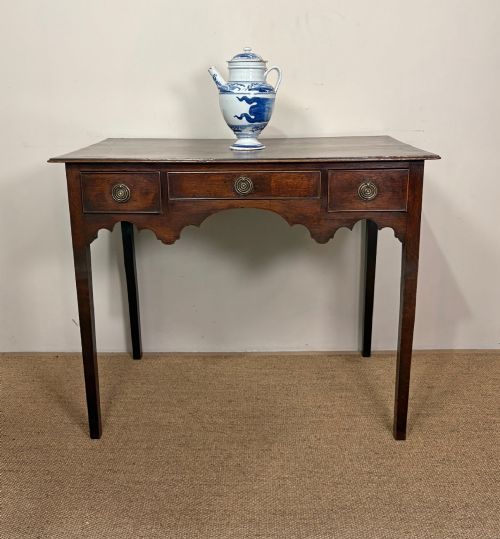
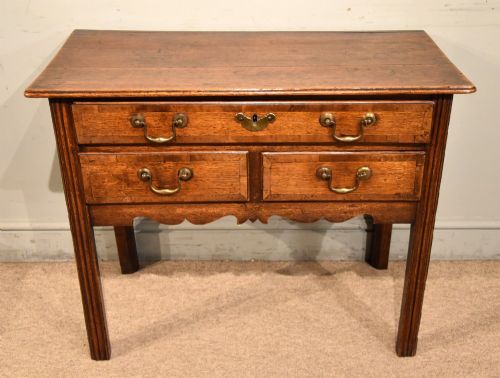
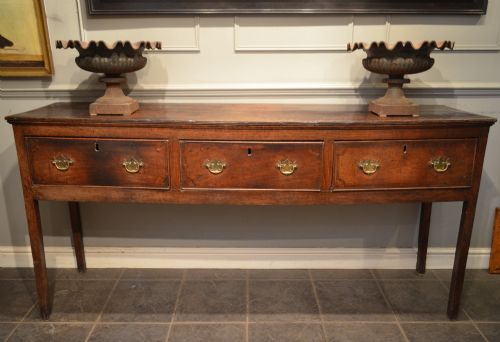
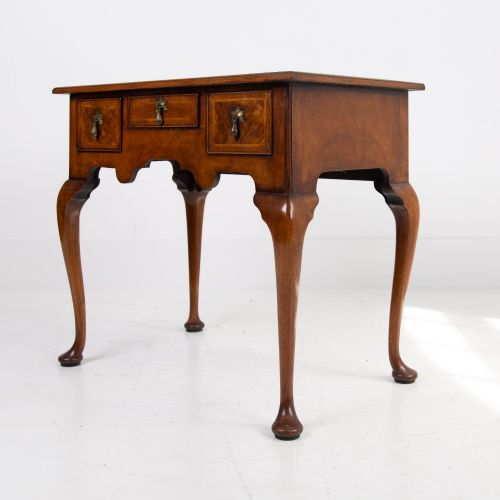
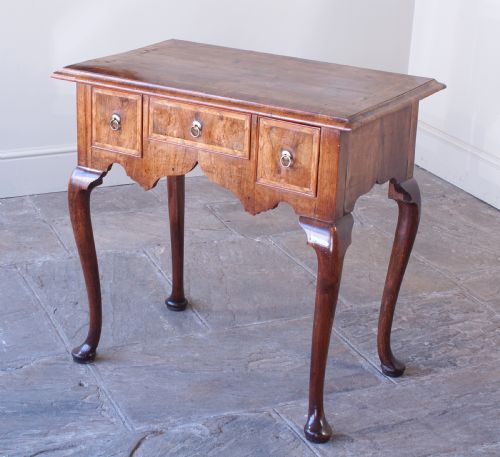
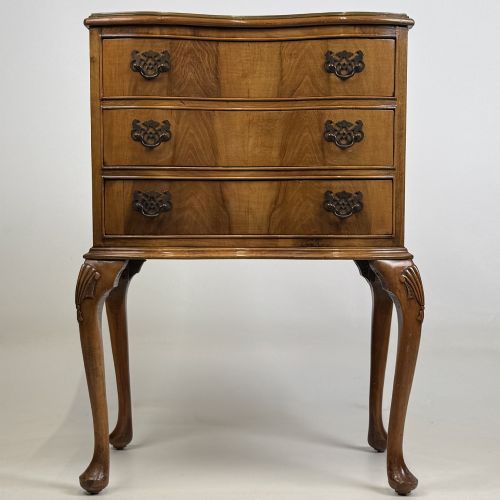

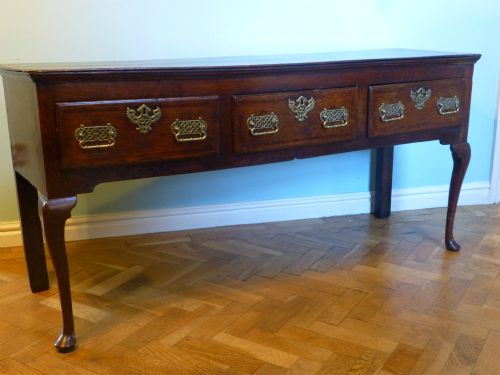
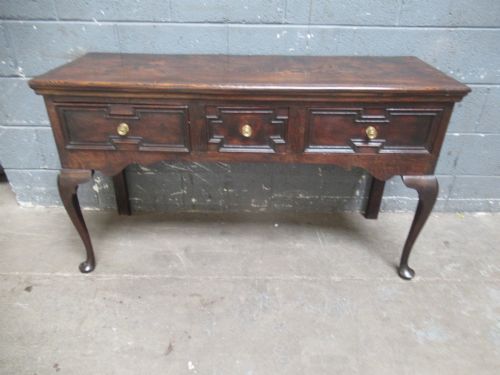

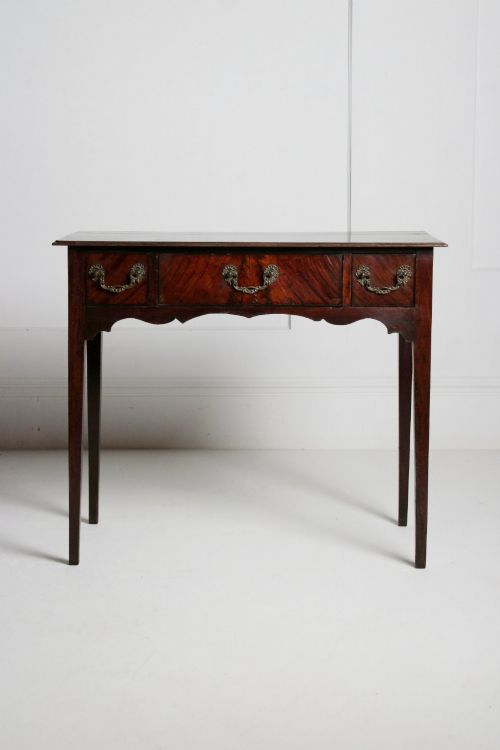
Three Drawer Lowboy Table
A three drawer lowboy table provides compact surface space and useful storage, prized for its elegant proportions in traditional interiors.
Three Drawer Lowboy Table
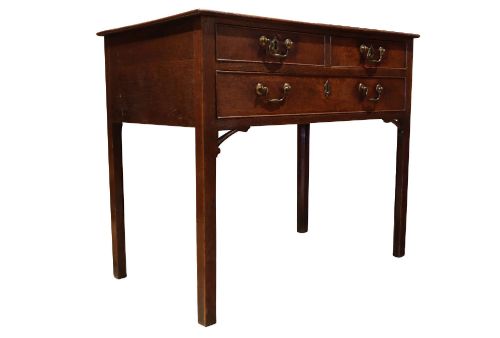
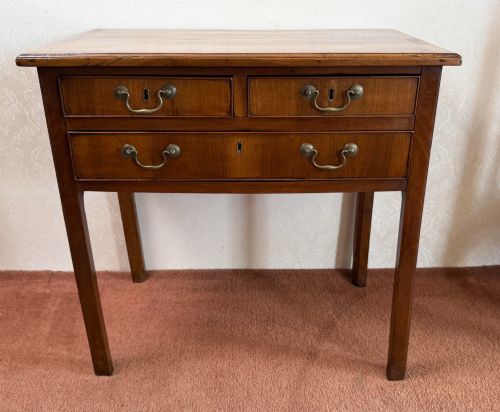
A three drawer lowboy table is a low side table fitted with a trio of drawers, commonly used as a dressing table, writing desk or side console. When searching for this form, buyers encounter examples spanning the eighteenth and nineteenth centuries, alongside revival pieces from the twentieth century.
The oak and mahogany versions dating from the Georgian period predominate on this page, often appearing under related descriptions such as side tables or dresser bases. These low-slung tables originate primarily from English and Welsh workshops, reflecting domestic craftsmanship of their respective eras.
How they were made
Cabinetmakers utilised solid timbers such as oak, mahogany and walnut, occasionally incorporating fruitwood, burr walnut, plum wood, boxwood inlay and leather inserts. Drawer construction frequently employed hand-cut dovetails, while brass handles and escutcheons provided functional hardware.
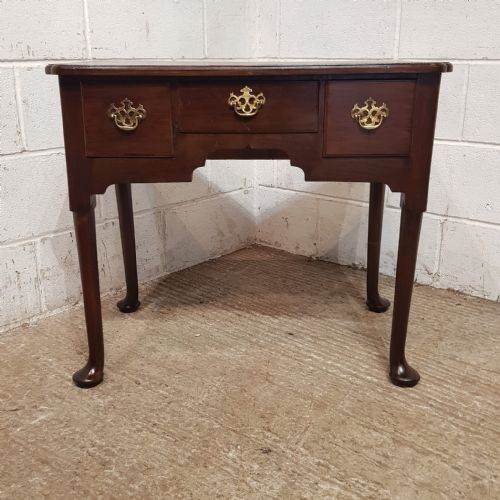
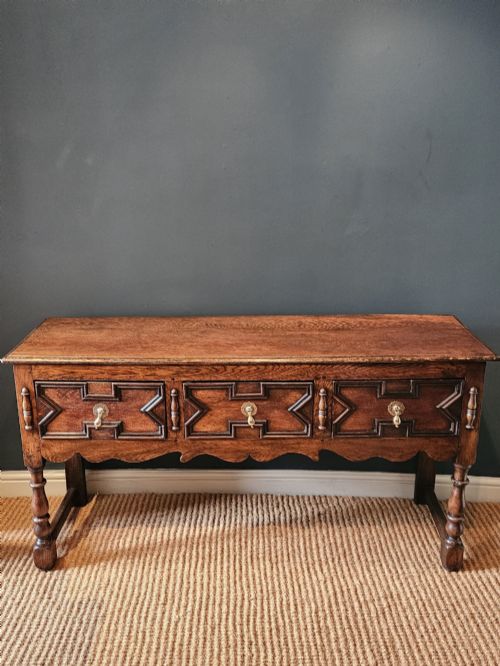
Structural support relies on timber framing, with tables standing on cabriole or straight legs. Surfaces range from plain polished wood to feather-banded walnut and geometric mouldings.
Three Drawer Lowboy Table Retail Price Guide 2026
Typical asking prices for three drawer lowboy table among the pieces listed under this phrase on Sellingantiques today, from the lower quarter to the upper quarter. They describe what is for sale here now, not the wider market.
Some industrious eighteenth-century writers repurposed their lowboys into makeshift dressing tables by simply adding a looking glass.
What varies in quality
The refinement of timber selection dictates much of the distinction between pieces, with figured burr walnut or dense mahogany commanding attention above standard domestic oak. Subtle details such as feather banding, inlay work and crisp geometric moulding separate utilitarian examples from finer parlour pieces.
Proportion and leg execution also influence the standing of a lowboy, where slender cabriole legs or well-balanced drawers show greater artisan skill than heavy or plain framework.
The Three Drawer Lowboy Table Glossary
- Lowboy
- A small low table with drawers, typically used as a dressing table or side table in eighteenth-century rooms. It stands on four legs and usually incorporates one long drawer above two smaller ones.
- Dresser base
- The lower section of a kitchen or dining room dresser, often functioning independently as a sideboard or low serving table. These share similar proportions and drawer arrangements with larger lowboys.
- Feather banding
- An inlay technique using thin strips of veneer arranged in a herringbone pattern to frame drawer fronts or tabletops. This decorative border was popular on walnut furniture.
- Cabriole leg
- A furniture leg that curves outward at the knee and tapers inward toward the ankle, ending in a foot. This style draws inspiration from traditional animal forms.
Three Drawer Lowboy Table: Frequently Asked Questions
What is a three drawer lowboy used for?
These tables function as side tables, hall consoles, dressing tables or compact writing desks. Their modest height and drawer space make them versatile additions to living rooms and bedrooms.
Historically, they served personal grooming or writing needs before evolving into general display and storage surfaces in modern homes.
How do I identify a Georgian lowboy?
Georgian examples date from the eighteenth century and typically feature construction in oak, mahogany or walnut. They often display hand-dovetailed drawers and period brass hardware.
Stylistic markers include cabriole legs on earlier pieces and straighter legs on later George III iterations.
Are all lowboys from the eighteenth century?
While the form originates in the eighteenth century, nineteenth-century pieces and twentieth-century revival interpretations appear frequently. Edwardian and later reproductions capture earlier aesthetic styles.
Examining timber ageing, construction methods and hardware helps determine whether a piece is period or a later revival.
What woods were used for lowboy tables?
Oak and mahogany represent the most common timbers found in these listings. Walnut and burr walnut appear alongside fruitwood and occasional solid plum wood.
Secondary materials include boxwood for inlay work and leather for writing surfaces.